
Tragic Killing of Japanese Boy Sparks Debate Over Rising Nationalism in China

The brutal killing of a 10-year-old Japanese-Chinese boy in Shenzhen has ignited deep soul-searching in China, with many questioning the role of extreme nationalism in fueling violence. The boy, the son of a Japanese father and Chinese mother, was fatally stabbed on his way to school, marking the second knife attack on Japanese children in China in recent months. While authorities have described the incidents as isolated, they have stirred concerns about rising xenophobia and nationalist sentiment, especially towards Japan.

The complex relationship between China and Japan, shaped by wartime history and territorial disputes, remains sensitive. Some Chinese citizens and commentators have accused the government of fostering a “culture of hatred” towards Japan, exacerbated by nationalist rhetoric and propaganda. A Shenzhen resident who left flowers at the school where the boy was a student expressed shame and heartbreak, blaming long-standing anti-Japan education for the violence.

Online commentators have echoed these concerns, with several calling for an end to anti-Japan sentiment. However, many of these discussions were quickly censored on Chinese social media platforms. One viral post removed from WeChat highlighted the dangers of nationalist rhetoric spilling into real-world violence, a concern shared by the Japanese community in China, many of whom now fear for their safety.

Picture background

Anti-Japanese sentiment in China is deeply rooted in the atrocities of World War II, reinforced by patriotic education and state propaganda. Chinese leader Xi Jinping has increasingly evoked this history to garner public support for his nationalistic agenda. However, critics argue that this has perpetuated resentment and distrust between the two nations. The timing of the boy’s death, which coincided with the anniversary of Japan’s invasion of China, has fueled speculation about the attack’s motive.

Despite official denials from the Chinese government, which insists there is no “Japan-hating education,” the rise in online xenophobia is clear. Ultra-nationalistic posts targeting Japanese schools and businesses have become popular, with influencers using anti-Japan rhetoric to attract attention. In response, some platforms have taken action, suspending accounts that promote hostility.

Calls for reflection have also come from Chinese intellectuals living in Japan. A joint statement signed by several prominent figures condemned the nationalist hate education prevalent in China and urged for change. Japanese officials have also pressed China to ensure the safety of Japanese citizens, with Japan’s Foreign Minister Yoko Kamikawa calling for a crackdown on anti-Japan social media posts.

While some Japanese families in China are choosing to return home, others, like one mother of two in Guangzhou, remain. She emphasized that the extreme rhetoric online does not reflect the Chinese people she has encountered, expressing her sadness over the tragedy and the subsequent tensions between the two nations. Acts of solidarity, such as the more than 1,000 bouquets left at the Japanese school, show that many Chinese citizens are also grieving the loss.

The killing has raised profound questions about the effects of nationalistic propaganda, with increasing calls for a more balanced approach to China’s relationship with Japan.

 

SK Hynix Spurs Rally in Asian Semiconductor Stocks with Mass Production of Advanced AI Chip

SK Hynix shares surged by over 9% on Thursday after the South Korean chipmaker announced the mass production of a new high-bandwidth memory (HBM) chip designed for AI applications. The company revealed that the HBM3E chip, the first 12-layer version of its kind, will be ready for delivery by the end of the year. This updated chip boasts a 36 GB capacity, marking a 50% increase from the previous 8-layer version, all while maintaining the same physical thickness.

SK Hynix has positioned itself as a key player in the AI memory chip market, supplying HBM chips to major tech firms like Nvidia. With the new 12-layer HBM3E chip, the company seeks to solidify its dominance in the space, offering advanced solutions for high-end generative AI workloads.

HBM chips are dynamic random access memory (DRAM) components that are stacked vertically, allowing for more compact designs and reduced power consumption. The global HBM market is currently dominated by SK Hynix, Micron Technology, and Samsung Electronics.

Micron Technology also made headlines by issuing better-than-expected revenue and profit forecasts for its fiscal first quarter, citing strong demand for HBM chips. Micron expects $8.7 billion in revenue and profits of $1.74 per share, surpassing market estimates. This positive outlook, coupled with SK Hynix’s announcement, led to a rally in Asian semiconductor stocks.

In Japan, Tokyo Electron’s shares rose 7%, and Advantest climbed 5%, while Samsung Electronics saw a 3% gain. The South Korean Kospi index also responded positively, increasing by 2% as the sector benefitted from these developments.

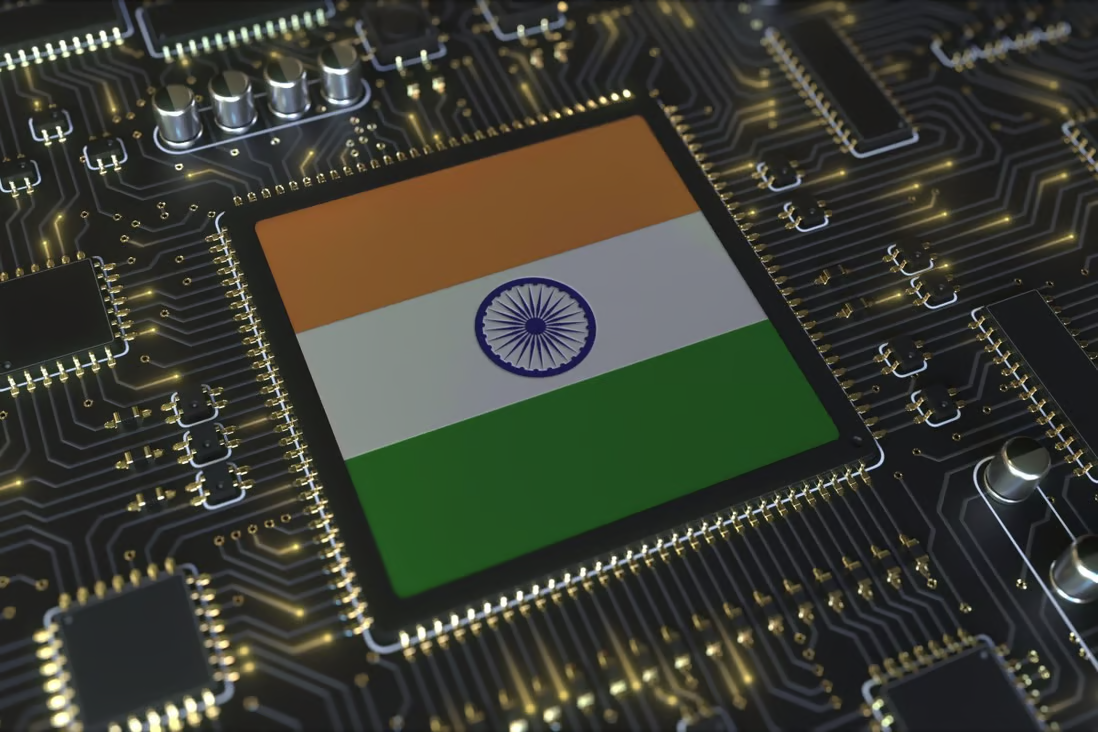
India’s Path to Becoming a Semiconductor Powerhouse Faces Challenges, but Collaboration is Key

India is making bold strides toward establishing itself as a global semiconductor powerhouse, aiming for self-reliance in manufacturing. Prime Minister Narendra Modi has set ambitious goals, targeting a leap in the country’s electronics sector from $155 billion today to $500 billion by 2030. However, experts are divided on whether this target is feasible, with a consensus that India cannot achieve it on its own.

Eri Ikeda, assistant professor at IIT Delhi, highlights that India’s semiconductor journey is still in its early stages. Taiwan leads global semiconductor production with 44% market share, followed by China (28%) and other key players like South Korea and the U.S. Collaborative efforts are already in motion, such as Taiwan’s Powerchip Semiconductor partnering with Tata Electronics to build India’s first wafer fab in Gujarat, and American chipmaker Micron Technology planning to produce semiconductors in India by 2025.

India’s drive for semiconductor self-reliance is partly fueled by its growing role as a viable alternative to China for global supply chains. However, analysts caution that India must first learn the nuances of the semiconductor industry. Rishi Bhatnagar of the Institution of Engineering and Technology suggests that India should focus on collaboration rather than direct competition with China, which continues to invest heavily in semiconductor equipment from the U.S. and Japan.

India is strengthening ties with the U.S. to diversify its semiconductor sources. The U.S. Department of State has partnered with India’s Semiconductor Mission to bolster global semiconductor value chains, further fueled by geopolitical tensions with China. As a democratic nation with a growing English-speaking workforce, India is positioned as an attractive investment destination for tech giants like Apple and Google.

While infrastructure and investment challenges remain, India has advantages such as a low labor cost and a young workforce. The country is also making significant improvements in its infrastructure, with plans to modernize highways, railways, and airports. These developments are crucial as India positions itself to cater to the increasing global demand for semiconductors.

Despite the hurdles, optimism persists. Analysts see India’s potential to meet global chip demands while maintaining lower production costs, offering a competitive edge over China. Samir Kapadia, CEO of India Index, emphasizes India’s unique combination of economic stability, workforce potential, and infrastructure development, making it a strong contender in the global semiconductor race.