
No Electronic Equipment Deemed Safe After Lebanon Device Attacks Amid Rising Tensions

Following a devastating wave of pager-bomb attacks that struck Lebanon earlier this week, a second explosion rocked the Hezbollah stronghold of Dahiyeh, southern Beirut, on Wednesday. The blast, captured on video, caused panic as mourners gathered for the funerals of an 11-year-old boy and three Hezbollah members killed the previous day. Screams and chaos filled the air as fears grew that walkie-talkies and other electronic devices were now being targeted, causing widespread anxiety about the safety of all electronic equipment.

Hezbollah supporters were on high alert, with many demanding journalists avoid using phones or cameras. Lebanese officials reported that the death toll had risen to at least 20, with 450 more injured across the country. Fires broke out in homes, shops, and vehicles, leaving widespread devastation in their wake.

The attacks, seen as a blow to Hezbollah’s reputation, are fueling suspicions that its communication network may have been infiltrated by Israeli forces. The synchronized pager explosions on Tuesday were believed to have been triggered after users received deceptive messages they thought were from Hezbollah. These explosions killed 12 people, including young children, and injured nearly 3,000. Many of the injured lost limbs or suffered severe facial damage, with doctors overwhelmed by the extent of the injuries.

While the exact method of the Wednesday attacks remains unclear, Hezbollah blames Israel for both waves of destruction. Israel has yet to comment, but tensions are rising, with fears of an all-out war between the two forces. Hezbollah’s ongoing attacks on Israel, in solidarity with Gaza, show no signs of abating, despite Lebanon’s internal struggles and economic challenges.

Mourners at the funeral in Dahiyeh expressed defiance, vowing that the attacks would only strengthen their resolve. Israel’s defense minister, Yoav Gallant, announced the beginning of a new phase in the conflict, signaling that the situation could escalate further. Hezbollah’s leader, Hassan Nasrallah, is expected to deliver a critical response soon, which may indicate the group’s next moves.

 

Tech Entrepreneur’s Dream to Restore a Cruise Ship Ends in Heartbreak After $1 Million Investment

Chris Willson, a tech entrepreneur from Utah, embarked on an ambitious project in 2008 when he purchased a historic cruise ship he found on Craigslist. The 293-foot vessel, originally named Wappen von Hamburg and later renamed Aurora, had 85 cabins, a swimming pool, and a theater. Over the next 15 years, Willson poured his life savings into restoring the ship, with dreams of converting it into a museum. However, his passion project ended in disappointment when the ship began sinking in 2023.

Willson and his partner, Jin Li, moved aboard the vessel and spent years painstakingly renovating it, completing significant restorations with the help of volunteers. Despite the progress, the couple faced numerous obstacles, including resistance from local authorities and logistical challenges. The ship, which had been moored in California’s Delta region, became a subject of concern after other nearby vessels sank, increasing scrutiny from officials.

By October 2023, Willson made the difficult decision to sell the Aurora. Unfortunately, just months later, the ship began taking on water due to a hole in its hull, leading to diesel fuel and oil leaks. The situation required intervention from the US Coast Guard, and as of mid-2024, local authorities are determining whether the ship can be salvaged or must be scrapped.

Though devastated by the outcome, Willson looks back on the experience without regret, saying the project extended the ship’s life by 15 years. He remains hopeful that the Aurora may still avoid being scrapped, but for now, his dream of restoring the ship has come to a heartbreaking end.


Tycoon’s 100-Year-Old Coin Collection Fetches $16.5 Million at First Auction

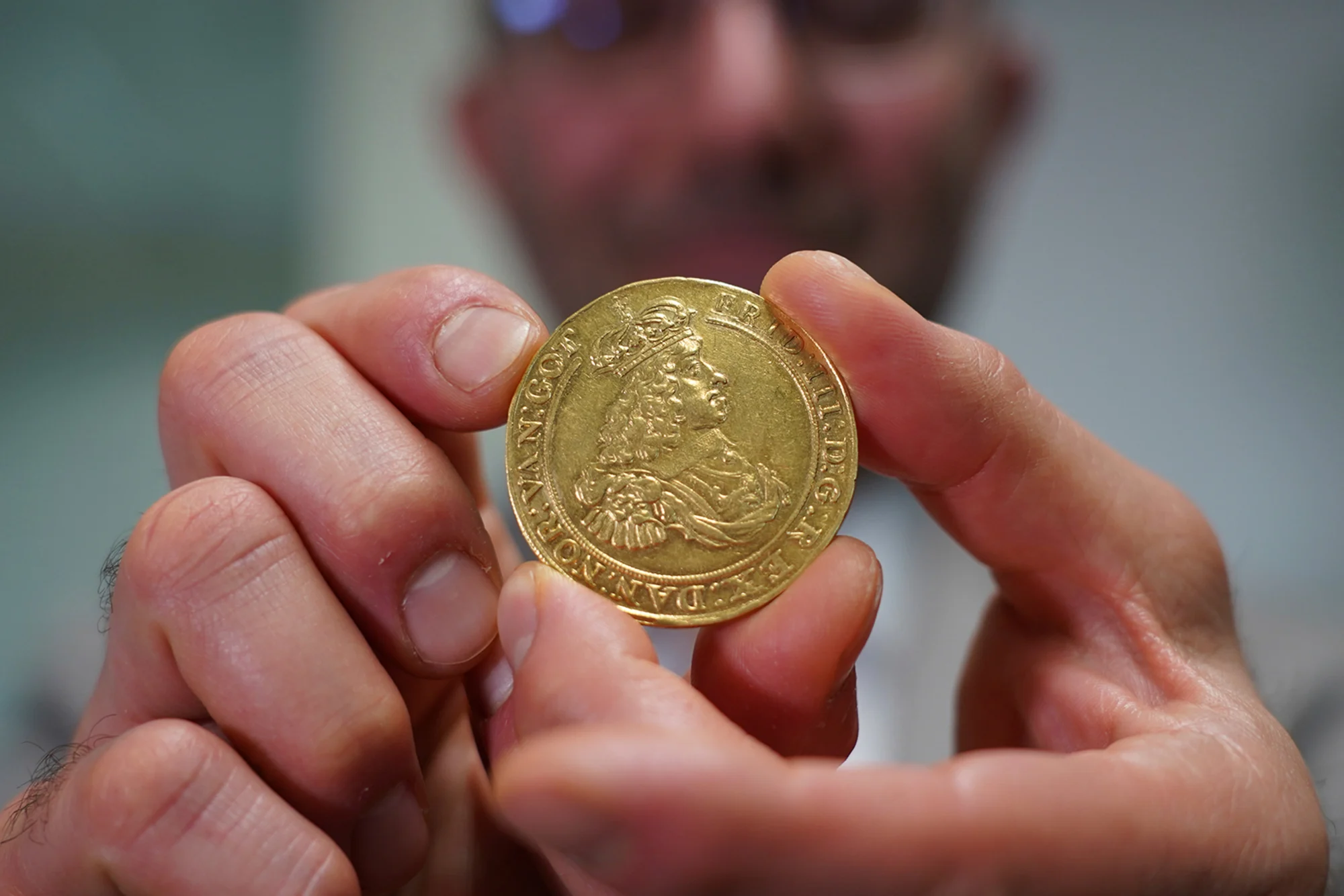
Nearly a century after Danish butter tycoon Lars Emil Bruun’s passing, the first portion of his vast 20,000-piece coin collection has been sold at auction, fetching an astounding $16.5 million. Bruun’s will, written in 1923, mandated that his prized coins, notes, and medals remain untouched for 100 years to serve as an emergency reserve for Denmark’s national collection. If not needed by the state, the coins would then be sold for the benefit of his descendants. On Tuesday, the first set of 286 lots from this numismatic treasure went under the hammer in Copenhagen, after the century-old moratorium expired.

The auction, held by Stack’s Bowers, lasted nearly eight hours and is the first in a series of sales planned to liquidate the collection, which has been insured for a staggering $72.5 million. Once fully sold, it is expected to be the most expensive international coin collection ever auctioned. According to Stack’s Bowers, the L.E. Bruun Collection is one of the most valuable collections of world coins ever to enter the market.

The collection’s most notable piece, a rare 1496 gold noble of King Hans, set a new world record for a Scandinavian coin, selling for $1.34 million. The coin holds immense historical significance as Denmark’s first gold and dated coin, and is the only one of its kind in private hands.

Bruun, a passionate coin collector since childhood, amassed his fortune through butter exports but devoted much of his wealth to building one of the world’s most impressive coin collections. His passion for numismatics was well known, and he was a founding member of the Danish Numismatic Society in 1885.

During the sale, other rare coins from Denmark, Norway, and Sweden dating from the 15th century were also auctioned. In the lead-up to the auction, the coins toured various fairs and were displayed in Stack’s Bowers galleries as well as in Copenhagen.