
India’s New Nuclear-Capable Submarine Joins the Fleet: Can It Catch Up with China?

India has added its second nuclear-capable ballistic missile submarine, the INS Arighaat, to its naval fleet. The commissioning took place in late August, with Indian Defense Minister Rajnath Singh declaring that it strengthens the country’s nuclear deterrence amid rising concerns about both China and Pakistan. Despite this advancement, India’s capabilities still lag behind China, whose People’s Liberation Army Navy boasts a fleet that includes six Jin-class nuclear-powered ballistic missile submarines, which outmatch India’s two ballistic missile submarines in terms of firepower.

The INS Arighaat, named “Destroyer of the Enemy” in Sanskrit, joins the INS Arihant, commissioned eight years ago. Both submarines, 366 feet long with a 6,000-ton displacement, are equipped with K-15 Sagarika ballistic missiles with a range of about 750 kilometers (466 miles). However, this range limits their ability to strike deep within Chinese territory from the Indian Ocean, as analyst Carl Schuster points out.

China’s Jin-class submarines can carry missiles with a range of at least 8,000 kilometers (4,970 miles), along with the capability to carry multiple nuclear warheads, further tilting the strategic balance in Beijing’s favor. The Arighaat aims to improve India’s second-strike capability, crucial in maintaining nuclear deterrence. While India is developing longer-range missiles for future submarines, it may take years for these capabilities to materialize. For instance, Arighaat took nearly seven years from launch to commissioning, suggesting that the next Indian ballistic missile sub may not be ready until 2030.

India’s efforts to develop its sea-based nuclear deterrent are part of a broader ambition to establish a robust second-strike capability, especially as the country faces growing threats from both Pakistan and China. Pakistan is modernizing its fleet with Chinese-designed submarines, while China’s naval buildup includes regular nuclear deterrence patrols by its Jin-class submarines. India’s Arihant-class submarines, though limited in number, will help counter these regional threats, with the Indian government planning further investments, reportedly $31.6 billion over the next decade.

While China’s navy is significantly larger and more advanced, India’s naval buildup sends a strong message about its strategic ambitions. The country’s pursuit of more sophisticated submarines and long-range missiles is aimed at achieving greater parity with China and ensuring a secure nuclear second-strike force capable of deterring aggression.
 

Philippines to Continue Vessel Deployment in Contested South China Sea Shoal

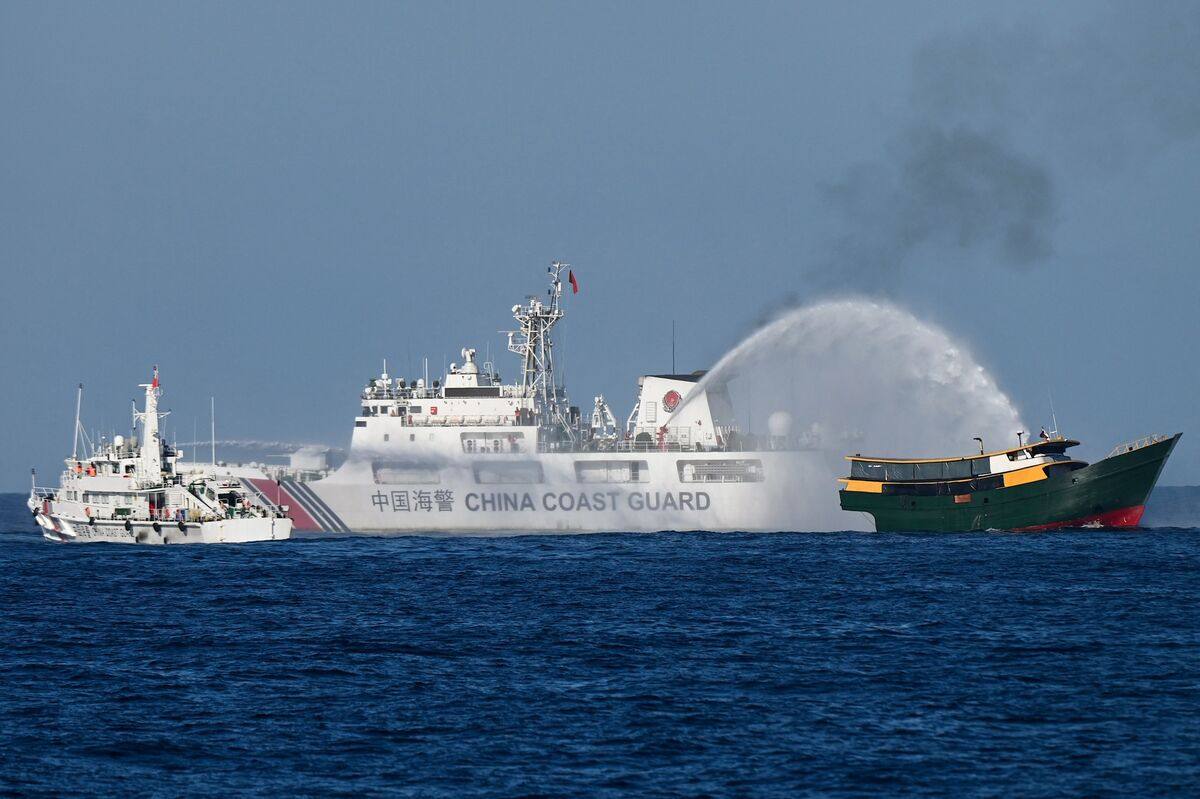
The Philippines will maintain a persistent presence in the contested Sabina Shoal in the South China Sea, according to a statement by its coast guard on Monday. This comes after the Philippine vessel Teresa Magbanua returned to port following a five-month deployment in the area.

Philippine Coast Guard Spokesperson Jay Tarriela emphasized that the country will continue to deploy vessels in these waters, reinforcing the nation’s stance amid concerns over China’s activities. The Teresa Magbanua was initially sent to the shoal in April to monitor what the Philippines suspects are small-scale land reclamation operations by China. The ship’s return on Sunday was due to the need for repairs and to address crew medical needs, and not in response to any demands from China, according to Tarriela.

Sabina Shoal, referred to by China as Xianbin Reef and by the Philippines as Escoda Shoal, is located west of the Philippine province of Palawan, within the country’s exclusive economic zone (EEZ). Despite China’s claims, the Philippines is committed to ensuring a coast guard presence at all times, regardless of the size or number of vessels, Tarriela assured during a press conference.

China’s coast guard responded on Sunday, stating it will continue its law enforcement activities within the waters it claims as its jurisdiction, in line with Beijing’s laws, to protect its territorial sovereignty and maritime interests.

China asserts sovereignty over most of the South China Sea, leading to territorial disputes with several Southeast Asian nations, including Brunei, Indonesia, Malaysia, the Philippines, and Vietnam. However, in 2016, an international arbitration tribunal in The Hague ruled against China’s extensive territorial claims, a decision that Beijing has repeatedly rejected.


Hong Kong Stocks Fall as Investors Digest China Economic Data, Await Fed Rate Verdict

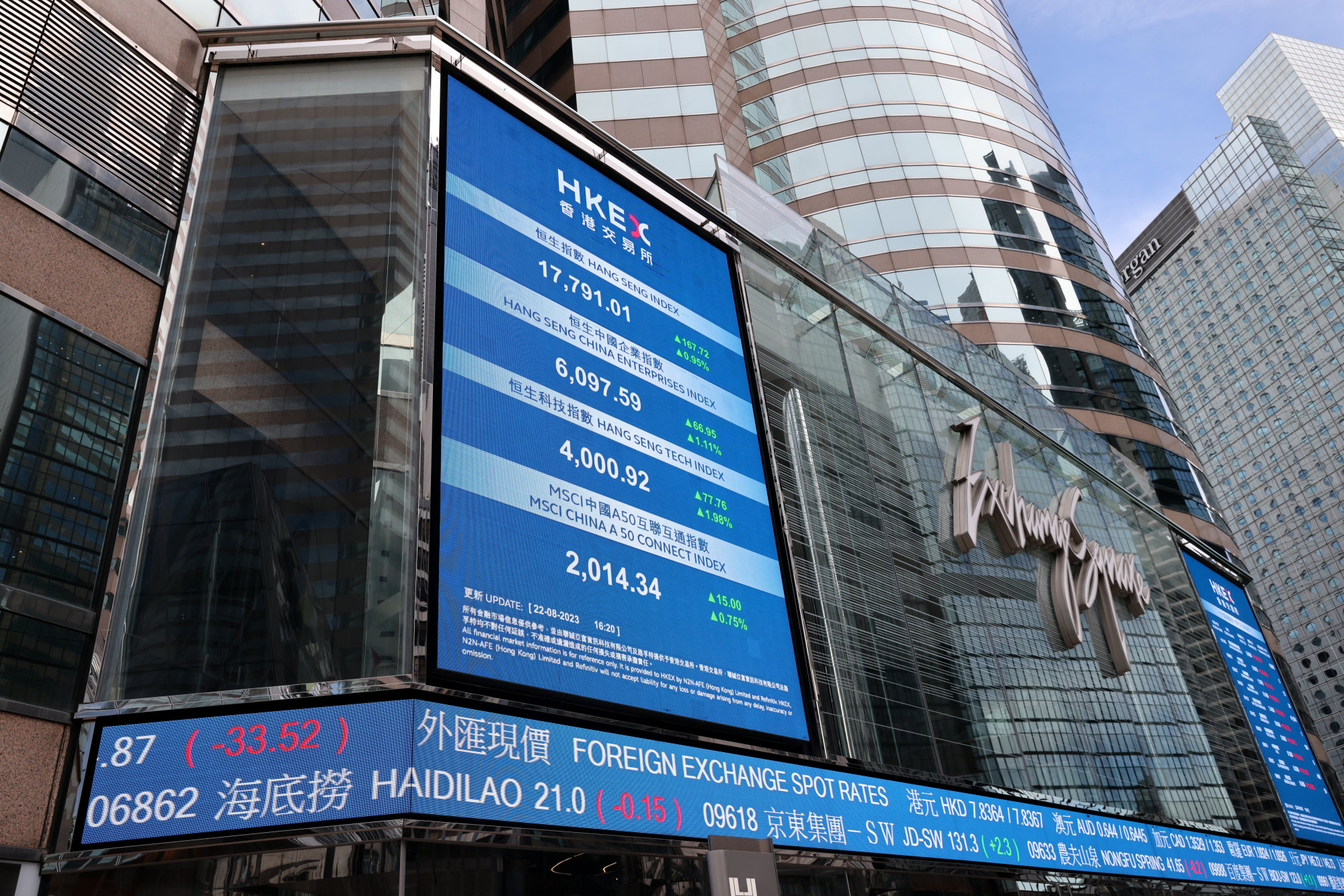
Asian markets opened mixed on Monday, with Hong Kong stocks dipping as investors absorbed disappointing economic data from China and looked ahead to the U.S. Federal Reserve’s policy meeting later in the week. The Hang Seng Index dropped by 0.76% following the release of China’s August economic figures, which fell short of expectations in factory output, retail sales, and investment. The urban unemployment rate hit a six-month high, while year-on-year home prices experienced their steepest decline in nine years.

Investor focus is now shifting toward the Federal Reserve’s meeting on Tuesday and Wednesday, where the central bank is expected to discuss a possible interest rate cut, the first since 2020. In contrast, Australia’s S&P/ASX 200 saw a 0.44% rise at market open, while Taiwan’s Weighted Index edged up slightly. However, several key markets, including those in mainland China, South Korea, and Japan, were closed for holidays, including the Mid-Autumn Festival and Japan’s Respect for the Aged Day.

Further complicating the Asian markets, Typhoon Bebinca has resulted in the cancellation of hundreds of flights across China, with Shanghai bracing for the strongest storm since 1949. As investors monitor the approaching storm, attention is also focused on upcoming economic data and central bank decisions from the region.

Japan’s inflation data, expected to show a rise for August, is likely to support the Bank of Japan’s hawkish stance. The central bank is projected to hold interest rates steady during its policy meeting on Friday, but could signal potential rate hikes ahead. The Japanese yen strengthened Monday morning, trading at 140.49 against the U.S. dollar, positioning the currency to close at its strongest level in over a year.

Meanwhile, China is set to adjust its one- and five-year loan prime rates on Friday. The one-year loan rate, which influences most new and existing loans, currently stands at 3.35%, while the five-year rate, which affects mortgage pricing, is at 3.85%.

In the U.S., after a slow start to September—a historically weak month for the markets—the three major indexes ended last week on a positive note. The S&P 500 gained 0.54%, closing at 5,626.02, while the tech-heavy Nasdaq Composite advanced 0.65% to 17,683.98. The Dow Jones Industrial Average jumped 0.72%, finishing at 41,393.78. Futures tied to the Dow Jones, S&P 500, and Nasdaq 100 showed little movement, with investors awaiting the Fed’s upcoming decisions.