Exclusive: HSBC Probes China Pinnacle Wealth Business on Costs and Control

HSBC Holdings Plc is conducting an internal review of its Pinnacle digital wealth business in China, examining rising costs and potential operational inefficiencies. Sources familiar with the matter indicate that the review, which began a few months ago, could lead to layoffs and mark a significant shift in the bank’s ambitions for its China wealth unit.

Launched in 2020, Pinnacle was part of HSBC’s broader strategy to expand its presence in the growing Chinese wealth management market by offering insurance and fund products. However, the unit has faced challenges, with costs outpacing revenues, and an investigation is now underway to determine whether supplier expenses were inflated, potentially contributing to the increased financial burden.

Staff and Supplier Investigations

The review is also focusing on staff salary structures. Pinnacle’s employees, particularly wealth planners, are compensated with fixed salaries, which some insiders claim have led to low sales motivation. The bank is now reassessing its compensation model, with some sources suggesting that relatively high fixed salaries may have contributed to slower-than-expected revenue growth. In addition, HSBC is investigating whether its suppliers were involved in inaccurate expense reporting, including an incident where an event management company charged for over two dozen customer engagement events held on the same day.

The bank’s review, led by executives such as Ed Moncreiffe, HSBC’s global insurance CEO, is expected to conclude by the end of the year. Moncreiffe, who moved into his current role in April 2024, has spearheaded the initiative, with Alison Law, Global Chief Distribution & Customer Officer for HSBC’s insurance business, being sent to mainland China to analyze Pinnacle’s operational practices.

A Setback for HSBC’s Asia Ambitions

The review comes as HSBC doubles down on its investments in Asia, where it generates most of its revenues. The bank committed $6 billion for Asian expansion in 2021, with half of that earmarked for China and Hong Kong. Pinnacle, as a digitally-driven wealth management arm, was meant to compensate for HSBC’s limited physical branch presence in mainland China. However, despite employing over 1,700 personal wealth planners and planning to grow its headcount to 1,900 by the end of 2024, Pinnacle has struggled to turn a profit. In the first half of 2024, Pinnacle reported a $46 million loss, though this marks an improvement from the $90 million loss in the same period the previous year.

For HSBC, the potential downsizing of Pinnacle represents a notable setback as it attempts to carve out a larger market share in the world’s second-fastest growing wealth market. The Greater China region, which includes Hong Kong, Taiwan, and mainland China, remains critical for HSBC’s overall strategy, yet the bank’s wealth and personal banking business in this region remains unprofitable.

Strategic Review Amid Tougher Market Conditions

HSBC’s Pinnacle review is also indicative of broader challenges the bank faces as it navigates a tougher economic environment. Under CEO Georges Elhedery, the bank is focused on cost-cutting measures as global interest rates are expected to drop, which will likely put additional pressure on revenues. HSBC is already bracing for tighter margins as major central banks prepare to reduce interest rates, which had previously buoyed the bank’s profits.

Moreover, as China’s economic growth slows and wealth market competition intensifies, HSBC’s reliance on digital wealth solutions like Pinnacle may need to be recalibrated. The pressure to deliver profits in China could force the bank to streamline its operations further or shift strategies entirely to maintain its competitive edge in the region.

Future Outlook

HSBC’s probe into its China Pinnacle wealth division signals a critical juncture for the bank’s Asia-focused growth strategy. While the review could lead to cost-saving measures like layoffs and compensation restructuring, the broader question remains whether HSBC can successfully navigate the complex Chinese wealth market, where competition is fierce, and operational challenges continue to mount.

The outcome of the review, expected by the end of the year, will likely play a pivotal role in determining the future of Pinnacle and HSBC’s long-term ambitions in China’s wealth management space.
China-Europe Rivalry Heats Up at Paris Car Show as EV Tariffs Loom

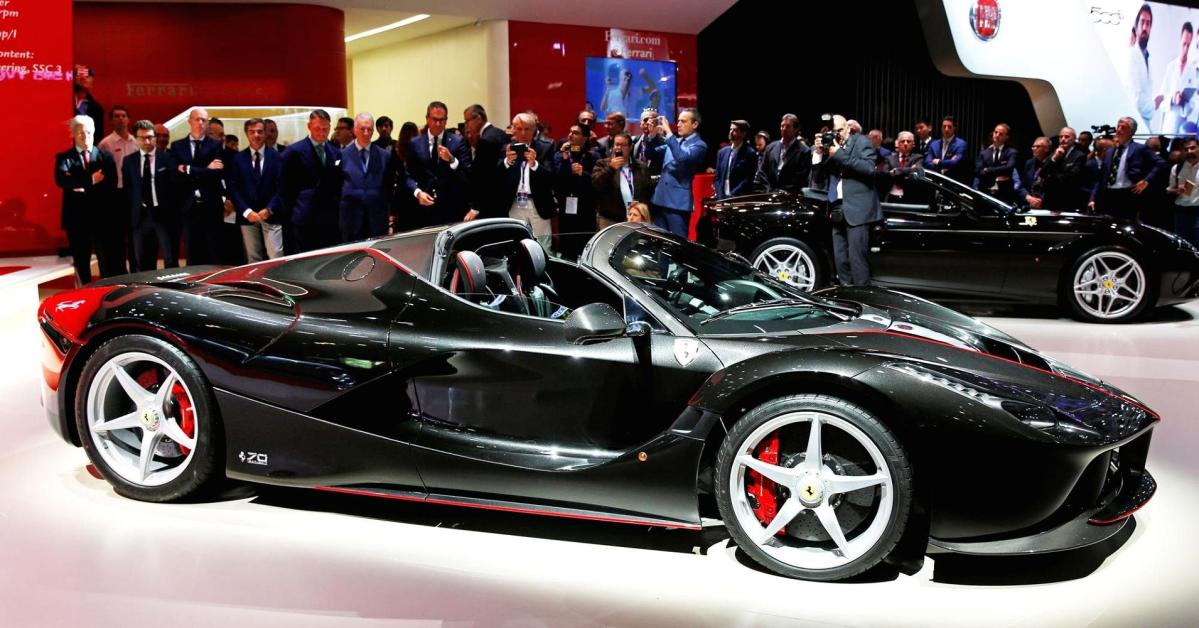
The Paris car show, one of Europe’s largest automotive events, has become a battleground for Chinese and European automakers. Tensions are rising as the European Union prepares to impose significant tariffs on Chinese-made electric vehicles (EVs), a move that could reshape the future of the industry amid already weak demand.

Chinese automotive giant BYD voiced concerns over the planned tariffs, which could reach 45%, warning that these levies would push up prices and deter consumers. Stella Li, executive vice president of BYD, highlighted that the higher costs would disproportionately affect lower-income buyers. “It will stop poorer people from buying,” she said, underlining the impact on affordability and consumer access.

This year’s Paris show, while showcasing major players from both sides, reflects a critical moment for the auto industry. European manufacturers, struggling with declining sales and profitability, are trying to prove they can compete with their Chinese counterparts, who have been rapidly gaining ground.

Tariff Debate and Chinese Expansion

The EU’s impending tariffs are aimed at countering what it describes as unfair subsidies from Beijing to Chinese automakers. European leaders argue that these subsidies give Chinese companies an edge by artificially lowering production costs, allowing them to flood the European market with cheaper EVs. However, Beijing denies these claims and has threatened retaliatory measures against the EU.

Despite the controversy, Chinese automakers are pressing ahead with their plans to expand into Europe. BYD, along with eight other Chinese brands, including Leapmotor, are debuting their latest models at the Paris show. Chinese companies accounted for nearly half the brands present in 2022, but this year they represent about one-fifth, reflecting a stronger response from European carmakers determined to defend their market share.

One of the key attractions at the event is BYD’s Sea Lion 07 SUV, which is expected to generate buzz among European consumers. However, while Chinese automakers like BYD are selling across Europe, they still struggle with brand recognition. That lack of awareness is something they aim to overcome with more aggressive marketing strategies and product launches.

Other Chinese automakers, such as Leapmotor and GAC, are also making their European debut, with plans to establish hundreds of sales points by 2025. While these companies have gained a foothold by undercutting their European rivals on price, they are also trying to differentiate themselves by offering better equipment and features as standard.

Picture background

Europe’s Response

On the European front, car manufacturers face an uphill battle. Industry giants like Volkswagen, BMW, and Mercedes-Benz have all issued profit warnings, largely due to declining sales in China, their biggest market. These companies are feeling the pressure to innovate and reduce costs in the face of Chinese competition, which can bring new models to market in just two years—half the time it typically takes traditional Western automakers.

The European car market itself is struggling. Sales hit a three-year low in August 2024, and automakers like Stellantis have been forced to slash earnings forecasts due to inventory issues in the U.S. market. The European auto industry is now grappling with potential job cuts and factory closures, as companies like Volkswagen consider shutting down plants in Germany to cut costs.

As automakers scramble to remain competitive, Stellantis CEO Carlos Tavares hinted at tough decisions ahead, including potential job cuts or even offloading underperforming brands. Speaking on French radio, Tavares emphasized that it would ultimately be up to consumers to determine which brands survive, saying, “It’s the clients, not me, but there is no taboo.”

Adding to the pressure, European consumers are becoming more price-conscious. The French government recently announced that it would reduce its subsidies for EV buyers, following in the footsteps of Germany, which ended its EV subsidy program in 2023. These moves are likely to further strain the EV market as manufacturers try to close the price gap between electric vehicles and their cheaper gasoline-powered counterparts.

The Broader Context: Chinese and U.S. Relations

For Chinese automakers, the European market is critical, as they have largely been shut out of the U.S. market. The Biden administration has imposed a 100% tariff on Chinese-made EVs and proposed restrictions on key Chinese software and hardware in connected vehicles. With limited opportunities in the U.S., Chinese automakers are turning to Europe as their next big growth market.

Chinese companies have been able to leverage their lower production costs and fast development cycles to gain an advantage over European automakers. However, the upcoming EU tariffs could slow down their momentum, depending on how Chinese brands respond. So far, no Chinese automaker has announced plans to raise prices to offset the expected tariffs, but industry analysts warn that increased costs may be inevitable.

Future Outlook: A Battle for Market Supremacy

As EV adoption continues to rise, the competition between Europe and China is intensifying. While Chinese automakers have gained a reputation for producing affordable, feature-rich EVs, they still face hurdles in brand recognition and consumer trust. On the other hand, European automakers must quickly innovate and cut costs if they want to defend their home turf.

Industry insiders predict that price parity between electric and gasoline-powered vehicles could be achieved within the next two to three years, a milestone that could level the playing field for all manufacturers. However, the race is on, and European automakers have only a short window to catch up to their Chinese rivals.

As John Dunne, an automotive expert at Stax, noted, “The Europeans have massive alarm bells ringing. They have recognized they need to do something pretty radical, and they only have a couple of years to do it.”

UK Competition Authority Expresses Ongoing Concerns Regarding Google’s Advertising Privacy Strategy

In July, Google abandoned its long-term initiative to eliminate cookies, the small code packets responsible for tracking users online, from the Chrome browser. Devamını Oku