5 Things to Know Before the Stock Market Opens Monday

  1. Running to Records U.S. stocks are riding a steady climb to new highs. Both the S&P 500 and Dow Jones Industrial Average closed at record levels on Friday, with the Nasdaq Composite also showing strong gains. Last week saw all three indexes rising by over 1%. As the markets focus on several key events, including the U.S. presidential election, conflicts in the Middle East, and Federal Reserve policy, this week’s earnings reports will further shape the stock market’s trajectory.
  2. Banking on Earnings This week will be packed with earnings reports from major companies, especially from the financial sector. Last Friday, JPMorgan Chase and Wells Fargo exceeded expectations, helping push stock markets higher. Among the big names to report earnings this week are:
    • Tuesday: Johnson & Johnson, Bank of America, Walgreens Boots Alliance, Goldman Sachs, Citigroup, United Airlines
    • Wednesday: Morgan Stanley
    • Thursday: Netflix
    • Friday: Procter & Gamble
  3. Boeing Cuts Boeing is grappling with financial challenges as it plans to cut 17,000 jobs, representing 10% of its workforce. This comes amid production disruptions caused by a machinist strike and ongoing difficulties. The company is also delaying the delivery of its 777X wide-body plane until 2026, and expects to report a significant third-quarter loss of $9.97 per share. CEO Kelly Ortberg outlined the tough restructuring decisions necessary to keep the company competitive.
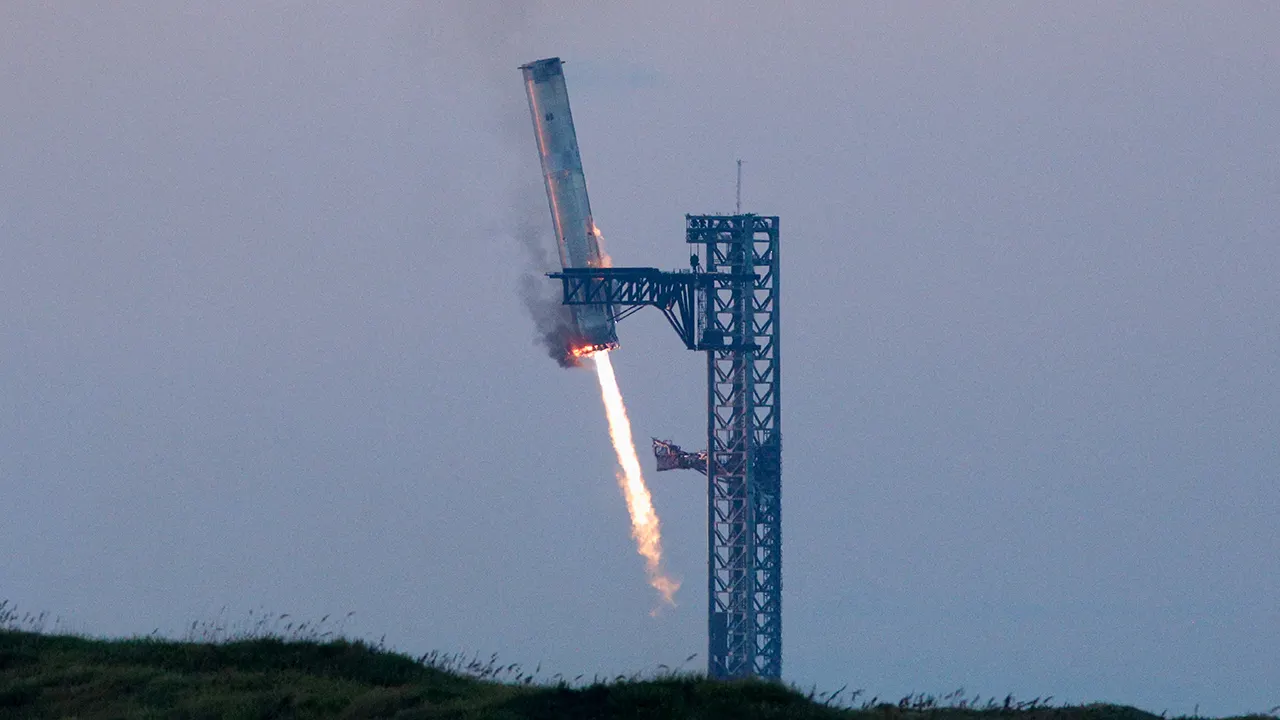
  4. SpaceX Milestone SpaceX achieved a key breakthrough on Sunday with the successful fifth test flight of its Starship rocket. In a historic first, the rocket’s booster was caught by the launch tower arms after its ascent. This marks a crucial step toward making the Starship system reusable. After launching, the rocket entered space and traveled halfway around the Earth before splashing down in the Indian Ocean.
  5. 2024 Policy Stakes The 2024 U.S. election carries major implications for corporate America. Vice President Kamala Harris and former President Donald Trump hold divergent views on key issues like taxes, tariffs, regulation, healthcare, and clean energy. The election’s outcome will likely have significant impacts on industries such as airlines, banks, electric vehicles, and technology. The policies proposed by each candidate could lead to vastly different outcomes for companies across sectors.

European Central Bank Poised for Third Interest Rate Cut of the Year Amid Easing Inflation Risks

The European Central Bank (ECB) is expected to deliver its third interest rate cut of the year during its meeting this Thursday, as policymakers express growing confidence that inflation is easing faster than anticipated. Recent data indicates that inflationary pressures in the euro area have continued to soften, further bolstering expectations for a rate reduction.

In September, headline inflation in the eurozone dropped to 1.8%, falling below the ECB’s 2% target. Core inflation, which excludes volatile components like energy and food, reached a two-and-a-half-year low of 2.7%, signaling that the ECB’s tightening measures have been effective in curbing price growth.

Declining Inflation and Rate Cuts

The ECB had already implemented two 25-basis-point interest rate cuts earlier this year — one in June and another in September — bringing the central bank’s deposit facility rate from a record high of 4% to 3.5%. These cuts followed a sustained period of high inflation driven by global energy prices and supply chain disruptions.

Given the improving inflation outlook, money markets are now predicting another 25-basis-point cut during the October meeting, with further expectations of an additional reduction to 3% by the ECB’s final meeting of the year in December.

Recent dovish remarks from ECB officials, coupled with cooler inflation figures from key eurozone countries like Germany, have solidified the expectation of back-to-back rate reductions. Francois Villeroy de Galhau, Governor of the Bank of France, stated last week that a rate cut in October was “very likely” and hinted that this cut would not be the last in the current cycle.

Victory Over Inflation in Sight?

ECB President Christine Lagarde signaled a shift in policy during her address to European Union parliamentarians last month. She expressed optimism that inflation was on track to return to the ECB’s target, signaling a potential “pivot” in the central bank’s approach to monetary policy. This contrasts with her more cautious stance during the Sept. 12 meeting, where she emphasized a gradual approach to easing.

Even Joachim Nagel, head of Germany’s Bundesbank and a known hawk on inflation, acknowledged the positive trend, suggesting he would be open to discussing another rate cut.

Economic Weakness and Growth Concerns

In addition to easing inflation, the eurozone economy continues to face significant challenges. Economic activity remains sluggish, with the latest composite purchasing managers’ index (PMI) showing signs of stagnation for the third quarter. This follows a weak 0.3% growth in the second quarter.

The prolonged period of tight monetary policy has exerted downward pressure on growth, with sectors like German manufacturing facing competitiveness issues. Economists, such as Jack Allen-Reynolds from Capital Economics, have revised their forecasts to predict ongoing rate cuts until the ECB’s deposit rate reaches 2.5%. This projection also reflects a cooling labor market and slower wage growth, which should help reduce services inflation in the coming months.

The ECB’s own projections have also been revised downward, with the bank now expecting 0.8% GDP growth for the eurozone in 2024, slightly lower than the 0.9% previously forecast.

A Careful Balance

Despite the growing momentum for rate cuts, some analysts caution that the ECB risks overreacting by easing monetary policy too aggressively. Holger Schmieding, chief economist at Berenberg, warned that while inflation may not be a major issue in 2025, the central bank could face renewed inflationary pressures in 2026 and 2027. He argues that if the ECB lowers rates too quickly, it may have to raise them again in the future to prevent wage inflation and increased consumer demand from pushing prices higher.

Schmieding also predicted that Lagarde is unlikely to push back against market expectations for a December cut during her press conference on Thursday, effectively solidifying the likelihood of continued easing in the months ahead.

Looking Forward

As the ECB navigates this critical juncture, the global economic environment remains a significant factor. The recent 50-basis-point rate reduction by the U.S. Federal Reserve has heightened expectations for faster monetary easing across the globe, putting additional pressure on the ECB to follow suit.

Economists at Bank of America Global Research believe that this week’s rate cut could mark the beginning of a broader trajectory that sees rates lowered to 2% by June 2025 and further to 1.5% by the end of 2025. However, the ECB is expected to maintain its data-dependent and meeting-by-meeting approach, avoiding any definitive long-term commitments.

With the eurozone’s inflation risks appearing to subside and growth concerns still prevalent, the ECB faces the delicate task of balancing monetary easing with the need to avoid reigniting inflationary pressures down the line.


SpaceX Achieves Major Milestone: Starship Booster Successfully Caught in Fifth Test Flight

SpaceX achieved a groundbreaking engineering feat on Sunday during its fifth test flight of the Starship rocket, successfully returning the Super Heavy booster to its Texas launch pad using giant mechanical arms. This marks a critical advancement in SpaceX’s efforts to develop a fully reusable rocket system designed for missions to the moon, Mars, and beyond.

The mission began at 7:25 a.m. CT (1225 GMT) when the Super Heavy booster lifted off from SpaceX’s Boca Chica facility in Texas, propelling the Starship second stage toward space. After separation at an altitude of approximately 70 kilometers (40 miles), the Super Heavy booster initiated its descent back to the launch site in a dramatic sequence. As it neared the pad, the booster reignited three of its 33 Raptor engines to control its descent, targeting the 400-foot launch tower equipped with large metal arms designed to “catch” the rocket.

In a first for SpaceX, the booster hooked itself into place using tiny protruding bars under its four grid fins, which had steered the rocket during its descent. Elon Musk, SpaceX’s CEO, celebrated the success by posting, “The tower has caught the rocket!!” on X (formerly Twitter). Engineers at SpaceX were seen cheering on the company’s live stream as the novel landing method succeeded.

Pushing the Limits of Reusability

This successful catch-landing is part of SpaceX’s ambitious mission to develop fully reusable rockets, an essential feature for deep-space exploration and reducing the costs of space missions. Starship, the rocket system’s second stage, also played a key role in the test flight, accelerating to speeds of 17,000 miles per hour at an altitude of 89 miles before heading toward a targeted splashdown in the Indian Ocean.

Upon reentry, Starship encountered superheated plasma, with onboard cameras capturing the spectacular display as it streaked through Earth’s atmosphere. The heat shields, now made up of 18,000 improved tiles, were enhanced following the previous test flight in June, when the Starship’s heat shields sustained damage, complicating its reentry.

Controlled Splashdown and Explosion

The test flight concluded with Starship re-igniting one of its six Raptor engines to reorient itself for a simulated landing in the ocean near Western Australia. While the ship successfully landed on target in the waters, it toppled onto its side soon after, and moments later, a fireball explosion illuminated the area. Although it remains unclear whether the explosion was a controlled detonation or due to a fuel leak, SpaceX engineers were heard celebrating the mission’s outcome, confirming that the Starship landed “precisely on target.”

Regulatory Approvals and Tensions

SpaceX’s fifth test flight was cleared for launch just a day before by the U.S. Federal Aviation Administration (FAA), ending a period of tension between the company and the regulatory body over the pace of launch approvals. The FAA had previously fined SpaceX over its Falcon 9 rocket, which is the company’s workhorse for launching satellites and crew missions. Despite these regulatory hurdles, the successful test highlights SpaceX’s commitment to advancing its spaceflight technology and achieving its long-term vision of interplanetary travel.

Conclusion

This latest test is a significant step in SpaceX’s test-to-failure development strategy for creating reusable rocket technology capable of supporting NASA’s lunar missions and Musk’s vision of human colonization of Mars. Though setbacks like the Starship’s post-landing explosion remain, the key achievements of this mission—such as the booster catch—bring SpaceX closer to its ambitious goal of developing a rocket system that can be reused for multiple deep-space missions, drastically cutting costs and paving the way for the future of space exploration.