
NASA’s Europa Clipper Mission Ready to Explore Potentially Habitable Ocean World

NASA’s Europa Clipper spacecraft is poised for launch, set to embark on a mission to explore Jupiter’s moon Europa, one of the most promising candidates in the solar system for supporting life. The spacecraft is scheduled to lift off on Monday at 12:06 p.m. ET from NASA’s Kennedy Space Center in Florida aboard a SpaceX Falcon Heavy rocket. This marks the start of a mission aimed at investigating whether Europa’s subsurface ocean could harbor the conditions necessary for life.

Weather conditions are 95% favorable for launch, with backup launch opportunities extending through November 6.

Mission Overview

Europa Clipper is the first spacecraft designed specifically to study an ice-covered ocean world, with a focus on determining whether Europa’s subsurface ocean, estimated to contain twice the volume of Earth’s oceans, could support life. The mission will deploy nine instruments, including cameras, spectrometers, and a magnetometer, to gather data on Europa’s ice shell, ocean depth, and geological activity.

This $5.2 billion mission has faced challenges, including concerns over radiation from Jupiter’s powerful magnetic field, which could damage the spacecraft. However, a specially designed titanium and aluminum vault will shield Europa Clipper’s sensitive electronics, allowing it to withstand the harsh environment during 49 planned flybys of the moon.

Scientific Goals and Instrumentation

Europa Clipper will use its suite of instruments to explore Europa’s ocean and its interaction with the moon’s ice shell. Key questions include the thickness of the ice, the ocean’s composition, and whether plumes of water observed venting through cracks in the ice could indicate habitable conditions.

  • Cameras and spectrometers will capture high-resolution images of the surface and atmosphere.
  • Ice-penetrating radar will study the ice’s thickness and detect subsurface water.
  • Mass spectrometer and dust analyzer will investigate the composition of the ocean by “sniffing” particles from plumes.
  • Magnetometer will assess the ocean’s depth and salinity.

Long Journey and Coordination with Other Missions

After launch, Europa Clipper will travel 1.8 billion miles and is expected to reach Jupiter in April 2030. Along the way, it will perform flybys of Mars and Earth to gain speed and conserve fuel. The mission will work in tandem with Juice, the European Space Agency’s Jupiter Icy Moons Explorer, which launched in April 2023 and will arrive in July 2031.

Once at Europa, Clipper will execute flybys every two to three weeks, collecting data to help scientists understand the moon’s potential habitability.

Future Implications

While not designed to detect life directly, Europa Clipper will pave the way for future missions. Robert Pappalardo, the project scientist, hopes the spacecraft will find evidence of organics and warm, liquid water just below the surface. Such findings could inspire NASA to send a future lander to search for signs of life beneath Europa’s icy crust.

Ruth Chepngetich Smashes Women’s Marathon World Record in Chicago

Kenya’s Ruth Chepngetich made history on Sunday at the Chicago Marathon by setting a new women’s marathon world record, completing the course in a groundbreaking time of 2:09:56. She became the first woman ever to break the 2:10 barrier, shattering the previous world record of 2:11:53 set by Ethiopia’s Tigist Assefa in September 2023. This victory also marked Chepngetich’s third Chicago Marathon win.

The new record is pending the usual ratification by World Athletics, but Chepngetich expressed her excitement and pride, stating, “This is my dream… the world record has come back to Kenya.” She dedicated her win to her late compatriot Kelvin Kiptum, who set the men’s marathon world record in Chicago last year and passed away earlier this year.

Race Highlights

By the 10-kilometer mark, Chepngetich had already pulled away from the competition, with only Ethiopia’s Sutume Asefa Kebede staying close for a while. However, Chepngetich widened the gap significantly, finishing nearly eight minutes ahead of Kebede, who came in second at 2:17:32. Kenya’s Irine Cheptai secured third place with a time of 2:17:52.

Chepngetich’s pace was so fast that only nine male runners in the men’s race finished with faster times than her.

Men’s Race

In the men’s competition, Kenya’s John Koriri took the victory with an impressive time of 2:02:43, the second-fastest ever recorded in Chicago, following Kiptum’s record of 2:00:35 from 2023. Ethiopia’s Huseydin Mohamed Esa placed second, finishing just over two minutes behind Koriri, and Kenya’s Amos Kipruto came in third with 2:04:50.

Wheelchair Division

In the wheelchair division, Switzerland’s Marcel Hug successfully defended his title in a dramatic sprint finish, completing the course in 1:25:54. His compatriot Catherine Debrunner set a new course record in the women’s race, finishing in 1:36:21.

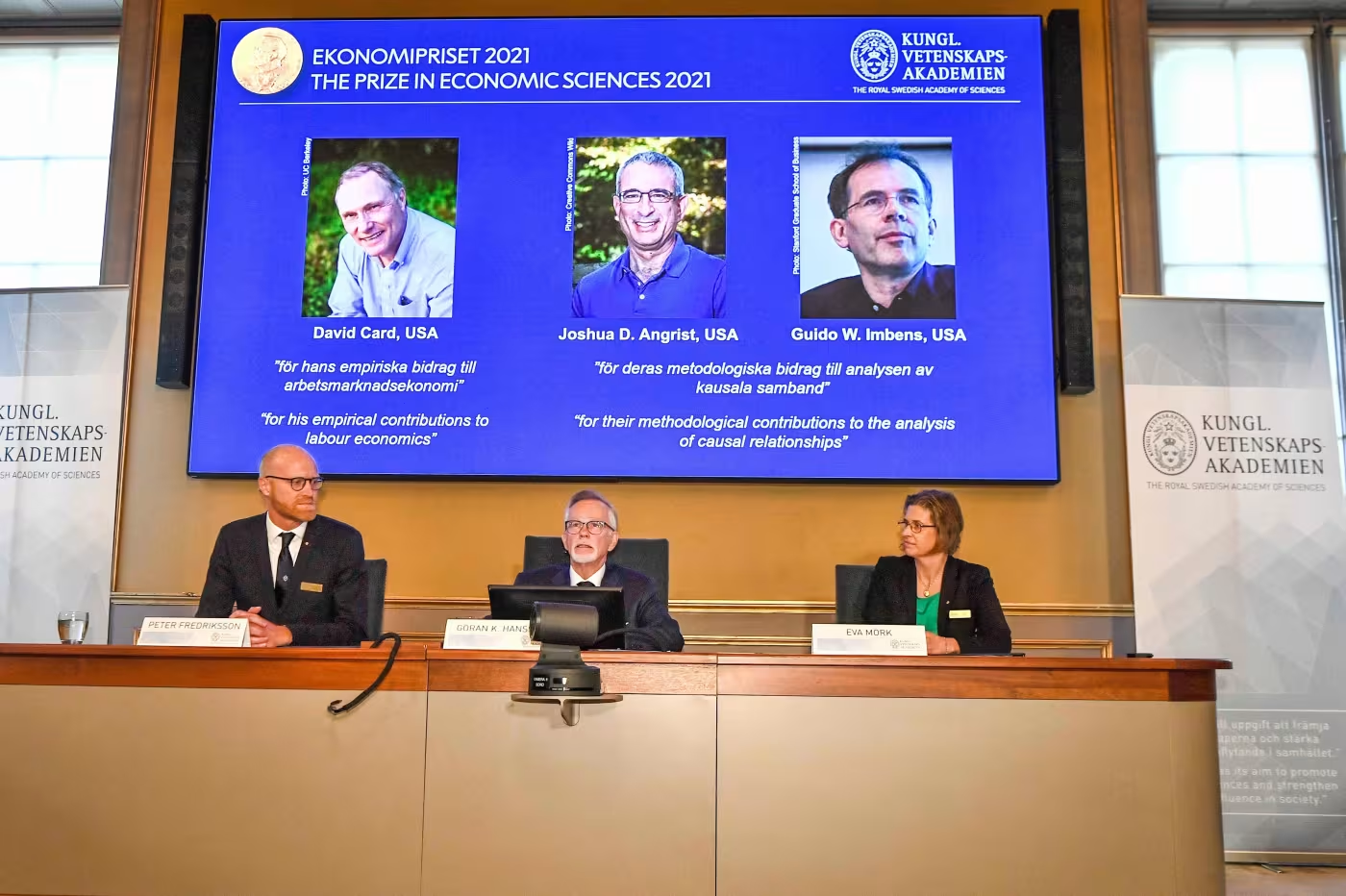
Nobel Economics Prize 2024 Awarded to Daron Acemoglu, Simon Johnson, and James Robinson

Daron Acemoglu, Simon Johnson, and James Robinson have been awarded the 2024 Nobel Prize in Economic Sciences for their groundbreaking work on the inequality of wealth between nations. The trio’s research has highlighted how poor governance and exploitative institutions hinder economic development and growth, playing a crucial role in why some nations struggle to achieve prosperity while others flourish.

Acemoglu and Johnson are professors at the Massachusetts Institute of Technology (MIT), while Robinson serves as the director of the Pearson Institute for the Study and Resolution of Global Conflicts at the University of Chicago. Their work emphasizes the significance of effective societal institutions in fostering economic growth, illustrating why countries with stronger legal systems and better institutions tend to succeed economically.

Key Contributions and Insights

Acemoglu and Robinson are best known for their 2012 book, Why Nations Fail: The Origins of Power, Prosperity, and Poverty. This influential work investigates the roots of global inequality, revealing how political and economic systems—particularly those shaped by colonial powers—have perpetuated wealth gaps across nations.

One of the most striking findings highlighted by the Nobel committee is that nations that were among the wealthiest during the colonization period are now some of the poorest. The laureates’ research traces this phenomenon back to the exploitative institutions established by colonial rulers, which stunted growth and created enduring economic disparities.

The Nobel committee also noted that the richest 20% of nations today are approximately 30 times wealthier than the poorest 20%. The ongoing inability of the poorest nations to close this gap underscores the importance of the economists’ work in understanding how institutions impact national wealth over time.

A Longstanding Question in Economics

The persistence of economic inequality between nations has been a critical question in social sciences for centuries. The work of Acemoglu, Johnson, and Robinson has provided fresh empirical and theoretical approaches to this issue, significantly enhancing our understanding of global wealth distribution. Jakob Svensson, director of Stockholm University’s Institute for International Economic Studies, praised their work as pioneering, particularly in its exploration of the roles institutions play in either driving or hindering prosperity.

Nobel Economics Prize History

The Nobel Prize in Economic Sciences, officially known as the “Sveriges Riksbank Prize in Economic Sciences in Memory of Alfred Nobel,” was first awarded in 1969. This year’s laureates will share 11 million Swedish kronor (around $1.058 million), continuing the tradition of recognizing the most significant contributions to the field.

Last year’s prize was awarded to Claudia Goldin for her research on women’s labor market outcomes. The Nobel committee has consistently recognized work that sheds light on pressing economic and societal challenges, with previous winners focusing on topics such as financial crises, banking systems, and gender disparities in the workforce.

Broader Context of Nobel Prizes

The Nobel Peace Prize for 2024 was awarded last week to Nihon Hidankyo, a Japanese atomic bomb survivor organization, for its tireless efforts to eliminate nuclear weapons globally. The other Nobel Prizes, which have been awarded since 1901, cover fields like physics, chemistry, physiology or medicine, and literature. The economics prize, though introduced later, in 1968, remains one of the most prestigious honors in the world of academic research, recognizing individuals or groups whose work has outstanding importance for global economic understanding.