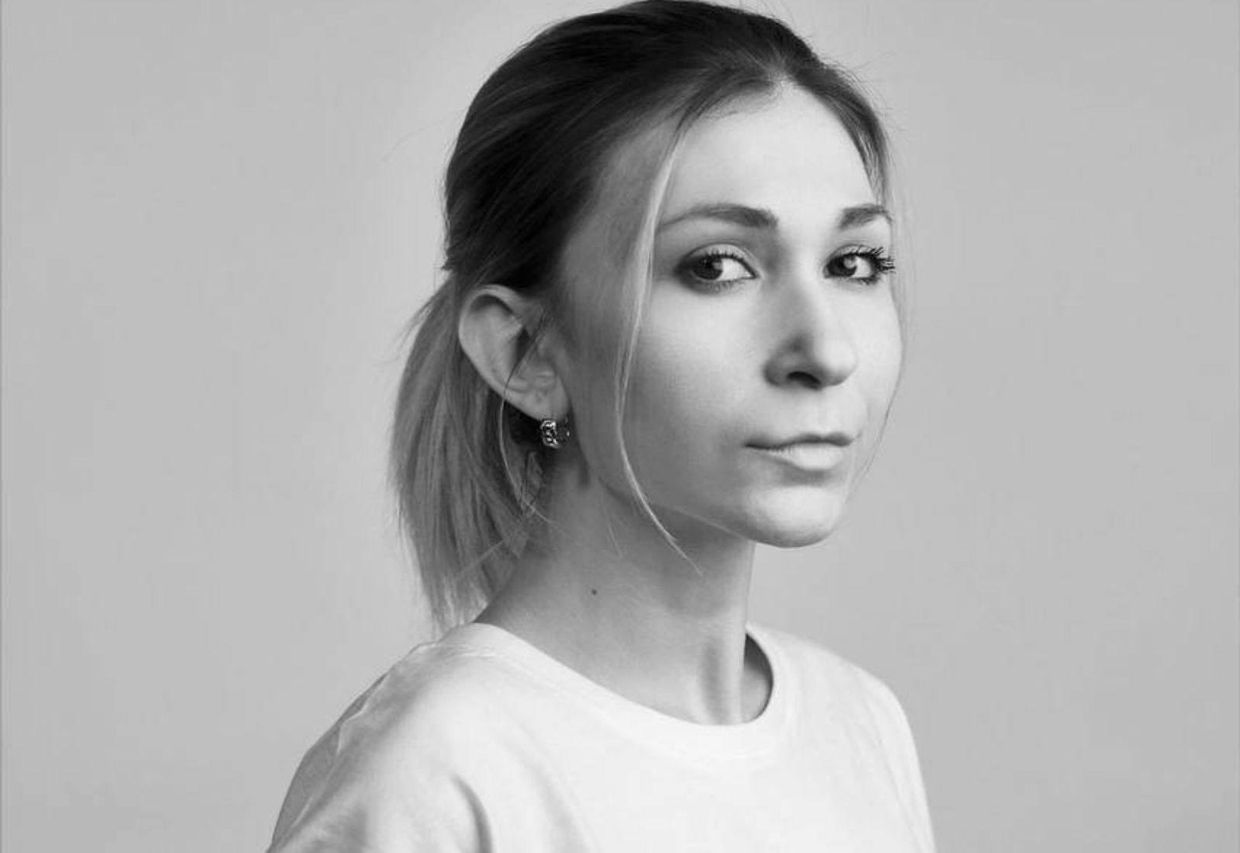
Ukrainian Journalist, 27, Who Chronicled Russian Occupation Dies in Prison

Ukrainian journalist Viktoriia Roshchyna, 27, who reported extensively on life in Russian-occupied territories, has died while in Russian custody. Roshchyna disappeared in August 2023 after entering a region in Ukraine that had fallen under Russian control. Nine months later, Russian authorities finally confirmed her detention, though they provided no reason for her arrest.

This week, Roshchyna’s father received a brief letter from the Russian Ministry of Defence, notifying him of her death on September 19. The letter stated that her body would be returned during a future exchange of soldiers killed in battle between Russia and Ukraine. However, no details were provided about the cause or circumstances of her death.

A Vigil for Viktoriia

Over the weekend, Roshchyna’s friends and colleagues gathered at Maidan Square in central Kyiv to remember her. Holding up photographs of her smiling face, they expressed their grief and honored her legacy. One speaker praised her “huge courage,” while another, overcome with emotion, remarked, “We will miss her enormously.”

Roshchyna had made a name for herself by reporting from some of the most dangerous areas in Ukraine, often entering Russian-occupied zones to document the conditions faced by civilians under siege. Despite the risks, she insisted on telling the stories of Ukrainians trapped in occupied territories, often referring to collaborators as “traitors” and openly labeling Russian-controlled regions as “occupied.”

The Dangerous Path to Truth

Born in 1996, Viktoriia had a determination that set her apart. Even after being detained by Russian forces once before, she remained undeterred, opting to continue reporting from the frontlines as a freelance journalist. Former colleagues recall how she defied warnings from her editors and even her parents, who urged her to avoid the most perilous assignments.

In her reports, Viktoriia painted a vivid picture of the harsh realities faced by those living under Russian occupation. She was known for her tenacity, never using a pseudonym, and for continuing to write candidly about the war despite the danger.

Sevgil Musaieva, editor-in-chief of Ukrayinska Pravda, described Roshchyna as “absolutely amazing” and committed to exposing the truth about the war’s impact on ordinary Ukrainians.

Detention and Mysterious Circumstances

Roshchyna’s journey into Russian-occupied Ukraine began in July 2023, when she traveled through Poland and Russia before reaching the region. A week later, she called her family, explaining that she had been interrogated at the border for several days. By May 2024, it was confirmed that she was being held in Detention Centre No. 2 in Taganrog, a notorious facility in southern Russia known for its brutal treatment of Ukrainian prisoners. The prison has been likened to “Russian Guantanamo” for the conditions faced by detainees.

Hopes for her release were raised in September, when a fellow Ukrainian detainee reported seeing Roshchyna alive in early September. At the time, plans were reportedly underway for her to be included in a prisoner-of-war exchange between Russia and Ukraine. However, on the day of the swap, Roshchyna was not among those released. Instead, she and another Ukrainian woman were moved to an undisclosed location, possibly Lefortovo Prison in Moscow, a facility run by the FSB and often used for political prisoners and those accused of espionage.

In late August, Roshchyna had spoken to her father from prison. During the conversation, she revealed she had begun a hunger strike, but her father persuaded her to resume eating. This detail, according to Ukrainian officials, requires further investigation to determine whether her death might have been related to her hunger strike or if she was subjected to other forms of mistreatment.

Calls for Justice

Ukraine’s General Prosecutor’s Office has since upgraded Roshchyna’s case from illegal detention to murder, following confirmation of her death. Ukrainian officials, including MP Yaroslav Yurchyshyn, have condemned her death, describing it as the “killing of hostages” by Russia.

As of now, Russian authorities have provided no explanation for Roshchyna’s death or the circumstances surrounding her detention. Her father and colleagues remain in the dark about why she was held and why she wasn’t included in the planned prisoner exchange.

Civilian Hostages of War

Roshchyna’s death highlights the broader issue of civilian detentions in Russian-occupied territories. Since the start of Russia’s full-scale invasion of Ukraine, thousands of civilians have been detained, with their families left in limbo regarding their whereabouts or conditions. According to the Media Initiative for Human Rights, at least 1,886 civilians have been forcibly taken by Russian forces, although the true number may be much higher. These individuals range from ex-soldiers to local officials, and their detention often occurs without formal charges or access to legal representation.

Continuing Viktoriia’s Legacy

Roshchyna’s colleagues are determined to continue her work and ensure that her death is fully investigated. Angelina Karyakina, a former editor at Hromadske, expressed her belief that Viktoriia would want them to continue pursuing the truth rather than mourn her loss. “Her life was her work,” Karyakina said. “What’s important for us as journalists is to find out what she was working on — and to finish her story.”

The Largest Storm in Our Solar System is Moving Unexpectedly, Scientists Say

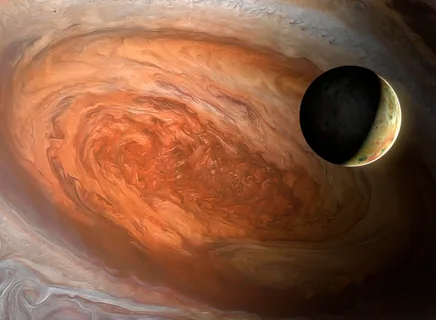
New findings from the Hubble Space Telescope have revealed unexpected changes in Jupiter’s Great Red Spot (GRS), the largest and longest-lasting storm in our solar system. Over a 90-day observation period, scientists found that the enormous storm, which has been raging for at least 190 years, wobbles like gelatin and shifts its shape in ways never before seen.

The Great Red Spot, an anticyclone located in Jupiter’s southern hemisphere, has long fascinated astronomers due to its enormous size—large enough to fit Earth inside—and its incredible longevity. The storm’s winds circulate around a central area of high pressure, and while typical storms are usually unstable, this one has persisted for nearly two centuries. However, the recent observations suggest that the GRS is far from stable, exhibiting noticeable motion and size oscillations.

Unusual Behavior and Observations

Scientists using Hubble’s high-resolution imaging tracked the storm’s behavior between December and March and were surprised to see the vortex “jiggling” as if made of gelatin, while also expanding and contracting. This behavior had never been observed before, leading scientists to reassess their understanding of this iconic storm.

“We didn’t expect to see the size oscillate as well. As far as we know, it’s not been identified before,” said Amy Simon, the lead author of the study and a planetary scientist at NASA’s Goddard Space Flight Center. Simon emphasized that these changes in the storm’s behavior are new insights into how Jupiter’s atmospheric systems operate.

The study, published in The Planetary Science Journal and presented at the American Astronomical Society’s Division for Planetary Sciences meeting, suggests that this oscillation is tied to changes in both the storm’s speed and how it interacts with surrounding jet streams on Jupiter.

A Dynamic Feature of Jupiter’s Atmosphere

The Great Red Spot has always been recognized for its distinctive oval shape and reddish hue, but more recent observations have shown that it can change its dimensions, sometimes appearing skinnier or fatter. Separate research from the James Webb Space Telescope used infrared light to peer into the storm, revealing new details about its internal structure. The Great Red Spot has a cold center, where ammonia and water condense to form thick clouds, and researchers also detected phosphine gas, which may contribute to the spot’s signature red color.

The Outer Planet Atmospheres Legacy (OPAL) program, led by Simon, monitors Jupiter’s atmosphere and weather systems annually. The new study, however, involved more frequent imaging, capturing changes over a matter of months rather than the usual yearly snapshot. This allowed scientists to observe more dynamic features of the storm, including its oscillation and interactions with Jupiter’s jet streams.

The oscillations suggest that the storm’s core brightens when it reaches its largest size and slows down during contractions, pushing against the powerful jet streams to its north and south. This interaction is likened to a “sandwich” effect, where the storm bulges outward when internal pressure increases, much like a stress ball being squeezed.

The Future of the Great Red Spot

Astronomers have noticed that the Great Red Spot has been shrinking over the past decade and predict it may eventually stabilize into a less elongated shape. This could potentially reduce the wobble observed in the latest study. Simon explained that once the storm shrinks to fit more comfortably within its latitude band, the winds around it will likely hold it in place more effectively.

Mike Wong, a planetary scientist at the University of California, Berkeley, compared the storm’s confinement between jet streams to weather patterns on Neptune, where dark spots drift more freely without such boundaries. The study shows that while the Great Red Spot may be shrinking, it continues to exhibit complex behavior, such as changing shape and interacting with other atmospheric systems.

Leigh Fletcher, a professor of planetary science at the University of Leicester, who was not involved in the study, emphasized that long-term observations are essential to understanding the chaotic and variable weather on Jupiter. The findings add important insights into the physics governing the Great Red Spot and other planetary weather systems, which could help astronomers better understand atmospheric dynamics on exoplanets as well.

As Jupiter’s most iconic storm continues to evolve, scientists remain captivated by its mysteries, unraveling the complex meteorological processes that make it both a marvel of our solar system and a valuable object of study.

Greece Pays Tribute to George Baldock in Historic Win Over England at Wembley

In an emotional night for Greek football, Greece secured a famous 2-1 victory over England at Wembley Stadium on Thursday, marking their first-ever win against the English national team. The match was especially poignant as Greece paid tribute to their late teammate, George Baldock, who was tragically found dead in his swimming pool in Athens just days before the game.

The match itself was a thriller, with Vangelis Pavlidis scoring both goals for Greece, including a last-minute winner in the 94th minute. Pavlidis initially gave Greece the lead early in the second half, but Jude Bellingham equalized for England just three minutes from full time. However, Greece refused to settle for a draw, and Pavlidis’ dramatic stoppage-time goal sealed the historic victory.

A Tribute to Baldock

Before kickoff, the Greek players paid tribute to Baldock by posing for their team photo holding his No. 2 shirt. Following Pavlidis’ first goal, the team lifted Baldock’s shirt once again in honor of their fallen teammate, and at the final whistle, they repeated the gesture in front of the traveling Greek fans, who chanted Baldock’s name in unison.

Pavlidis dedicated his opening goal to Baldock, raising his black armband and shouting, “Georgey, this is for you!” into the cameras. Fellow defender Lazaros Rota also expressed his emotions, calling out to Baldock in a heartfelt post-match tribute.

In his post-match interview, Pavlidis emphasized how much Baldock had been in the team’s thoughts in the lead-up to the game. “From yesterday when we heard what happened… it’s been really difficult for us, because George was part of the team and a special guy,” Pavlidis said. “We just said that we have to play for him. The score didn’t matter; we gave everything for him.”

Baldock’s Career and Legacy

Baldock, who was born in England but qualified to represent Greece through his paternal grandmother, earned 12 caps for the Greek national team. He started his professional career at MK Dons and played for clubs including Oxford United, Northampton Town, and Sheffield United, where he starred in the Premier League. In 2024, Baldock signed a three-year contract with Greek club Panathinaikos.

Baldock’s family confirmed that his cause of death was drowning, saying in a statement, “We can confirm that a post-mortem examination has found that George tragically drowned whilst swimming in the pool at his home in Glyfada, Athens.”

Thursday’s match at Wembley was not just a victory for Greece, but a touching tribute to a beloved teammate, whose memory inspired the team to one of their greatest achievements on the international stage.