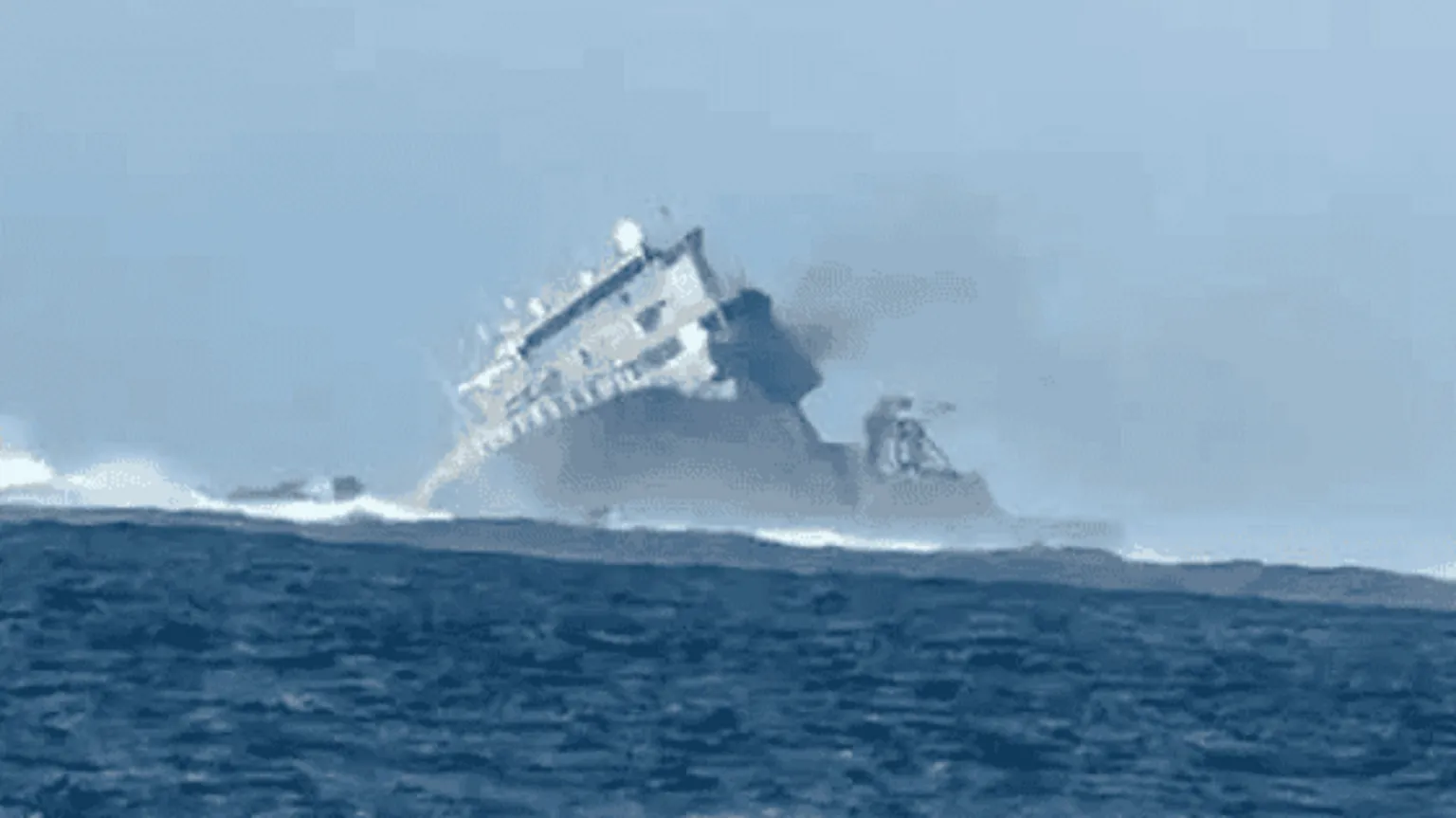
New Zealand Minister Criticises Trolling of Sunk Ship’s Female Captain

New Zealand’s Defence Minister, Judith Collins, has condemned online trolling targeting the female captain of HMNZS Manawanui, which sank near the Samoan island of Upolu. The incident, which occurred while the ship was surveying a reef, resulted in the evacuation of all 75 personnel on board, who were rescued early Sunday morning.

While investigating the cause of the incident, Collins highlighted that the gender of the ship’s captain, British-born Commander Yvonne Gray, is not to blame for the mishap. “The one thing that we already know did not cause it is the gender of the ship’s captain,” she stated, emphasizing the need for decency and respect amidst the backlash.

Commander Gray, who previously served in the UK’s Royal Navy, expressed her distress over the incident, describing it as her “very worst imagining” becoming a reality. However, she praised her crew for their commitment and courage during the emergency response.

Collins voiced her outrage over the online criticisms, referring to those making disparaging comments as “armchair admirals.” She noted that these individuals, who have never faced life-and-death decisions, should refrain from posting such “vile” comments. She also mentioned an increase in abuse directed at women in uniform in New Zealand, stating, “This is outrageous behaviour, and New Zealand is not known for this. We are better than it.”

The sinking of HMNZS Manawanui marks the first loss of a New Zealand naval ship to the sea since World War II. Investigations are ongoing to determine the cause of the grounding and the potential environmental impacts. Collins previously indicated that the area had not been surveyed since 1987.

Samoa’s Marine Pollution Advisory Committee reported that the ship was leaking oil from three locations but noted no oil had washed ashore. Concerns about the potential environmental effects remain, particularly for local wildlife. A resident expressed worries about the impact on the area’s green sea turtles and coconut crabs, highlighting the ecological significance of the region.

In response to the incident, New Zealand’s Defence Force has mobilized a team to address possible contamination and debris removal along local beaches. Additionally, divers from the Samoan Ministry of Resources and Natural Environment are assessing damage to the reef where the ship capsized.

While New Zealand has a strong history of gender equality and was the first nation to grant women the right to vote, Collins’ comments underscore the ongoing discussions around misogyny, particularly in the context of leadership roles. Approximately 20% of New Zealand’s defense personnel are women, reflecting a commitment to inclusivity within the armed forces.
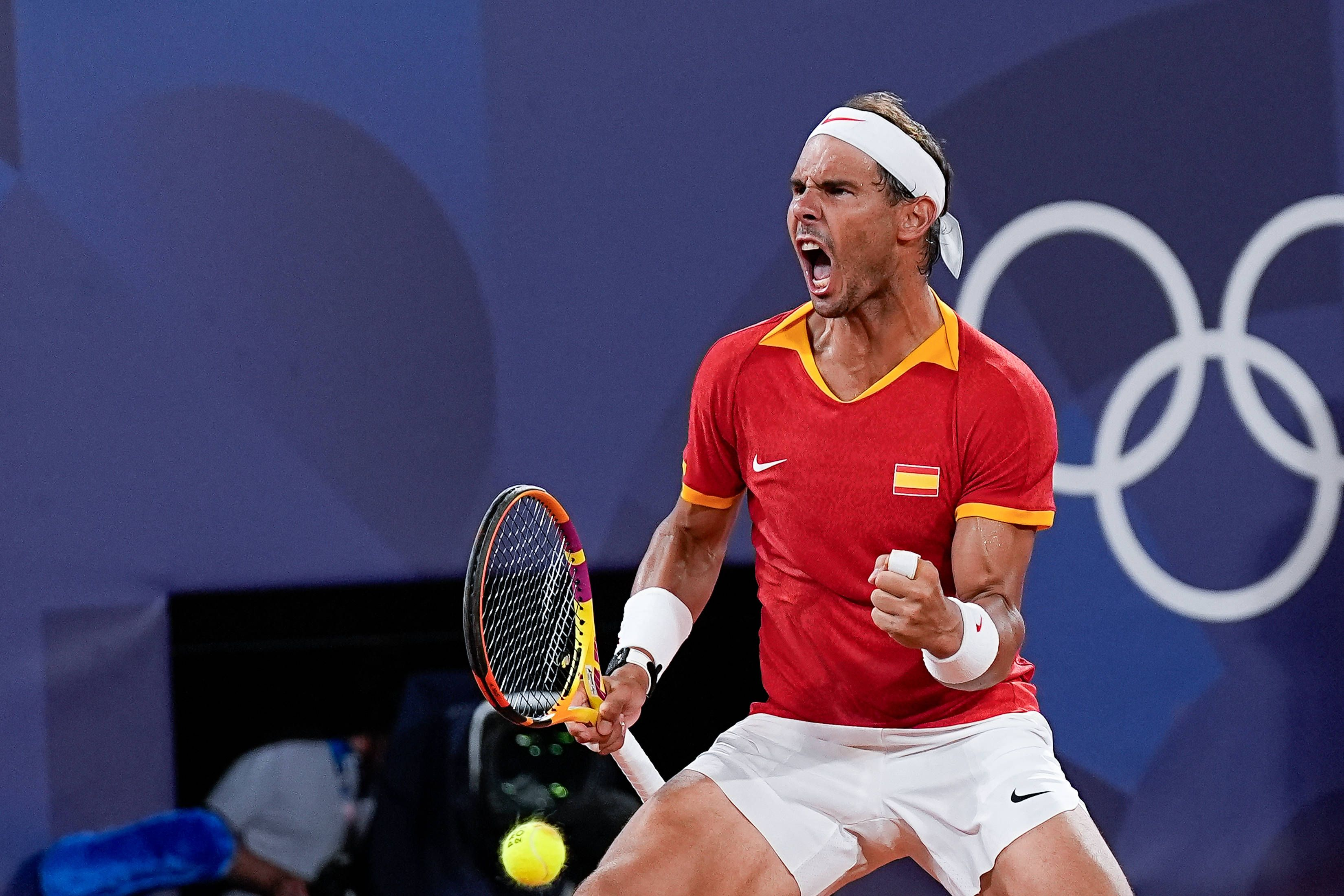
 

Tennis Legend Rafael Nadal to Retire After Davis Cup Finals

Rafael Nadal, the 22-time Grand Slam champion and one of the greatest tennis players of all time, will retire from professional tennis at the end of this season. The 38-year-old Spaniard has struggled with injuries in recent years and will make his final appearance at the Davis Cup Finals in Malaga next month.

In a video statement released on Thursday, Nadal acknowledged the challenges of the past two seasons, saying, “It has been some difficult years, the last two especially. I don’t think I have been able to play without limitations.” His retirement marks the end of an illustrious career that has seen him achieve numerous records and leave an indelible mark on the sport.

Known as the “King of Clay,” Nadal won the French Open a record 14 times, an accomplishment unmatched in tennis history. His dominance at Roland Garros, with 112 victories in 116 matches, cemented his legacy as one of the sport’s most formidable competitors. In total, Nadal has claimed 22 Grand Slam titles, making him the second-most successful men’s singles player, behind only his long-time rival Novak Djokovic.

Why Now?

Nadal’s decision to retire comes after years of battling injuries. Although he had previously indicated he might retire at the end of the 2024 season, his struggles to return to top form after a series of injuries have led him to conclude that now is the right time to step away. His return earlier this year was marred by a thigh injury, causing him to miss the Australian Open. After competing in just a few tournaments, including the French Open, Nadal ultimately decided to call time on his storied career.

From Mallorca Kid to Tennis Legend

Nadal’s journey from a young boy in Mallorca, where he was introduced to tennis by his uncle Toni, to becoming one of the sport’s greatest icons is a testament to his resilience and talent. Turning professional at 15, Nadal helped Spain win the Davis Cup in 2004, defeating world number two Andy Roddick at just 18. A year later, he began his reign at the French Open, capturing his first of 14 titles there.

His rivalry with Roger Federer is legendary, highlighted by their epic five-set 2008 Wimbledon final, considered one of the greatest matches in tennis history. Nadal’s ability to adapt his game beyond clay courts saw him win titles across all surfaces, including two Australian Opens, two Wimbledons, and four US Opens. In 2010, he completed the career Grand Slam, a feat only a few have achieved.

Despite numerous injuries affecting his knees, back, wrists, and more, Nadal’s longevity and success are remarkable. His final major victory came at the French Open in 2022, just days after his 36th birthday, fittingly on the surface where he achieved his greatest triumphs.

Legacy and Reaction

The tennis world has been paying tribute to Nadal, with his retirement sparking reactions from players and fans alike. Jannik Sinner, the current men’s world number one, called it “tough news for the tennis world,” while Coco Gauff praised his “greatness and work ethic.” Long-time rival Roger Federer expressed his admiration for Nadal, saying, “What a career, Rafa! I always hoped this day would never come. Thank you for the unforgettable memories.”

Nadal will bow out representing Spain one last time at the Davis Cup Finals, a fitting farewell for a player who has been instrumental in helping his country claim four Davis Cup titles.

Rafa’s Roll of Honour:

  • 22 Grand Slam singles titles
  • 14 French Open titles (2005-2008, 2010-2014, 2017-2022)
  • 2 Wimbledon titles (2008, 2010)
  • 2 Australian Open titles (2009, 2022)
  • 4 US Open titles (2010, 2013, 2017, 2019)
  • 2 Olympic gold medals (2008 singles, 2016 doubles)
  • 4 Davis Cup titles (2004, 2009, 2011, 2019)
  • 92 ATP Tour titles
  • 209 weeks as world number one


Why Pennsylvania Could Hold the Keys to the White House

Pennsylvania’s importance in the U.S. presidential election has never been more crucial. With its 19 electoral votes, it stands as a pivotal battleground state that could very well determine the next occupant of the White House. According to political analyst Nate Silver, the candidate who wins Pennsylvania has a 90% chance of winning the presidency. This has led both the Kamala Harris and Donald Trump campaigns to focus heavily on securing a win in this state, as it could tip the balance in the race for the highest office in the U.S.

Pennsylvania is often referred to as the “Keystone State,” not just because of its geographical location but also for its symbolic importance in elections. If Harris manages to win Pennsylvania alongside Michigan, Wisconsin, and one congressional district in Nebraska, she is likely to secure the presidency. On the other hand, if Trump flips Pennsylvania along with North Carolina and Georgia, he could find his way back to the White House.

A Swing State That Mirrors America

What makes Pennsylvania so critical is that it serves as a microcosm of the broader United States. With a diverse economy that includes agriculture, energy, and new industries, as well as a population that is predominantly white but growing in diversity, it reflects the national landscape. Urban areas like Philadelphia and Pittsburgh lean heavily Democratic, while vast rural regions are strongholds for Republicans. The once-reliably conservative suburbs are now trending left, creating a political environment where the balance is constantly shifting.

In recent elections, Pennsylvania has remained fiercely competitive. Joe Biden won the state by just 80,000 votes in 2020, while Trump took it by about 40,000 in 2016. Only once in the last 40 years has a candidate won the state by double digits—Barack Obama in 2008. This ongoing electoral tightrope walk makes Pennsylvania a top priority for both campaigns.

Campaign Strategies for the Keystone State

Both Harris and Trump have been dedicating significant resources to Pennsylvania, spending more on advertising there than in any other swing state. Harris introduced her running mate, Tim Walz, at a rally in Philadelphia, and has spent considerable time campaigning in Pittsburgh, a key city in her electoral strategy. Trump, meanwhile, has held large rallies in Butler and Scranton, targeting areas where he enjoys significant support.

For Harris, the key to victory lies in dominating the urban vote in Philadelphia and Pittsburgh and winning the suburbs by enough to counter Trump’s dominance in rural areas. A big part of her strategy is appealing to moderate Republicans, especially the 160,000 voters who supported Nikki Haley in the state’s Republican primary, held after Trump had already secured the nomination. To this end, Harris is positioning herself as a centrist candidate, seeking to dispel any notions of radical leftism. Craig Snyder, a former Republican staffer, leads the “Haley Voters for Harris” initiative, which aims to win over moderate Republican voters.

Trump’s strategy revolves around maximizing turnout in the rural and conservative parts of Pennsylvania. His campaign has focused on registering new voters and mobilizing those who haven’t participated in past elections. Although Democrats still outnumber Republicans in the state, the margin has narrowed to just a few hundred thousand, the smallest gap since 1998. The Trump campaign also aims to peel away support from traditional Democratic voters, particularly among blue-collar union workers and young Black men, who have shown growing support for Trump in national polls.

The High Stakes of Pennsylvania

Both campaigns understand that winning Pennsylvania is critical. Trump’s team is banking on their grassroots efforts to turn out rural and suburban conservatives, while Harris is hoping to maintain strong support in urban areas and sway moderate Republicans. With the race in the state nearly deadlocked, the outcome in Pennsylvania could ultimately determine who will be sworn in as president in January.