
Baidu’s Robotaxi Unit Eyes Global Expansion Amid Rising Competition

Baidu’s autonomous driving division, Apollo Go, is reportedly exploring potential expansion into international markets in the near future. According to an inside source, discussions with various firms are underway, although specifics on timelines or targeted regions have not yet been revealed.

Baidu is currently one of China’s leading operators in the robotaxi sector. The company has made significant strides in autonomous driving technology and has been allowed by local regulators in cities like Beijing and Wuhan to run commercial self-driving taxi services. Wuhan stands out as Apollo Go’s largest area of operation, where robotaxis have been in use beyond just testing phases.

The move toward global expansion comes amid increasing competition in the robotaxi space, particularly as Tesla gears up for its much-anticipated robotaxi event this Thursday. Another Chinese player in the field, WeRide, recently announced a partnership to integrate its autonomous vehicles with Uber’s ride-hailing platform in Abu Dhabi. However, that collaboration is not expected to extend to the U.S. or Chinese markets.

In July, electric vehicle giant BYD also teamed up with Uber to work on developing “autonomous-capable vehicles” for Uber’s platform, though no further details have been disclosed regarding this partnership.

In China, Baidu’s Apollo Go, along with other companies like Pony.ai, heavily subsidizes robotaxi rides to drive user adoption. While regulations currently mandate a human attendant to be present inside some of the autonomous vehicles for safety reasons, Baidu continues to push forward with its self-driving services. By late July, Apollo Go had reportedly completed over 7 million robotaxi rides.

On a separate note, Baidu announced changes to its executive leadership on Tuesday. Rong Luo, who was serving as the company’s Chief Financial Officer (CFO), will step down from that role to take on the position of Executive Vice President overseeing Baidu’s mobile ecosystem unit. Junjie He, the former head of the mobile division, will take over as interim CFO. The company characterized these shifts as part of a “management rotation.”
 

Left and Right Target Weak French Government as ‘Austerity’ Budget Looms

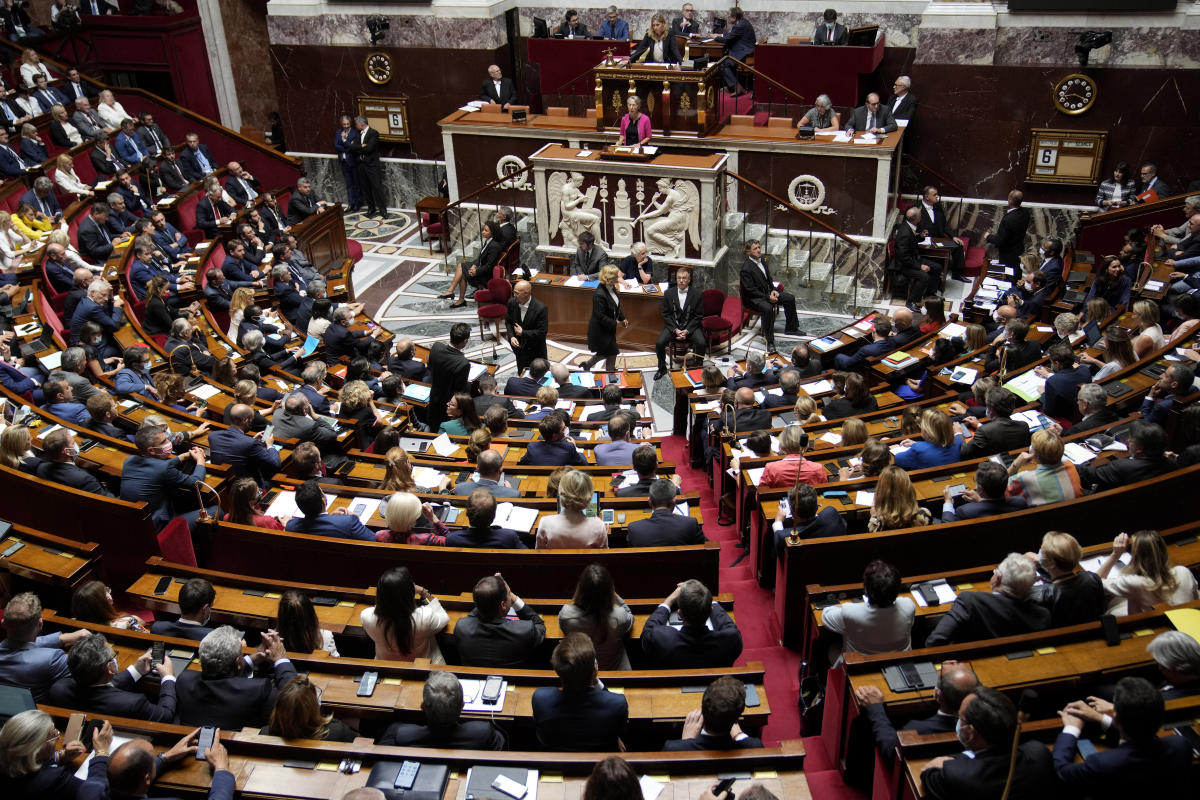
France’s fragile government, led by newly appointed Prime Minister Michel Barnier, is preparing to present its 2025 budget amidst mounting fiscal and political challenges. The upcoming budget is widely viewed as an “austerity” plan, designed to tackle the country’s fiscal crisis through tax increases and spending cuts. These measures are expected to ignite further tension among opposition parties on both the left and right, as well as among centrist supporters who initially helped Barnier rise to power.

In an address to the National Assembly on October 1, Barnier hinted at the tough road ahead. He outlined plans for higher taxes on large corporations and deep spending cuts, including a six-month delay in pension indexation. These moves are part of a broader strategy to slash the national deficit by €60 billion ($65.9 billion) in 2025, aiming to lower the deficit to 5% of GDP, down from 6.1% this year.

The budget, to be introduced by Finance Minister Antoine Armand, will include €40 billion in cuts to central and local government spending, and €20 billion from higher taxes on wealthier individuals and large businesses. France’s excessive deficit has already drawn scrutiny from the European Commission, and the country remains under pressure to meet the EU’s 3% deficit-to-GDP target by 2027.

Barnier’s government, only recently formed after months of political turmoil, faces substantial internal and external threats. His appointment followed a divisive snap election, where the far-right National Rally (RN) and left-wing New Front Populaire (NFP) secured significant victories in the first and second rounds of voting, respectively. After much political wrangling, President Emmanuel Macron chose Barnier, a conservative, as prime minister, sparking outrage from left-wing parties who accused Macron of stealing the election from them.

The political landscape remains volatile. The left-wing alliance recently filed a no-confidence motion against Barnier, though it failed to pass. Meanwhile, the National Rally has adopted a “wait-and-see” stance, closely watching Barnier’s every move. Marine Le Pen, leader of the far-right party, has warned that Barnier is “under surveillance.”

Critics argue that the proposed austerity measures could further strain France’s economic recovery. Andrew Kenningham, chief Europe economist at Capital Economics, compared the budget’s fiscal tightening to austerity measures seen during the eurozone crisis. He noted that France’s GDP growth forecast of 1.1% may be overly optimistic given the scale of proposed budget cuts.

Political analyst Carsten Nickel of Teneo risk consultancy warned that Barnier’s government could struggle to secure enough support for the budget. He suggested that Barnier might resort to Article 49.3 of the constitution, allowing the budget to pass without a vote unless the National Assembly files another no-confidence motion. Macron previously used this tool to push through controversial pension reforms, but the government’s position is now more precarious.

Marine Le Pen, with her eye on the 2027 presidential race, may avoid aligning with efforts to bring down the government if it risks being associated with political instability. Meanwhile, the left-wing bloc faces its own dilemma, as cooperating with Le Pen to topple Barnier would be seen as contradicting their mission to defend the republic from the far-right.

As France braces for its first true austerity budget in years, the question remains whether Barnier can maintain the delicate balance between economic recovery and political survival in an increasingly fractured government.


Rio Tinto to Acquire Arcadium Lithium in $6.7 Billion Deal

Mining giant Rio Tinto, the world’s second-largest mining company, has announced plans to acquire U.S.-based lithium producer Arcadium in a $6.7 billion deal. This acquisition is set to position Rio Tinto as one of the leading global suppliers of lithium, behind industry giants Albemarle and SQM.

The proposed all-cash transaction values Arcadium at $5.85 per share, marking a 90% premium to its closing price of $3.08 per share on October 4. With Arcadium’s current market valuation standing at $3.31 billion, according to LSEG data, this acquisition represents a significant leap in Rio Tinto’s portfolio, underscoring its commitment to expanding its role in the energy transition.

Rio Tinto CEO Jakob Stausholm hailed the acquisition as a key milestone for the company, integrating lithium production with its well-established aluminum and copper operations. “This is a significant step forward in Rio Tinto’s long-term strategy, creating a world-class lithium business alongside our leading aluminum and copper operations to supply materials needed for the energy transition,” Stausholm stated.

The deal follows earlier speculation about discussions between the two companies and will further strengthen Rio Tinto’s position in the growing market for lithium, a critical component in electric vehicle batteries and other renewable energy technologies.