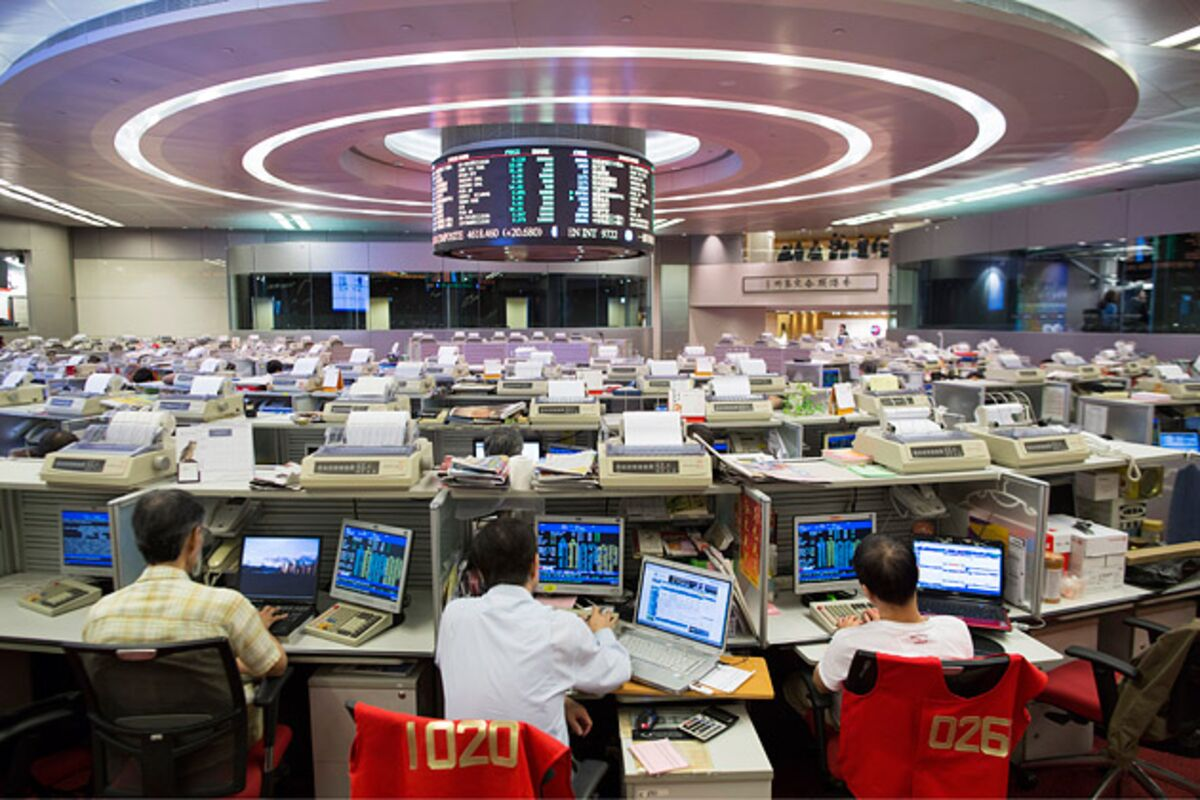
Hong Kong Stocks Surge Over 5% for Sixth Consecutive Day Amid Stimulus Optimism

Hong Kong’s Hang Seng index surged more than 5% on Wednesday, reaching a 22-month high as optimism regarding Beijing’s latest stimulus measures continued to drive market momentum. This marks the sixth consecutive day of gains, largely fueled by significant advancements in the property sector.

Returning from a public holiday on Tuesday, traders witnessed property developers like China Vanke, Longfor Group, and Logan Group skyrocketing by over 40%, 32%, and 31%, respectively. This rally came after major cities in mainland China implemented easing measures aimed at boosting homebuyer confidence. Additionally, Chinese tech giants including Meituan, Baidu, and JD.com saw increases of over 10%.

With mainland Chinese markets closed for the Golden Week holiday, traders reflected on a strong Monday where Chinese stocks enjoyed their best performance in 16 years, following the announcement of various stimulus initiatives from Beijing. These measures included interest rate cuts, reduced reserve requirements for banks, and increased liquidity for investors.

However, James Sullivan of JPMorgan expressed caution regarding the sustainability of this market rally, pointing out that current stimulus measures seem to focus more on supply and investment rather than directly boosting consumer demand. “The million-dollar question in China right now is, does [the stimulus] only flow into the supply side of the equation, or does it ultimately flow through into consumer demand?” he remarked.

Mixed Performance Across Asia-Pacific Markets Despite Hong Kong’s rally, the broader Asia-Pacific markets exhibited mixed results on Wednesday. Australia’s S&P/ASX 200 dipped 0.13% to close at 8,198.2, while South Korea’s Kospi fell 1.22% to 2,561.69. Japan’s Nikkei 225 decreased by 2.18% to end at 37,808.76, with the Topix dropping 1.44% to 2,651.96.

The recent political developments in Japan, with Shigeru Ishiba taking over as Prime Minister, may influence the Bank of Japan’s monetary policies. Although Ishiba’s leadership might provide room for further interest rate hikes, newly appointed economy minister Ryosei Akazawa emphasized the need for cautious evaluation before making any adjustments.

South Korea Economic Data and Concerns In South Korea, traders were digesting consumer inflation data that indicated a rise of 1.6% in September, which was lower than economists’ expectations of 1.9%. Additionally, factory activity in South Korea contracted at its fastest pace in 15 months in September, highlighting concerns over slowing overseas demand.

Middle East Tensions Impacting Global Markets In U.S. markets, the Dow Jones Industrial Average fell by more than 173 points, while the S&P 500 and Nasdaq Composite declined by 0.93% and 1.53%, respectively, driven by rising tensions in the Middle East. Iran’s missile strikes on Israel and Israel’s ground operations in Lebanon have escalated conflict in the region.

Israeli Prime Minister Benjamin Netanyahu vowed retaliation, asserting that Iran would pay for its actions. Economist Stephen Roach warned that the ongoing conflict could lead to increased oil prices and inflation, prompting the U.S. Federal Reserve to reconsider its accommodative monetary policy amidst rising unemployment.

Investors are closely watching for the upcoming September jobs report, which will provide further insight into the U.S. labor market amid these turbulent conditions.
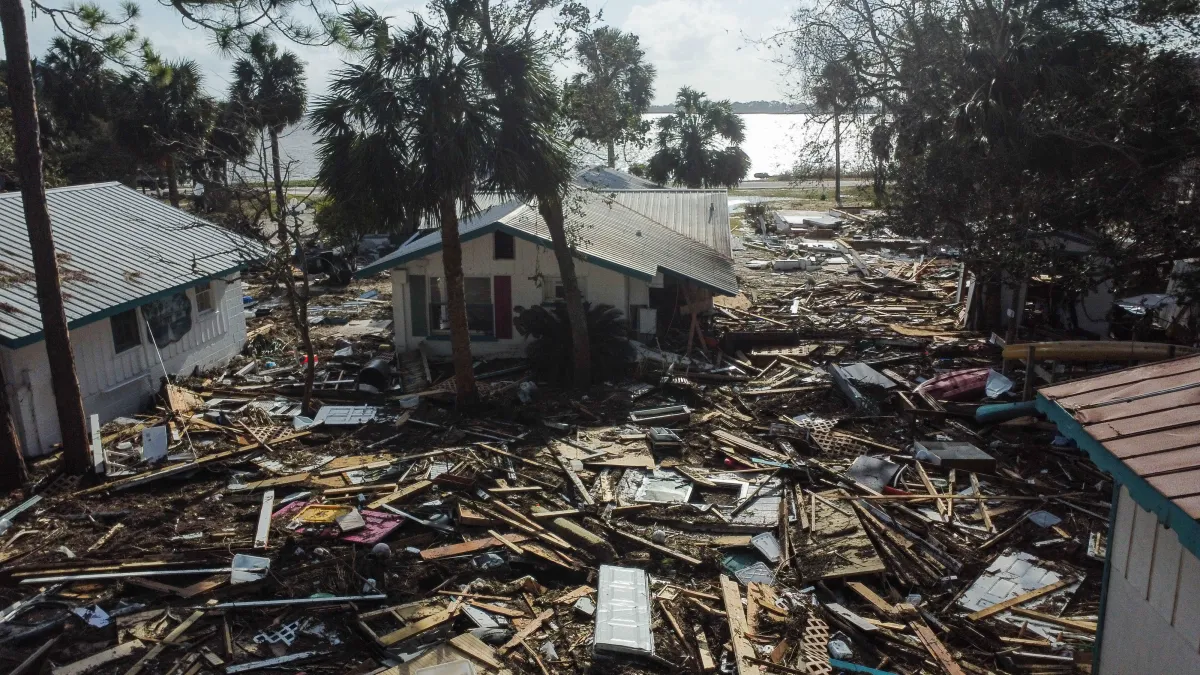

 

Rescuers Continue Search for Survivors in North Carolina Mountains After Devastating Hurricane Helene

Rescue operations intensified on Tuesday as teams combed the mountainous regions of western North Carolina, desperately searching for survivors cut off by the destruction caused by Hurricane Helene. The storm, one of historic magnitude, has left at least 162 people dead across several southeastern U.S. states, with the toll expected to rise as rescue teams gain access to isolated areas.

North Carolina has been hit hardest, particularly Buncombe County, where the death toll rose to 57 on Tuesday. Asheville and the surrounding mountainous regions bore the brunt of the hurricane, as washed-out roads, collapsed bridges, and downed power lines have left many communities inaccessible.

U.S. Homeland Security Secretary Alejandro Mayorkas described the recovery as a “multibillion-dollar undertaking” that could take years. President Joe Biden pledged federal support to accelerate the recovery, acknowledging the urgency of the situation as hundreds remain unaccounted for.

Search Efforts and Tragic Losses The North Carolina National Guard has already rescued over 500 people, using helicopters to ferry in supplies and evacuate survivors. One of the many tragic stories to emerge was that of David Carver, 58, who was killed in a mudslide while trying to protect his home in Linville Falls. Despite a heroic 11-hour rescue attempt by his lifelong friend Ken Fisher, Carver succumbed to his injuries in the hospital.

A “5,000-Year Event” Meteorologists have called the event a rare “5,000-year storm.” Tennessee climatologist Andrew Joyner explained that the combination of a pre-existing storm and Hurricane Helene created the perfect conditions for unprecedented precipitation in the Appalachian mountains, devastating communities like Swannanoa and Black Mountain.

Challenges Ahead Power outages remain widespread, with 420,000 homes in North Carolina still without electricity, down from a peak of 1 million. Emergency services are warning that recovery will be long and arduous, with many areas still without access to clean drinking water and other essential services.


Walz and Vance Clash Politely in Policy-Focused Vice Presidential Debate

In a relatively civil vice presidential debate, Democrat Tim Walz and Republican JD Vance sparred over key policy issues on Tuesday, leaving behind the inflammatory rhetoric that has marked much of the election season. Although both candidates have been vocal critics of each other on the campaign trail, they directed much of their criticism at the leading figures of their respective tickets—Democratic Vice President Kamala Harris and former Republican President Donald Trump.

Tensions flared during the closing moments when Vance, who has previously expressed doubts about the legitimacy of the 2020 election, dodged a question on whether he would challenge the results of this year’s election if Trump were to lose. Walz, Minnesota’s governor, accused Vance of avoiding accountability, tying Trump’s false claims of voter fraud to the January 6, 2021, attack on the U.S. Capitol.

Focused Policy Debate Throughout the debate, both candidates covered a wide range of issues, including the escalating Middle East crisis, inflation, immigration, taxes, abortion, climate change, and the economy. Vance, a U.S. senator from Ohio, used the opportunity to question Vice President Harris’s track record on economic issues, while Walz attacked Trump’s foreign policy and leadership, accusing him of mishandling immigration reform during his presidency.

The debate also touched on the growing conflict in the Middle East, with Vance suggesting that Israel should have the autonomy to decide on preemptive strikes against Iran, while Walz criticized Trump’s erratic approach to international affairs.

Moderated Tone, Underlying Tensions Despite the sharp contrasts in their policy positions, both candidates maintained a cordial tone, embodying what has been described as “Midwestern nice.” Vance was careful in his criticism of Harris but focused on attacking her handling of inflation and immigration, suggesting that she should have already implemented solutions rather than waiting for another term. Walz, meanwhile, painted Trump as an unpredictable leader who favored billionaires and failed to deliver on his campaign promises, particularly in regard to immigration.

Political Fallout Vice presidential debates rarely sway elections, but with the race as close as it is, even small shifts in voter opinion could prove decisive. Both candidates aimed to solidify their support while attempting to win over undecided voters. While Vance defended Trump’s record, he was pressed on his own previous criticisms of the former president, admitting he was wrong about Trump in the past. Walz, in turn, faced questions about past claims that he was present during the 1989 Tiananmen Square protests, admitting he had misspoken.

Polls have shown mixed feelings about both vice-presidential candidates. Vance, despite being a best-selling author, is viewed unfavorably by 51% of registered voters. Walz, a former high school teacher, fares slightly better, but the tight race remains unpredictable, especially in the swing states.