
Midday Stock Movers: Tapestry, Capri, L3Harris Technologies, and More

Tapestry, Capri
Tapestry’s shares surged over 14%, while Capri’s stock dropped 47%. This volatility followed a court ruling in favor of the FTC’s move to block Tapestry’s acquisition of Capri, resulting in a major impact on both stocks.

L3Harris Technologies
Shares of L3Harris Technologies climbed 3.5% as the defense contractor reported stronger-than-expected earnings for the third quarter. The company also raised its adjusted earnings forecast to a range of $12.95 to $13.15 per share, up from a prior lower-end estimate of $12.85. Analysts had projected $13.04 per share.

Colgate-Palmolive
Despite surpassing expectations with adjusted earnings of 91 cents per share and revenue of $5.03 billion, Colgate-Palmolive shares declined more than 3%. Analysts had predicted slightly lower earnings of 89 cents per share and $5 billion in revenue.

Western Digital
Western Digital rose 7% following a favorable first-quarter earnings report, posting $1.78 in adjusted earnings per share, above the expected $1.72. Revenue came in at $4.1 billion, marginally below the forecasted $4.12 billion.

Digital Realty Trust
Digital Realty Trust’s stock jumped 11% after it announced record-breaking lease bookings in the third quarter. The company also adjusted its full-year guidance to a range of $6.65 to $6.75 per share, close to analyst projections of $6.69.

Coursera
Shares of Coursera dropped around 8% due to weak demand and retention trends impacting its revenue forecast, despite exceeding third-quarter expectations. The online education company expects fourth-quarter revenue between $174 million and $178 million, aligning with analyst forecasts.

ResMed
ResMed saw a 7% gain after posting strong quarterly results, with adjusted earnings of $2.20 per share and $1.22 billion in revenue, surpassing analysts’ estimates of $2.05 per share and $1.19 billion.

HCA Healthcare
HCA Healthcare’s stock fell over 9% as its third-quarter revenue of $17.49 billion narrowly missed analyst projections of $17.54 billion, and its adjusted EBITDA also fell slightly short of expectations.

Booz Allen Hamilton
Booz Allen Hamilton shares rose nearly 10% as the company reported better-than-expected earnings, with adjusted earnings per share of $1.81 on revenue of $3.15 billion, above analyst estimates of $1.47 per share and $2.97 billion in revenue. The company also increased its guidance for the full year.
WeRide’s Shares Jump 19% in Nasdaq Debut Amid Renewed Investor Appetite for Chinese Tech Stocks

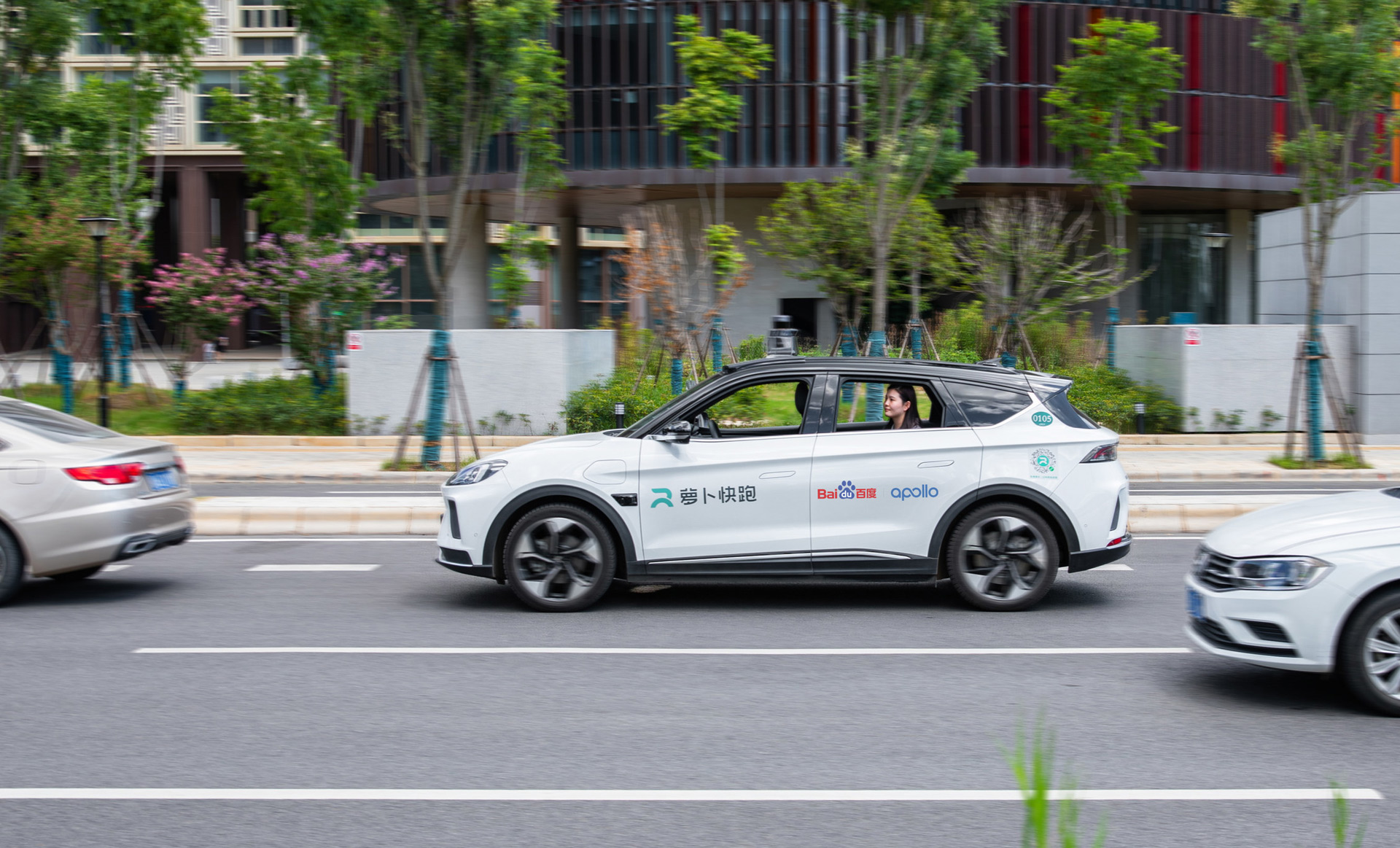
Chinese autonomous driving startup WeRide saw its shares surge 19% in its Nasdaq debut on Friday, following a $440.5 million raise through its initial public offering (IPO) and private placement. This marked a positive market entry for Chinese firms after an extended period of regulatory tensions between China and the United States. The success is seen as a signal of growing U.S. investor interest in Chinese companies, particularly in high-demand tech sectors.

WeRide’s IPO raised approximately $120 million by pricing 7.74 million American depositary shares at $15.50 each, while an additional $320.5 million came from a concurrent private placement, positioning the company’s valuation over $4 billion. WeRide is a prominent player in autonomous driving, with projects spanning taxis, vans, buses, and even street sweepers across 30 cities in seven countries.

ROBOTAXI SECTOR HURDLES

Industry analysts caution that while WeRide’s debut offers optimism, achieving viable robotaxi services faces ongoing challenges in safety, reliability, and adaptability to complex real-world environments. In China, where regulatory approvals have been more accommodating than in the U.S., WeRide and other autonomous vehicle companies are advancing trials and commercial pilots more rapidly. However, the Biden administration has proposed restrictions on Chinese technology within U.S. autonomous vehicles, citing security concerns, which may impact future expansions of Chinese autonomous firms in the U.S.

As the autonomous driving sector advances, firms like Tesla, which recently showcased its own robotaxi and robovan, and Pony AI, which filed for its own Nasdaq listing, watch WeRide’s performance closely as a benchmark for the industry’s potential and investor interest.

Nvidia Surpasses Apple to Become World’s Most Valuable Company Amid AI Chip Demand Surge

Nvidia briefly overtook Apple as the world’s most valuable company on Friday, fueled by a record-setting rally in its stock, largely driven by demand for its AI-focused chips. Nvidia’s market value briefly hit $3.53 trillion, slightly outpacing Apple’s $3.52 trillion before settling near Apple’s valuation. This is the second time this year that Nvidia has reached the top spot, previously contending with Apple and Microsoft for global market cap dominance.

The Silicon Valley chip giant’s stock has surged about 18% in October alone, spurred in part by OpenAI’s recent $6.6 billion funding announcement, which renewed optimism for AI technology. Nvidia, originally known for gaming processors, is now the preferred supplier of AI chips in a market led by Microsoft, Alphabet, Meta, and other tech titans. This week, further gains were prompted by Western Digital’s strong quarterly performance, indicating strong demand from data centers.

Amid these successes, Apple faces lukewarm iPhone sales, with a slight dip in China as Huawei’s sales grew 42%. Apple’s Q3 revenue is projected to rise 5.5% year over year to $94.5 billion, compared to Nvidia’s anticipated 82% jump to $32.9 billion, reflecting the rapid growth in AI adoption. Nvidia’s shares, now 190% higher this year, have gained significant traction in the options market, with bullish investors banking on sustained AI demand.