Discovery of Norman-Era Silver Coin Hoard Becomes Britain’s Most Valuable Treasure

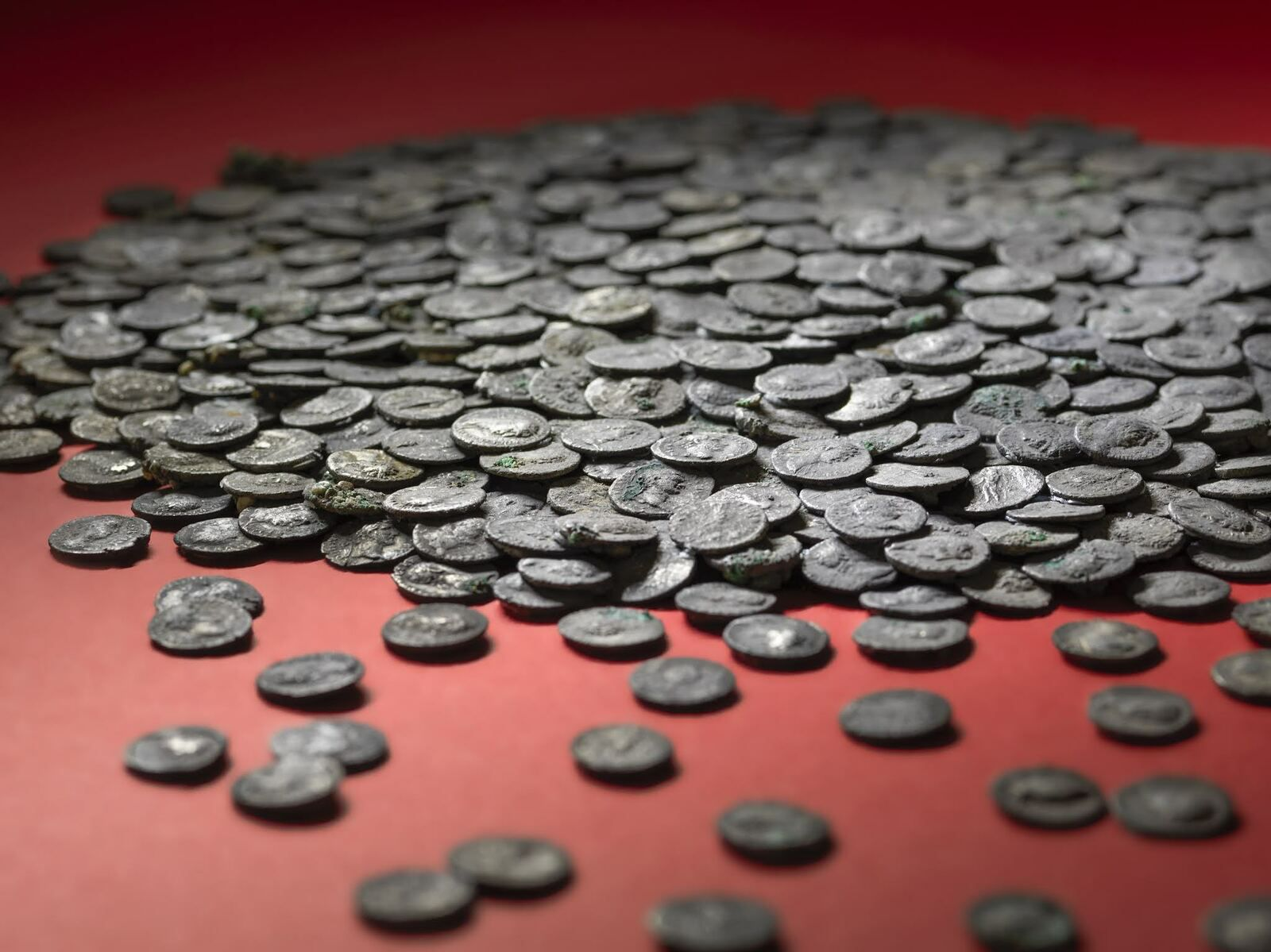
A remarkable hoard of silver coins from the Norman era, discovered five years ago in southwestern England, has been officially recognized as Britain’s most valuable treasure find, recently purchased for £4.3 million ($5.6 million) by a local heritage trust.

Discovery Details

The treasure, consisting of 2,584 silver pennies, was unearthed in the Chew Valley, approximately 11 miles south of Bristol, by a group of seven metal detectorists. As part of the sale, they will receive half of the proceeds, while the landowner where the coins were found will collect the remaining half.

Historical Context

According to the South West Heritage Trust, which acquired the hoard, the coins date back to 1066-1068, a pivotal period during the Norman Conquest, marking the last successful invasion of England. The hoard offers a glimpse into the turmoil of this era, as England faced a significant power shift.

The oldest coin in the collection features King Edward the Confessor, who died childless in January 1066, igniting a succession crisis among three claimants: Harold Godwinson, Earl of Wessex; Harald Hardrada, King of Norway; and William, Duke of Normandy.

Upon Edward’s death, he named Harold Godwinson as his successor. However, Harold II’s reign was short-lived as he faced challenges from both Harald and William, ultimately being defeated at the Battle of Hastings in October 1066.

Significance of the Hoard

The coin hoard reflects the tumultuous political landscape of the time, with about half of the coins featuring Harold II and the other half depicting William I (William the Conqueror).

Amal Khreisheh, curator of archaeology at the South West Heritage Trust, emphasized the importance of the hoard:

“It comes from a turning point in English history and encapsulates the change from Saxon to Norman rule.”

Khreisheh explained that the coins were likely buried around 1067-1068 on an estate belonging to Giso, the Bishop of Wells, during a time of rebellion against William in the South West. She noted:

“In 1068, the people of Exeter rebelled against William, and at that time, Harold’s sons returned from exile in Ireland, launching attacks around the River Avon and into Somerset and the Chew Valley.”

Rarity of the Find

The discovery of such ancient coins is exceedingly rare; this hoard contains twice as many coins from Harold II’s reign than have been found in previous discoveries.

Public Display

Following their acquisition, the coins will be displayed at the British Museum in London starting November 26, before returning to museums in southwestern England. This exhibition will allow the public to appreciate a tangible piece of English history that has remained buried for nearly a millennium.
Giant Meteorite Impact 3.2 Billion Years Ago Boosted Early Life on Earth

A colossal meteorite impact, roughly the size of four Mount Everests, struck Earth over 3 billion years ago, potentially serving as a “fertilizer bomb” that nourished the planet’s earliest life forms. This insight comes from new research led by Nadja Drabon, an assistant professor of Earth and planetary sciences at Harvard University, and published in the Proceedings of the National Academy of Sciences.

Impact Details

Typically, large asteroid impacts are associated with mass extinctions, such as the one that led to the demise of the dinosaurs 66 million years ago. However, the S2 meteorite, estimated to have 50 to 200 times the mass of the Chicxulub asteroid, collided with Earth 3.26 billion years ago, at a time when the planet was predominantly covered by oceans and inhabited by single-celled organisms.

Drabon notes that before the S2 impact, the oceans were “biological deserts,” lacking nutrients necessary for life. The collision led to significant geological changes, enriching the environment with essential nutrients.

Geological Exploration

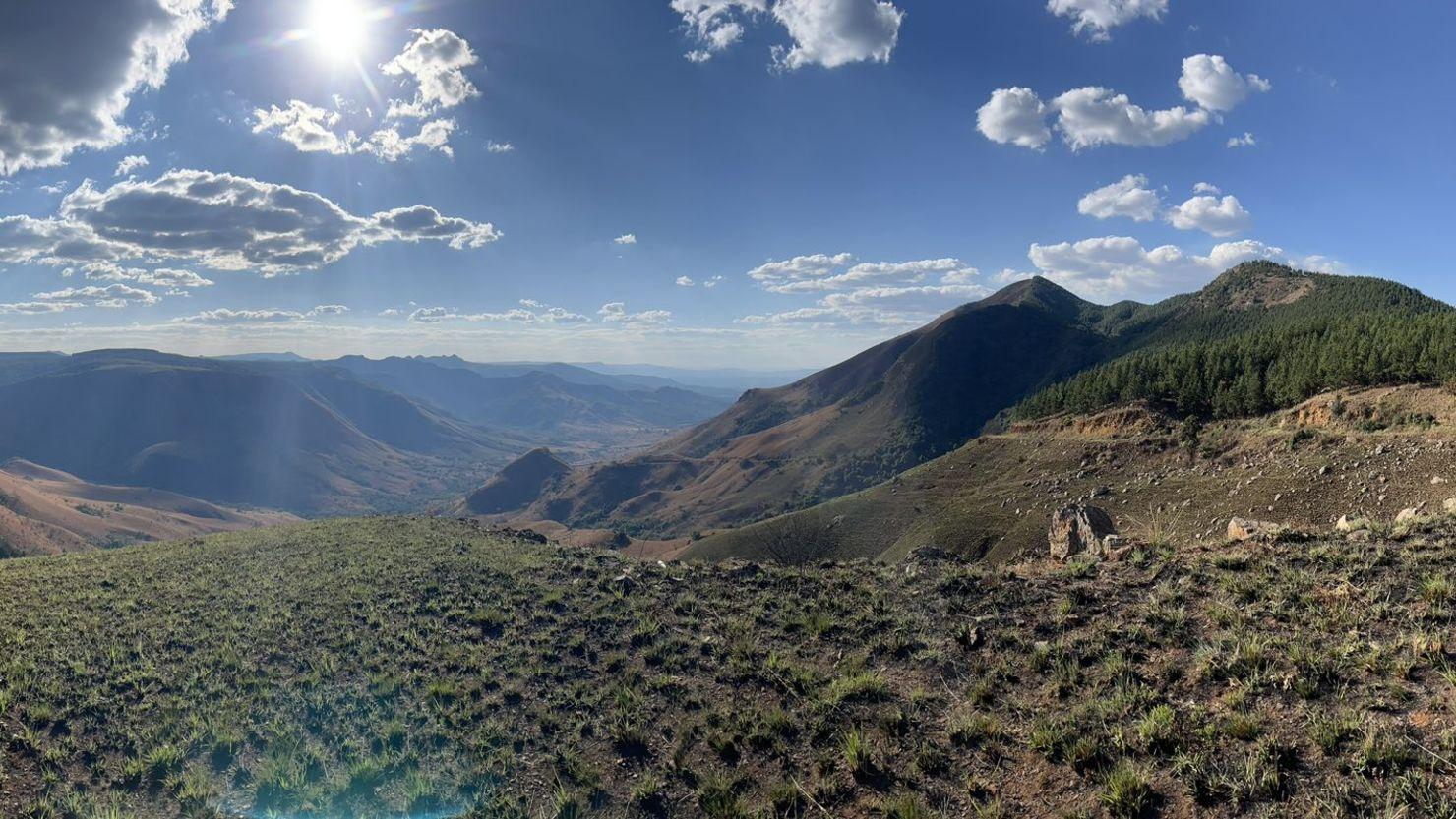
Drabon and her team studied the Barberton Makhonjwa Mountains in South Africa, a region rich in geological evidence of ancient impact events. They focused on identifying tiny impact particles known as spherules, which formed during meteorite strikes. By analyzing these spherules and the surrounding rock layers, the researchers reconstructed the environmental conditions following the S2 impact.

Drabon described the scene, stating:

“Picture yourself standing off the coast of Cape Cod, in a shelf of shallow water… then all of a sudden, you have a giant tsunami sweeping by and ripping up the seafloor.”

Tsunami and Nutrient Enrichment

The S2 meteorite, measuring between 23 and 36 miles (37 and 58 kilometers) in diameter, unleashed waves of destruction that included a massive tsunami. The heat from the impact caused the upper layer of the ocean to boil, evaporating water and forming salts. The darkened skies, filled with dust from the impact, disrupted photosynthesis in marine microorganisms, temporarily hindering life on the surface.

However, the deep ocean benefited from this upheaval. The tsunami stirred up iron and other nutrients, while erosion released phosphorus from the meteorite. This surge of nutrients was crucial for the survival and proliferation of single-celled organisms that thrived in the post-impact environment.

Drabon noted:

“The impact released essential nutrients, such as phosphorus, on a global scale. A student aptly called this impact a ‘fertilizer bomb.’”

Comparison with Chicxulub Impact

While both the S2 and Chicxulub impacts caused significant disruptions to life, their effects varied due to the size of the impacting bodies and the stage of Earth’s development at the time. The Chicxulub impact released sulfur into the atmosphere, leading to a dramatic drop in surface temperatures and a longer recovery period for marine life. In contrast, the S2 impact created conditions that allowed life to bounce back more rapidly, as the oceans filled back in and dust settled.

Drabon explained:

“Life during the time of the S2 impact was much simpler… you might eliminate 99.9% of bacteria, but by evening, they have returned.”

Future Research Directions

The findings from the Barberton Makhonjwa Mountains are opening new avenues for understanding Earth’s history of impacts and their role in the evolution of life. Ben Weiss, a professor of Earth and planetary sciences at MIT, emphasized the significance of these observations, stating that they provide insights into the global effects of ancient impacts.

Drabon and her team aim to explore how common such environmental changes and biological responses were after other ancient impacts, analyzing how both positive and negative effects shaped the early stages of life on Earth.

Conclusion

The S2 meteorite’s impact, rather than being solely catastrophic, may have played a pivotal role in nurturing early life by enriching the oceans with vital nutrients. This research enhances our understanding of the complex interactions between extraterrestrial events and the evolution of life on our planet.

Yelp Disables Comments for Pennsylvania McDonald’s Following Trump Visit

In response to a surge of contentious reviews, Yelp has temporarily disabled comments for a Pennsylvania McDonald’s that former President Donald Trump visited on Sunday. The influx of reviews, many of which were deemed inauthentic, criticized both the restaurant and Trump.

Controversial Reviews

After Trump’s visit to a Feasterville-Trevose McDonald’s, Yelp became inundated with reviews targeting the former president and the franchise. One user commented:

“Convicted felon sh*t-talking customers, especially women, did not wear gloves while preparing french fries, and only worked five minutes at a time before having to sit down or take a nap.”

Another review took a more humorous jab, stating:

“The fries were too salty as if someone who lost a major election had been crying over them for an hour.”

Some reviewers expressed their dissatisfaction with the franchise’s decision to host a Trump event, saying:

“If you make managerial decisions this bad I certainly am never going to eat anything you make.”

However, not all reviews were negative. One five-star review noted:

“I’ve been to this McDonald’s long before Trump came by and I’ll keep coming by long afterwards.”

McDonald’s Political Spotlight

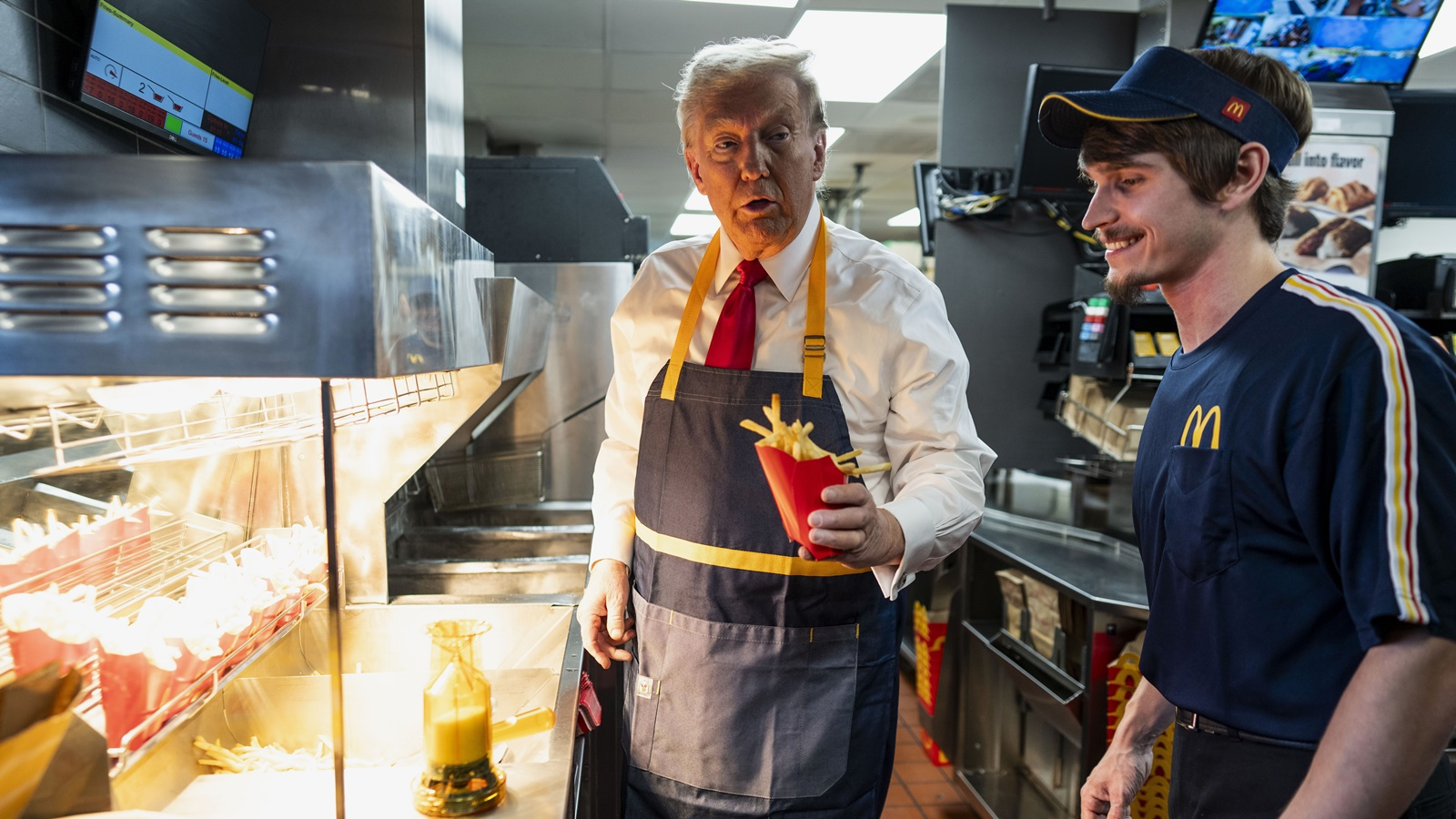
Trump served fries at the McDonald’s location, bringing the franchise into the political spotlight, even as the company attempted to distance itself from the event. Vice President Kamala Harris mentioned that she had briefly worked at a McDonald’s during the summer of 1983, a claim that Trump disputed without evidence.

Yelp responded to the heightened attention by flagging the McDonald’s page. In 2023, Yelp reported placing 986 alerts on business pages due to increased public interest and has removed nearly 50,000 reviews as a result.

A notice on the McDonald’s Yelp page stated:

“While we don’t take a stand one way or the other when it comes to this incident, we’ve temporarily disabled the posting of content to this page as we work to investigate whether the content you see here reflects actual consumer experiences rather than the recent events.”

Yelp’s Approach to Reviews

Yelp clarified that the disabling of reviews is temporary, stating that once the activity subsides, moderators would clean up the page to ensure only genuine consumer experiences are represented. Noorie Malik, Yelp’s VP of User Operations, noted:

“When we see the activity dramatically decrease or stop, our moderators will clean up the page so reviews describing only firsthand consumer experiences are reflected.”

McDonald’s Stance

Most McDonald’s locations operate as independently owned franchises, meaning franchise owners can decide whom to host. Following Trump’s visit, McDonald’s issued an internal memo asserting that they did not invite him. The memo stated:

“As we’ve seen, our brand has been a fixture of conversation this election cycle. While we’ve not sought this, it’s a testament to how much McDonald’s resonates with so many Americans.”

The memo also explained that Derek Giacomantonio, the franchise owner, was approached by local law enforcement regarding Trump’s visit, which he accepted. The company emphasized its core value of inclusivity, saying:

“We open our doors to everyone.”

Conclusion

Yelp’s action to disable reviews underscores the intersection of fast food and politics, especially during an election cycle. As the situation evolves, it remains to be seen how the reviews will be handled once the dust settles from this politically charged event.