
Sean Combs’ Children Stand United Amid Legal Battles

In a show of solidarity, the children of music mogul Sean “Diddy” Combs have publicly expressed their support for their father as he faces multiple legal challenges. The statement comes amid a tumultuous period for Combs, who is currently dealing with numerous lawsuits and serious allegations.

Family Support

On social media, Quincy Brown, 33, along with his siblings Justin, 30, Christian, 26, Chance, 18, and 17-year-old twins Jessie and D’Lila Combs, shared a heartfelt photo of themselves with their two-year-old sister, Love, their mother Dana Tran, and their paternal grandmother, Janice Combs. The accompanying message reflected their family’s distress over recent events:

“The past month has devastated our family. Many have judged both him and us based on accusations, conspiracy theories, and false narratives that have spiraled into absurdity on social media. We stand united, supporting you every step of the way. We hold onto the truth, knowing it will prevail, and nothing will break the strength of our family. WE MISS YOU & LOVE YOU DAD.”

Ongoing Legal Issues

This support from Combs’ children follows the filing of seven new lawsuits against him, including claims from individuals who allege they were minors at the time they were drugged and assaulted. Combs is currently in federal custody, awaiting trial on charges including racketeering conspiracy, sex trafficking, and transportation to engage in prostitution, to which he has pleaded not guilty.

The allegations against Combs intensified after his former girlfriend, singer Cassie Ventura, filed a lawsuit in November 2023 detailing years of abuse. While Combs denied the claims and settled the lawsuit swiftly, the settlement’s details remain undisclosed.

In May, a 2016 surveillance video surfaced, showing Combs physically assaulting Ventura in a Los Angeles hotel, raising further scrutiny of his past actions. Following the video release, Combs issued an apology, expressing his commitment to becoming a better person.

Previous Support for Their Father

The recent statement is not the first time Combs’ children have come to his defense. Previously, Quincy, Christian, and the twins condemned a self-published book titled “Kim’s Lost Words: A Journey for Justice, from the Other Side,” which claimed to be a memoir of their late mother, Kim Porter. The siblings clarified that the claims about their mother writing the book were false, stating:

“We have seen so many hurtful and false rumors circulating about our parents, Kim Porter and Sean Combs’ relationship, as well as about our mom’s tragic passing, that we feel the need to speak out.”

Porter, who was Combs’ longtime partner and the mother of three of his children, passed away in 2018 from pneumonia. Combs also helped raise Quincy, who is the son of singer Al B. Sure.

Family Background

The dynamics within Combs’ family are complex, as he has children with several women, including celebrity stylist Misa Hylton (mother of Justin Combs), businesswoman Sarah Chapman (mother of Chance Combs), and Dana Tran (mother of Love Combs). This diverse family structure further highlights the support and unity the Combs children feel towards their father during these challenging times.

Conclusion

As Sean Combs navigates through his legal struggles, the support from his children emphasizes the strength of family bonds, even amidst adversity. Their collective voice stands as a testament to their commitment to one another, as they face the public scrutiny surrounding their father’s ongoing challenges.
Polish Police Investigate Mysterious Discovery of Bronze Age Artifacts

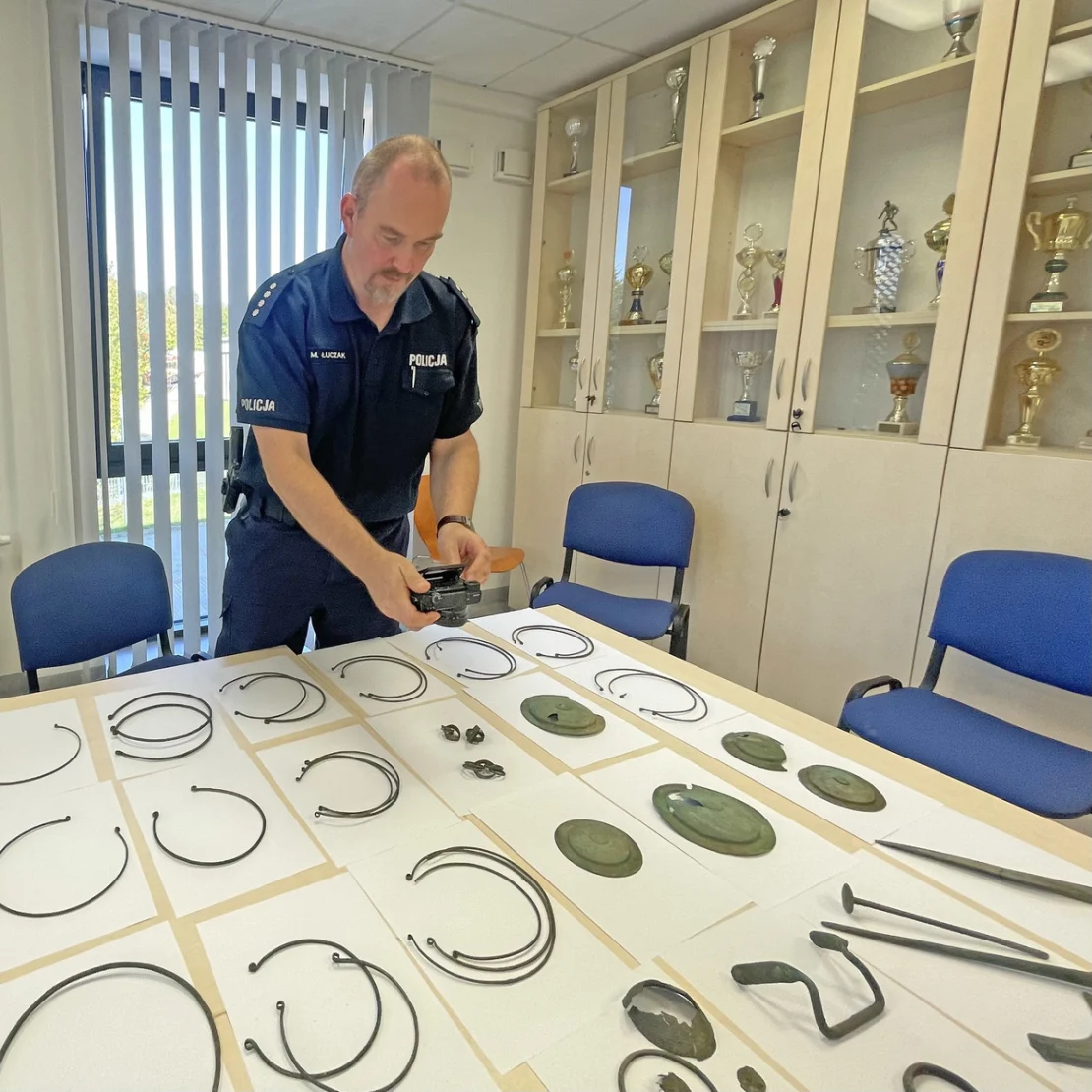
Authorities in Poland have initiated an investigation following the unexpected emergence of over 100 Bronze Age artifacts in the northwest region of the country. This remarkable collection includes weapons, bronze spearheads, necklaces, and shield bosses, all of which have raised questions about their origin and the circumstances of their discovery.

Discovery and Investigation

The investigation began when photographs of the artifacts were shared with the Provincial Heritage Protection Office in Szczecin. In a statement released by the West Pomeranian Police, it was revealed that an art-theft investigator located the individuals responsible for sharing the photos. They disclosed that the artifacts had been anonymously left outside a local historical association in the town of Gryfino.

Upon receiving the items, the historical association promptly transferred them to the Provincial Heritage Protection Office, which subsequently reported the case to the authorities, highlighting a potential crime of finding treasure without the required permissions.

Implications of the Discovery

According to police statements, the treasure was allegedly obtained through illegal searches, leading to its excavation and the complete loss of its archaeological context. This loss poses significant challenges for conducting accurate radiocarbon dating, hindering efforts to establish the artifacts’ historical timeline.

“This is one of the largest treasures found in Poland in recent years,” noted the police, emphasizing the significance of the find amidst the context of Polish archaeology.

Legal Consequences

The individuals responsible for the illegal excavation could face severe penalties, including up to eight years in prison. This case underscores the importance of adhering to legal protocols in archaeological discoveries and the protection of cultural heritage.

Current Status of the Artifacts

The artifacts have been transferred to the Provincial Heritage Conservator’s Office in Szczecin, which will ultimately determine the future housing and exhibition of these significant historical items.

Conclusion

The mysterious surfacing of these Bronze Age artifacts has not only sparked an investigation by Polish authorities but also raises awareness about the illegal excavation and the importance of preserving archaeological integrity. As the investigation unfolds, the fate of these artifacts remains uncertain, but their discovery serves as a reminder of the rich history lying beneath Poland’s surface.

Telescope with World’s Largest Digital Camera Set to Transform Astronomy

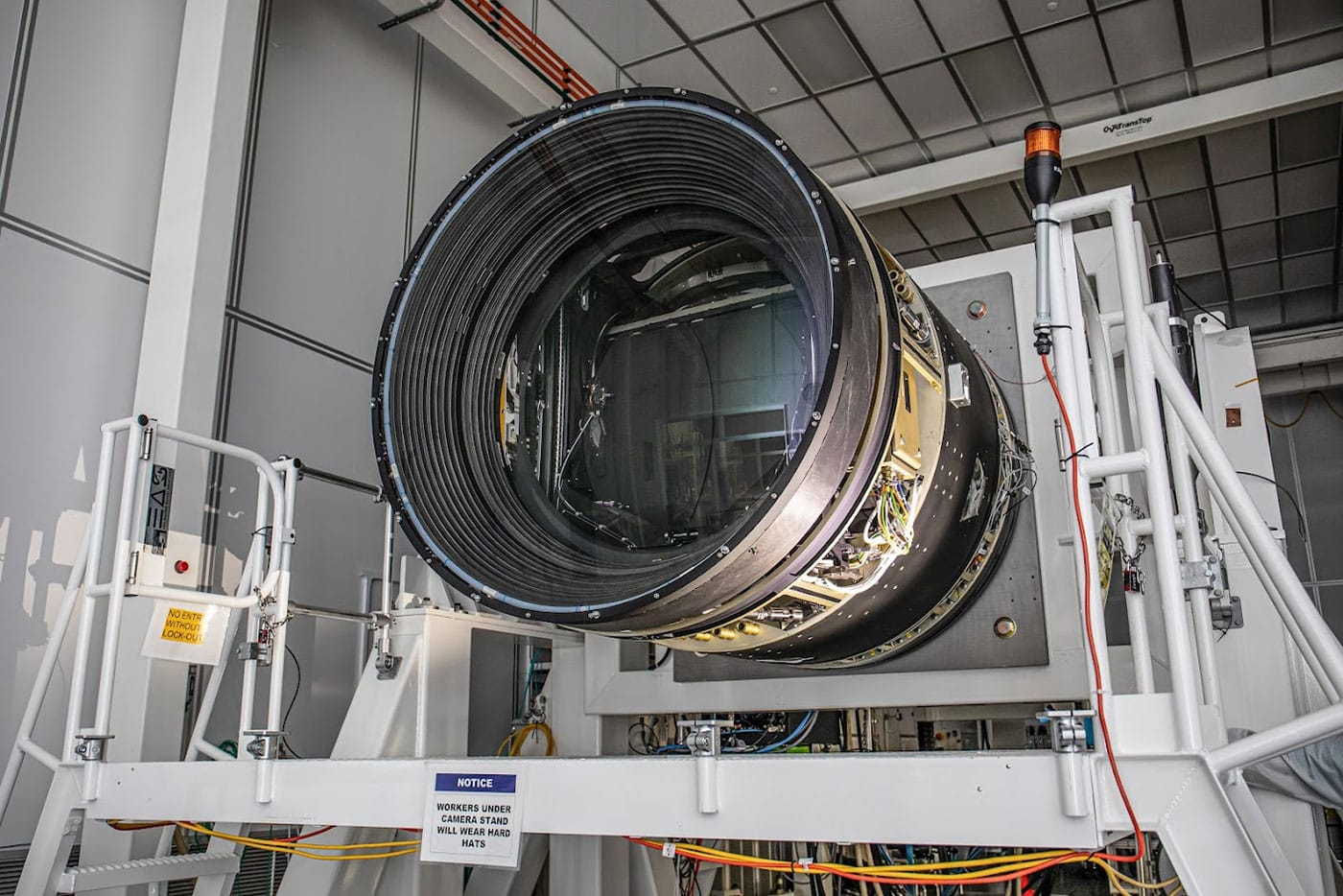
On a mountaintop in northern Chile, the world’s largest digital camera is gearing up for an ambitious mission: to photograph the entire night sky in unprecedented detail, unlocking some of the universe’s most profound secrets. This monumental project, housed within the Vera C. Rubin Observatory, is poised to revolutionize our understanding of the cosmos.

Overview of the Vera C. Rubin Observatory

Located on Cerro Pachón, a mountain standing 2,682 meters (8,800 feet) tall, the observatory features a groundbreaking camera with a resolution of 3,200 megapixels—equivalent to about 300 smartphones. Each image captured will encompass a sky area as large as 40 full moons.

The telescope aims to conduct a complete survey of the visible sky every three nights, generating thousands of images that will reveal celestial movements and brightness changes. Over its ten-year mission, the Vera Rubin Observatory expects to identify approximately 17 billion stars and 20 billion galaxies previously unseen.

“There’s so much that Rubin will do,” explains Clare Higgs, the observatory’s astronomy outreach specialist. “We’re exploring the sky in a way that we haven’t before, giving us the ability to answer questions we haven’t even thought to ask.”

Construction and Purpose

Under construction since 2015, the observatory is named after Vera Rubin, a pioneering American astronomer who confirmed the existence of dark matter before her passing in 2016. Initially funded through private donations from notable figures like Bill Gates and Charles Simonyi, the project later received support from the U.S. Department of Energy and the National Science Foundation.

The observatory’s location in the Chilean Andes is ideal for optical astronomy, with its high altitude, dry climate, and minimal light pollution enhancing the sensitivity of the instruments. Higgs notes, “You want a very still and well-understood atmosphere, and the quality of the night sky in Chile is exceptional.”

Expected to begin operations in 2025, the observatory is currently in its final construction stages. The team is working diligently to assemble and align all components, with plans to commence initial observations by late 2025, contingent on successful testing.

The Legacy Survey of Space and Time (LSST)

The primary mission of the Vera Rubin Observatory is the Legacy Survey of Space and Time (LSST). This ten-year project aims to capture the southern sky every night and repeat that every three nights, essentially creating a “movie” of the southern sky.

The camera can take an image every 30 seconds, generating an astonishing 20 terabytes of data daily. By the end of the survey, it is anticipated that more than 60 million gigabytes of raw data will be collected. Images will be transferred to California for analysis using AI and algorithms, resulting in about 10 million alerts per night for any observable changes in the sky.

Research Areas and Potential Discoveries

The data collected will cover four main research areas:

  1. Inventory of the Solar System: Including the search for Planet Nine.
  2. Mapping the Milky Way: Understanding our galaxy’s structure.
  3. Exploring Transients: Observing objects that change position or brightness over time.
  4. Understanding Dark Matter: Investigating the nature of this elusive substance.

Higgs notes, “We’ll go from a couple of observed events to statistically large samples, and the science impact of what that can do is huge.”

Excitement in the Astronomical Community

The astronomical community is abuzz with anticipation for the Vera Rubin Observatory. According to David Kaiser, a physics professor at MIT, the telescope will enable unprecedented mapping of dark matter through gravitational lensing, allowing for better understanding of how dark matter interacts with visible matter.

Professor Konstantin Batygin from Caltech adds that the observatory could provide critical insights into the Planet Nine hypothesis, helping astronomers to better understand the dynamics of the outer solar system.

Dr. Kate Pattle from University College London highlights that the observatory will make significant strides in studying astronomical transients, tracking supernova remnants, and monitoring high-energy gamma-ray bursts.

Conclusion

As the Vera C. Rubin Observatory prepares for its groundbreaking mission, astronomers are poised to gain insights that may redefine our understanding of the universe. With its advanced technology and ambitious goals, the observatory is not just a project; it is a potential game-changer for the field of astronomy.