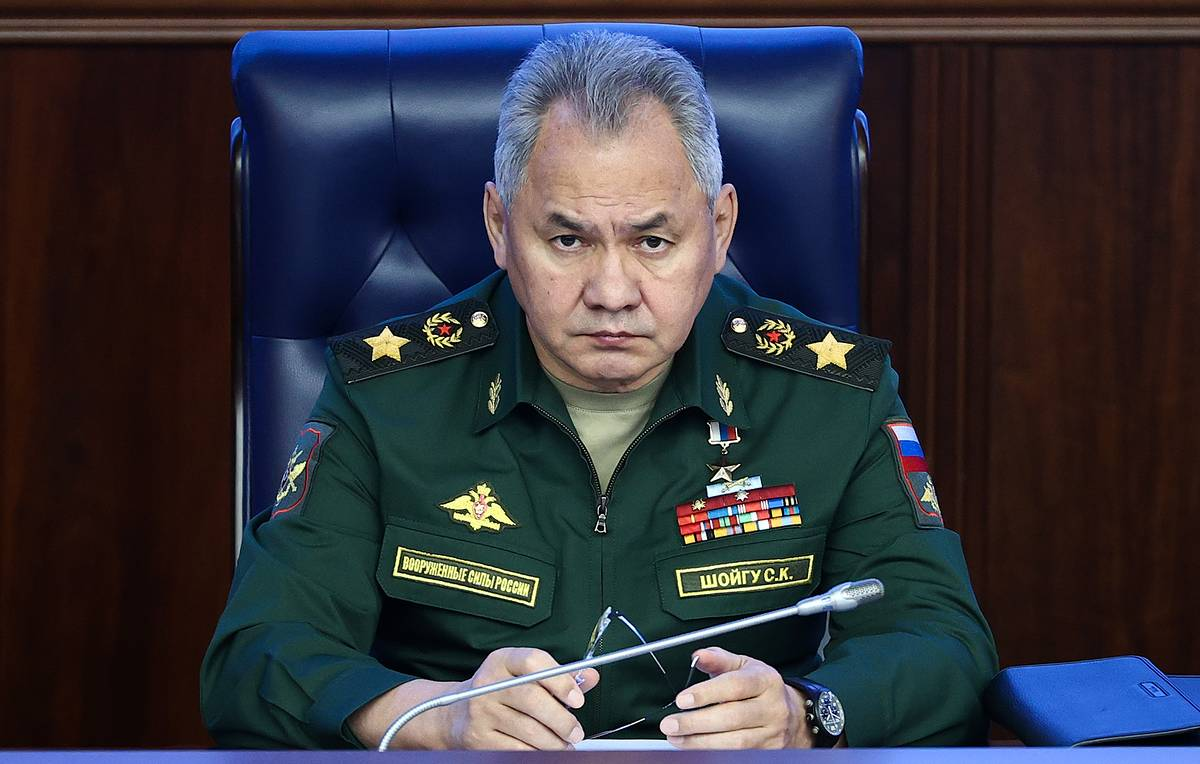
Russia Defense Chief Touts ‘Common Understanding’ with China in Beijing Talks

Russian and Chinese defense officials pledged to bolster their military cooperation during a series of meetings in Beijing this week, highlighting deepening ties between the two countries in the face of shared tensions with the West.

Russian Defense Chief Andrey Belousov emphasized the alignment between Russia and China, stating that the two countries share “common views, a common assessment of the situation, and a common understanding of what we need to do together” during talks with Zhang Youxia, vice chairman of China’s Central Military Commission. According to Russian state media Tass, the officials discussed plans to further “strengthen and develop” their strategic partnership.

Belousov’s visit, his first to China since his appointment in May, comes just ahead of an anticipated trip by Chinese leader Xi Jinping to Russia, where he is expected to attend a BRICS summit in Kazan next week. The BRICS group, composed of Brazil, Russia, India, China, and South Africa, has emerged as an economic bloc that Moscow and Beijing promote as a counterbalance to the US-led Group of Seven (G7).

Strengthening Military Relations

During the meeting on Tuesday, Zhang reiterated a familiar message from both Xi and Russian President Vladimir Putin, calling for deeper military cooperation. According to China’s Ministry of Defense, the two sides agreed to continue expanding military relations and emphasized their commitment to safeguarding each country’s national sovereignty, security, and development interests.

Belousov’s discussions in China also included talks with Chinese Defense Minister Dong Jun, and both sides stressed the importance of furthering joint military operations, particularly in light of recent security challenges from Western powers.

Growing Sino-Russian Security Cooperation

Russia and China have increasingly cooperated on security and military matters, staging numerous joint military drills in recent months. These actions are seen by experts as a way for both countries to show that they are not isolated, despite tensions with the United States and its allies.

The growing military coordination comes amid accusations from Washington that Beijing is assisting Russia’s war efforts by supplying dual-use technologies like microelectronics. China has defended its trade with Russia as “normal” and insists that it remains neutral in the ongoing conflict between Russia and Ukraine.

High-profile joint military activities in recent weeks include joint patrols by Chinese and Russian coast guards in the Arctic Ocean and anti-submarine warfare exercises in the northwestern Pacific Ocean. One notable joint exercise took place near Alaska, where US and Canadian forces intercepted Russian and Chinese bombers together for the first time.

This cooperation signals an effort to project military strength and unity as global geopolitical tensions rise, particularly over issues like the South China Sea, where Beijing asserts extensive territorial claims, and Taiwan, which China views as part of its territory despite the island’s self-governance.

Taiwan Tensions

Belousov’s visit to China coincided with a record number of Chinese warplanes flying around Taiwan during large-scale military drills. These drills were labeled as a “stern warning” by Beijing against pro-independence forces in Taiwan, just days after Taiwan’s new president, Lai Ching-te, vowed to defend the island’s sovereignty in a speech. China claims Taiwan as part of its territory and has increased military pressure around the island in recent years.

The growing security cooperation between China and Russia, paired with their military exercises near sensitive regions like Taiwan and Alaska, underscores the broader strategic alignment between the two countries as they face growing resistance from Western nations.

Broader Diplomatic Implications

Xi’s expected trip to Russia next week will be his second visit to the country since Putin launched the invasion of Ukraine in February 2022. This will mark the fifth face-to-face meeting between the two leaders during this period, highlighting their close diplomatic relationship amid global challenges.

The high-level meetings and intensified military cooperation between the two countries continue to draw close scrutiny from the US and its allies, particularly as they watch how China positions itself concerning the war in Ukraine and its broader ambitions in the Indo-Pacific region.
UK Inflation Falls Sharply to 1.7%, Below Bank of England’s Target for First Time in Over Three Years

Inflation in the United Kingdom dropped sharply to 1.7% in September, marking the first time since April 2021 that inflation has fallen below the Bank of England’s (BOE) 2% target. The Office for National Statistics (ONS) announced the drop on Wednesday, surprising markets as economists had expected a higher inflation rate of 1.9% for the month. The fall from 2.2% in August to 1.7% in September has now intensified speculation about a potential rate cut by the BOE in November.

Core and Services Inflation Drop

Core inflation, which excludes volatile components like energy, food, alcohol, and tobacco, also fell from 3.6% in August to 3.2% in September, lower than the 3.4% forecast. Meanwhile, inflation in the services sector, a key driver of the UK economy, eased to 4.9% from 5.6%, its lowest rate since May 2022.

These declines in core and services inflation are crucial for the BOE as it assesses whether to adjust interest rates further. A reduction in services inflation, in particular, suggests that underlying price pressures are starting to ease, providing the BOE with more flexibility.

Rate Cuts Anticipated

Following the publication of these inflation figures, market expectations for a 25-basis-point rate cut in November surged to 92%, up from 80%. Analysts are also pricing in a likely follow-up rate cut in December. If the BOE proceeds with these reductions, the key interest rate could fall to 4.5% by the end of the year. The central bank, which had already begun cutting rates in August, held steady in September but now appears more likely to continue easing its restrictive policy.

The BOE’s decisions may also be influenced by a fall in wage growth reported earlier in the week by the ONS. Lower wage growth could further support the case for loosening monetary policy, as inflationary pressures linked to labor costs decline.

Market Reactions and Future Outlook

The release of the lower-than-expected inflation data caused a drop in the British pound, with sterling falling 0.6% against the U.S. dollar to $1.299, dipping below the $1.3 mark for the first time since September 11. The British currency also dropped 0.5% against the euro.

Additionally, yields on British government bonds, or gilts, fell across the board. The two-year gilt yield declined by 9 basis points, while the 10-year gilt yield dropped by 7 basis points.

Although inflation has eased from a peak of 11.1% in October 2022, some economists remain cautious about the longer-term outlook. Suren Thiru, economics director at the Institute of Chartered Accountants in England and Wales, noted that while the latest figures are reassuring, inflation could rebound in October due to an increase in the energy price cap. Thiru also emphasized that the BOE might wait for the UK Labour government’s budget at the end of October to assess any potential inflationary impacts before committing to further rate cuts.

Similarly, Paul Dales, Chief UK Economist at Capital Economics, warned that part of the weakness in core and services inflation was due to a significant drop in airfares. Dales predicted that the BOE may proceed with gradual 25-basis-point rate cuts at every other meeting but expects rates to eventually fall to 3.00%, below the 3.50-3.75% currently priced into markets.

Risk from the Upcoming Budget

The upcoming UK budget on October 30 presents another potential risk for the BOE’s decision-making. Sanjay Raja, Chief UK Economist at Deutsche Bank, suggested that while the inflation figures will be welcomed by the BOE, the government’s fiscal policies may still pose challenges. Raja expects the budget to be expansionary, which could add inflationary pressure despite ongoing fiscal consolidation.

As the BOE weighs its options, the central bank is expected to carefully monitor both the impact of the government’s policies and the global economic environment before determining the pace and scale of its rate-cutting cycle.

10-Year Treasury Yield Dips Slightly as Traders Weigh Fed Officials’ Comments

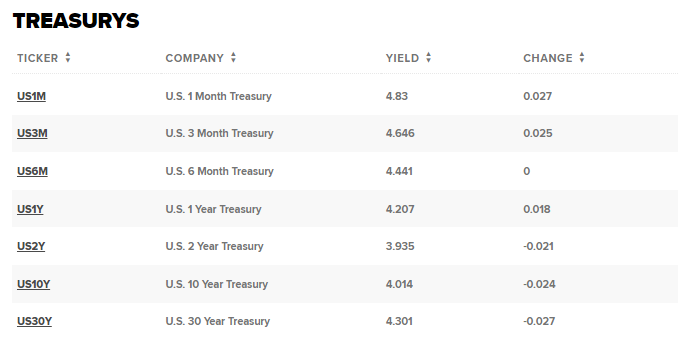
The yield on the 10-year U.S. Treasury saw a slight dip early Wednesday as bond traders processed recent remarks from Federal Reserve officials regarding the future of interest rates. As of 2:15 a.m. ET, the yield on the 10-year Treasury had fallen by over 1 basis point to 4.021%, while the 2-year Treasury yield was also down, dropping 1 basis point to 3.941%. Yields and bond prices move inversely, with one basis point equaling 0.01%.

The bond market reopened Tuesday following the Columbus Day holiday, and traders have since been grappling with mixed signals from various Fed representatives about the trajectory of monetary policy.

Mixed Messages from the Federal Reserve

On Monday, Minneapolis Fed President Neel Kashkari hinted that any future interest rate cuts would likely be “modest,” stressing that decisions will continue to hinge on incoming economic data. In a similar vein, Fed Governor Christopher Waller urged caution in reducing rates too soon, indicating that the economy is still showing signs of resilience.

However, on Tuesday, San Francisco Fed President Mary Daly took a different stance, suggesting that the Fed still has room to lower interest rates further. Daly highlighted that rates are still far from their “neutral” level, where the economy can stabilize without stimulating or restricting growth. She noted that this neutral rate could be higher than in previous economic cycles, implying that the process of adjusting rates downward may take longer than expected.

“We’re a long way from where it’s likely to settle,” Daly remarked, emphasizing the challenges in determining the speed at which rates will approach their neutral level. This uncertainty has led traders to cautiously adjust their positions in the bond market.

A Pause in Fed Activity

No Federal Reserve officials are scheduled to speak on Wednesday, and there are no major economic data releases expected. This temporary pause in public remarks allows bond traders to further digest recent statements and assess the broader economic landscape, particularly as they wait for future indicators that could offer more clarity on the Fed’s path forward.