CT Scans Reveal Mysteries of Ancient Egyptian Mummies at Field Museum

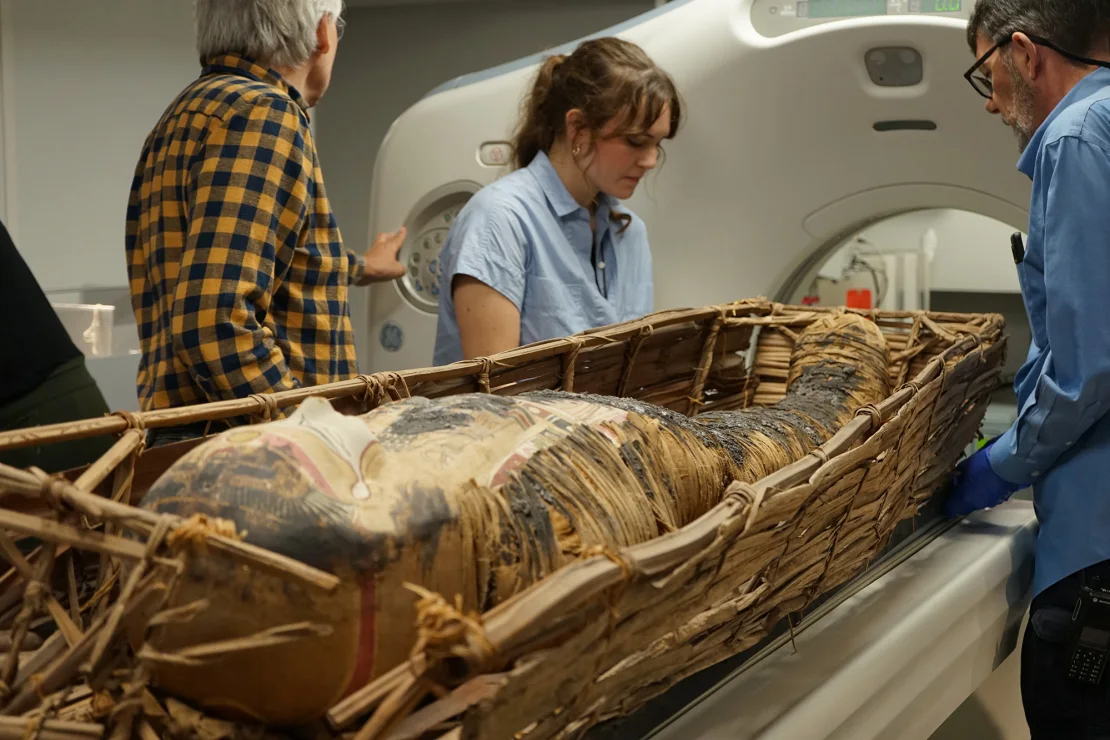
Scientists at Chicago’s Field Museum of Natural History recently used advanced CT scanning to study 26 Egyptian mummies without disturbing a single linen wrap. In a four-day procedure, museum staff transported the mummies on specially designed carts to a mobile CT scanner, capturing thousands of X-rays to produce detailed 3D images of each skeleton and artifact.

The scans are uncovering insights into Egyptian mortuary practices from over 3,000 years ago, such as the steps embalmers took to prepare bodies for the afterlife. Egyptians saw the body as essential for the soul’s journey, drying the corpse with salt and wrapping it in protective linen. Some embalmers even packed removed organs back into the body with wax statues representing the gods that safeguarded these organs.

The mummies offer individual glimpses into history. Lady Chenet-aa, a high-status woman from the 22nd Dynasty, received an elaborate burial, with prosthetic eyes placed in her sockets and her trachea filled to keep her neck intact. Her coffin, or cartonnage, was softened and molded around her upright-standing body before being laced shut. Harwa, another mummy, was likely a doorkeeper for a granary. Though his high status exempted him from hard labor, wear on his teeth suggests a life of sand-laden food in the desert.

One coffin, originally crafted for a priest, revealed a teenage boy inside, reflecting the reuse of coffins for those who could not afford personalized burial options.

These scans underscore a new respect in handling ancient remains. Museums now avoid unwrapping mummies, preserving them for further study and honoring their history. Conversations with Egyptian representatives about returning the mummies resulted in a request to keep them on display in Chicago, where visitors learn their stories. By sharing these narratives, the Field Museum aims to treat mummified remains not as art but as a dignified part of humanity’s history.
 

Ancient Embracing Figures in Pompeii Reveal New Truths Through DNA Analysis

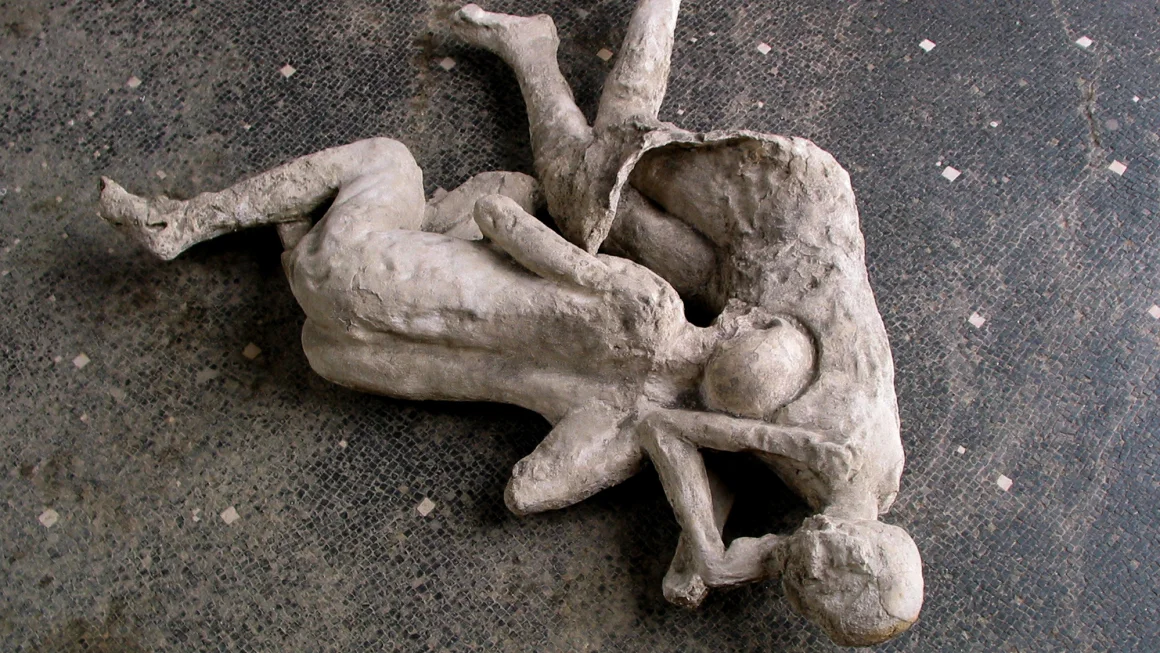
The eruption of Mount Vesuvius in AD 79 obliterated entire Roman towns like Pompeii, burying its residents in a thick layer of volcanic ash that preserved buildings, frescoes, and even the positions of people as they fell. For centuries, Pompeii’s existence was forgotten, only rediscovered during later excavations, including groundbreaking 19th-century work by archaeologist Giuseppe Fiorelli. Fiorelli pioneered the technique of creating plaster casts by pouring liquid chalk into the voids left by decomposed bodies, preserving the final forms of 104 victims.

Now, advanced DNA sequencing of bone fragments preserved within these plaster casts is rewriting some long-held beliefs about the identities and relationships of Pompeii’s residents in their final moments. In one case, what was thought to be a mother holding her child—a figure with a gold bracelet and a smaller figure on her hip—turned out to be two unrelated individuals. Meanwhile, two other bodies, once believed to be a pair of sisters or a mother and daughter, were revealed to be two young adults, one male and one female.

Beyond these revelations, DNA analysis points to Pompeii as a diverse, cosmopolitan city with a population showing varied genetic heritage, a testament to its place within the multicultural Roman Empire. The new findings not only offer a more nuanced understanding of the people of Pompeii but also provide a vivid reminder of the unexpected personal histories that can emerge from these ancient sites.


Diver Finds Graduation Ring Lost in the Ocean for Nearly 50 Years, Surprises Its Owner

Just before Morgan Perigo’s 83rd birthday, he received an unexpected package at his doorstep—a long-lost 1965 McMaster University graduation ring that had vanished in the ocean nearly 50 years ago.

This remarkable reunion was made possible by Alex Davis, a professional diver and spear fisherman based in Barbados. While checking webcams on a calm tourism day, Davis noticed that Hurricane Beryl had shifted sand along the coastline, exposing areas that typically lay buried. Intrigued by what the storm might have uncovered, he decided to investigate with his metal detector, expecting to find typical beach debris.

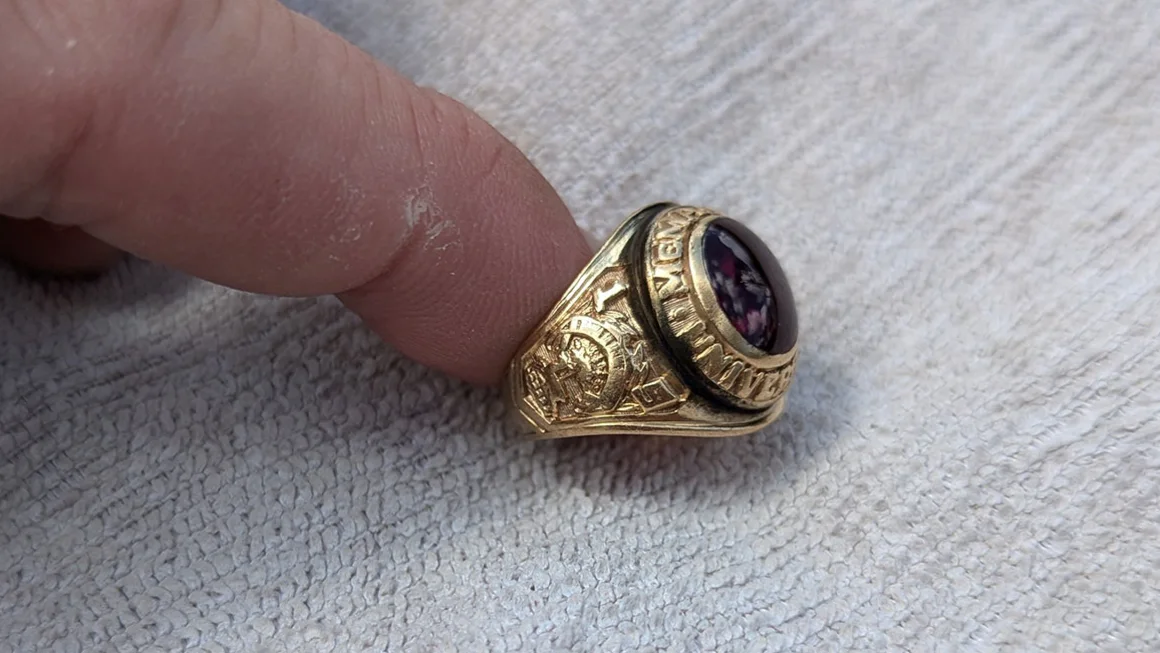
Initially, Davis encountered a few coins and miscellaneous metal objects. However, a distinct tone from his metal detector caught his attention, signaling something made of gold. After digging through sand and coral, he uncovered a gold ring with a dark red stone. Upon closer inspection, Davis noticed the engraving: “McMaster University 1965,” along with the initials “FMP.”

Knowing he had found something valuable and potentially sentimental, Davis embarked on a mission to return the ring to its owner. He reached out to McMaster University’s alumni office, where Karen McQuigge, director of alumni engagement, and her team identified the ring’s owner as Frederick Morgan Perigo. Luckily, Perigo had maintained his contact information with the university over the years, allowing the alumni team to notify him of the incredible find.

Perigo was astounded. He had lost the ring in 1977 during a family trip to Barbados when he dove into the ocean to rescue his son from a wave. In the process, the ring had slipped off his finger, disappearing into the water.

The timing was perfect. Davis reached out to Perigo, learning of his upcoming birthday and arranging for the ring to be shipped in time for the occasion. The sentimental reunion was a gift Perigo never expected, almost 47 years after the ring had slipped away.

Davis, who described the experience as profoundly rewarding, would gladly undertake a similar mission if he ever found another ring with identifying details. For McQuigge, the story symbolizes the lasting value people place on these mementos, noting that Perigo had worn the ring for over a decade before it was lost.