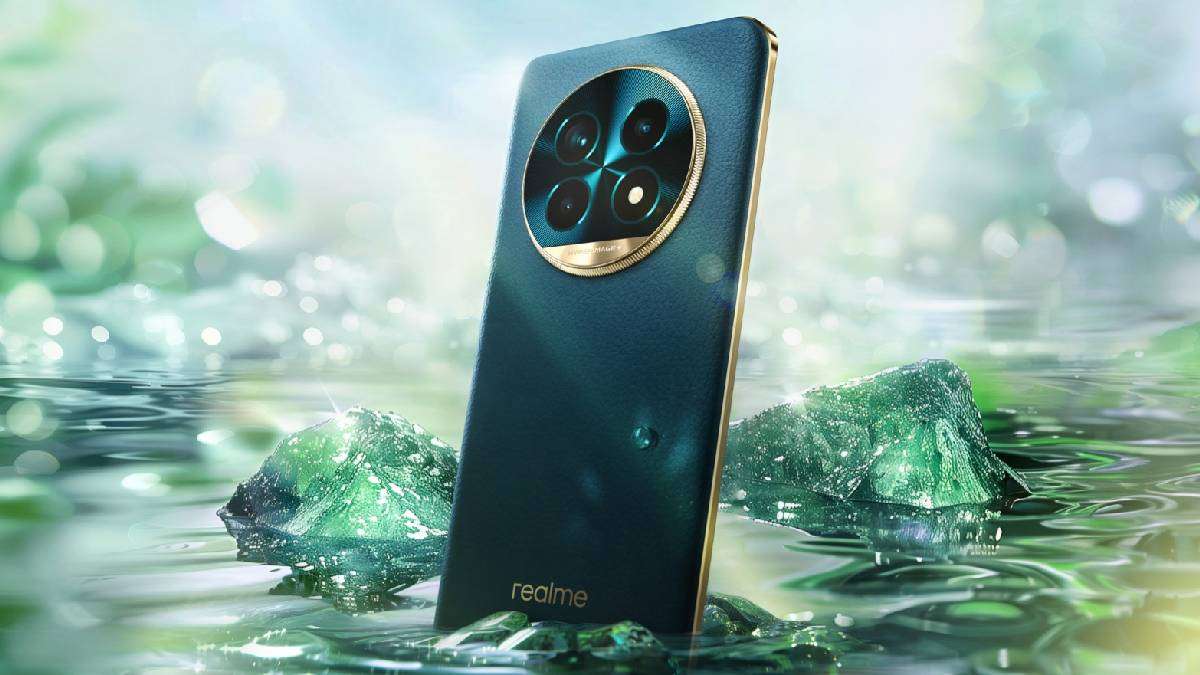
Realme 14X Set to Debut in December with Three Colour Options and Multiple RAM & Storage Variants

The Realme 14X is expected to launch in India in the coming weeks, marking the first device in Realme’s next-numbered series. Although the company has yet to officially confirm the release, several details about the handset have already begun to emerge. According to recent reports, the Realme 14X is likely to debut in early December, with key specifications such as RAM and storage configurations already surfacing. The device will likely join the Realme 14 Pro and Realme 14 Pro+ models, which are anticipated to arrive in India by January 2025.

A report from 91Mobiles has revealed the possible launch timeline, suggesting that the Realme 14X will be available in three distinct colour options: Crystal Black, Golden Glow, and Jewel Red. These choices are expected to cater to a wide range of preferences, allowing users to select a finish that suits their style. In terms of memory and storage, the Realme 14X is anticipated to offer multiple configurations, including 6GB of RAM with 128GB of storage, 8GB of RAM with 128GB of storage, and a more premium option with 8GB of RAM and 256GB of storage.

One of the standout features of the Realme 14X will be its impressive 6,000mAh battery, which is expected to provide long-lasting power to keep users going throughout the day. This large battery capacity is becoming increasingly popular in smartphones as consumers seek devices that can support heavy usage without needing frequent recharging. Additionally, the device is likely to feature a square-shaped camera module, hinting at a modern design with a focus on photography capabilities.

As the expected launch date approaches, more details about the Realme 14X are likely to emerge, including its performance specifications, camera capabilities, and pricing. With the Realme 14X poised to launch alongside other models in the series, it will be interesting to see how it compares to its Pro and Pro+ counterparts, particularly in terms of features and performance.

Samsung’s ISOCELL ALoP Technology Promises Thinner Camera Bumps in Future Smartphones

Samsung has unveiled a groundbreaking camera technology aimed at transforming the smartphone industry by reducing the size of camera bumps while preserving high image quality. This new innovation, called All Lenses on Prism (ALoP), has been developed by Samsung Semiconductor. The ALoP technology utilizes a large set of telephoto lenses, allowing them to be placed without the need for the space traditionally required by such lenses. The company believes that ALoP will provide an ideal telephoto camera solution for capturing high-quality portrait photos in both daylight and low-light conditions, all while maintaining a compact camera module in smartphones.

The key innovation behind the ISOCELL ALoP technology lies in its design. Traditional telephoto camera units typically rely on a folded camera structure, where a prism is used along with a set of lenses placed between the prism and the image sensor. The height of the prism and lenses determines the width of the camera bump, which often protrudes from the back of the phone. This setup, while effective, creates a bulky camera module that can detract from the sleek design of modern smartphones.

Samsung’s new approach with ALoP eliminates this limitation by optimizing the lens arrangement, allowing the camera system to remain slim while still offering advanced capabilities. By using a unique arrangement of lenses within the module, Samsung claims that ALoP can deliver the same high-quality results as traditional telephoto lenses but without the associated bulk. This innovation allows for thinner, more aesthetically pleasing smartphone designs, catering to the demand for both powerful camera features and sleek, compact form factors.

A major challenge with traditional telephoto lenses is their reliance on larger, more complex components to capture brighter and clearer images. The need for bigger lenses often results in a thicker camera bump, which could negatively impact the overall design of the device. Samsung’s ALoP technology solves this issue by maintaining high brightness and image quality without the need for a larger lens. As a result, the technology could become a game-changer for smartphone manufacturers looking to improve their devices’ photography capabilities while keeping camera modules slim and unobtrusive.

Vivo V50 Series and Vivo Y29 4G Appear on EEC Database Ahead of Upcoming Launch

Vivo is set to unveil a range of new smartphones in the coming months, with multiple devices spotted on a certification platform, signaling their imminent launch. Among the handsets spotted are two models from the upcoming Vivo V50 series, which are expected to succeed the Vivo V40 lineup. The Vivo V40’s latest variant was launched on September 25, and these new models are anticipated to carry forward the advancements introduced in their predecessors. Additionally, the Vivo Y29 4G has also surfaced on the same certification platform, further hinting at upcoming releases.

According to a report from MySmartPrice, the Vivo V50 and Vivo V50e have been listed on the EEC database, with model numbers V2427 and V2428, respectively. The listing for the Vivo Y29 4G shows the model number V2434. While the certifications provide insight into the upcoming models, they don’t offer detailed information about the specifications of these devices, leaving much to speculation.

This latest development follows a similar listing of the Vivo V50 and V50e on the International Mobile Equipment Identity (IMEI) database, as pointed out by tipster Yogesh Brar. Although these listings have generated considerable interest, the lack of detailed specs means that fans and analysts alike are left guessing about the exact features of these new phones. It’s expected that the Vivo V50 series will build on the features of the Vivo V40 and Vivo V40e, offering incremental improvements in design, performance, and camera capabilities.

With these certifications confirming the upcoming release, attention now turns to what new features Vivo might introduce with these smartphones. Given the company’s track record of offering well-rounded devices, the Vivo V50 series is expected to be a major player in the mid-range smartphone market. The addition of the Vivo Y29 4G to the mix further suggests that Vivo is focusing on a diverse range of users, catering to both premium and more budget-conscious customers.