Mortgage Rates Surge Following Trump Victory, Causing Housing Stocks to Drop

President-elect Donald Trump’s victory has led to a noticeable increase in U.S. 10-year Treasury yields, which has subsequently impacted mortgage rates. On Wednesday, the average rate for a 30-year fixed mortgage climbed by 9 basis points to 7.13%, according to Mortgage News Daily. This rate marks the highest since July of this year, though the increase was somewhat lower than some market analysts anticipated.

Matthew Graham, COO of Mortgage News Daily, noted that bond traders had expected rates to climb if Trump won, especially in the case of a Republican majority in Congress. While this majority is still uncertain, Trump’s victory alone has already pushed rates higher.

This spike in mortgage rates has adversely affected housing stocks. Major homebuilders such as Lennar, D.R. Horton, and PulteGroup saw their stocks fall by about 5% in midday trading. Retailers associated with home improvement, including Home Depot and Lowe’s, also experienced a decline of around 3% each. John Burns, CEO of John Burns Real Estate Consulting, emphasized that builder stocks are particularly sensitive to mortgage rates, which influence housing demand and construction costs.

Although Trump has not provided specific plans regarding housing policy, he has previously mentioned deregulation and the potential opening of federal land to increase housing supply. In a statement, Carl Harris, chairman of the National Association of Home Builders (NAHB), expressed optimism about Trump’s administration, indicating that the NAHB anticipates working with Trump to advance housing legislation aimed at easing affordability challenges and boosting supply.

Builders have been absorbing some of the mortgage rate increases by offering rate buy-downs to customers, though this approach has reduced profit margins. Despite the Federal Reserve’s recent rate cut, mortgage rates have continued to climb due to strong economic reports in September and October, which drove up bond yields.

For homebuyers, this rate increase translates to a substantial difference in monthly payments. A borrower purchasing a $400,000 home with a 20% down payment on a 30-year fixed mortgage would have had a monthly payment of $1,941 in early September; now, that payment is $2,157, reflecting an increase of $216 per month.

The current housing market has seen an unusual boost in existing home sales, with pending sales (signed contracts) rising by 7% in September compared to August. This sales surge is largely driven by increased inventory, as the number of homes for sale in October was up 29.2% compared to the previous year, reaching the highest levels of active inventory since December 2019.

According to Graham, the future trajectory of mortgage rates will depend on inflation, broader economic performance, and Treasury issuance, factors which will continue to play a critical role in the U.S. housing market.
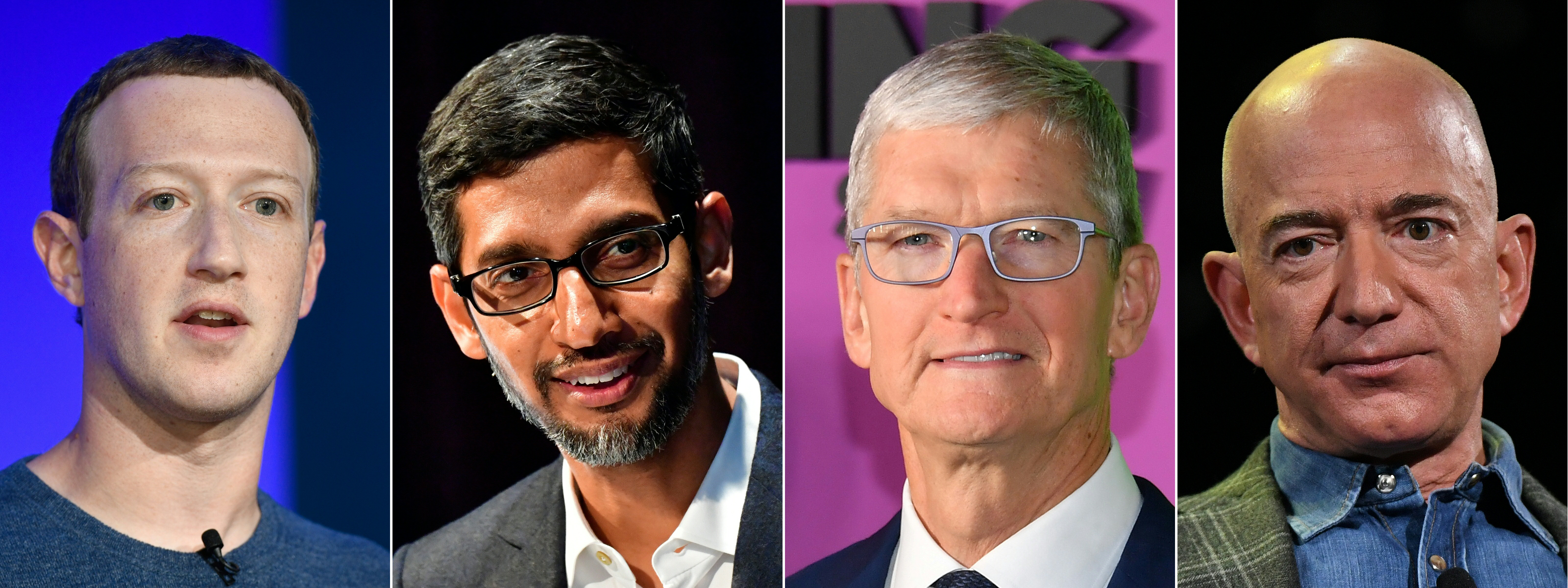

 

Tech Leaders Congratulate Donald Trump on Presidential Election Victory

Several high-profile tech CEOs extended their congratulations to President-elect Donald Trump and Vice President-elect JD Vance following Trump’s win in the U.S. presidential election. These statements, posted on social media, expressed support for Trump’s return to the Oval Office and emphasized a shared focus on technology advancement and economic growth.

Amazon
Jeff Bezos, Amazon’s founder and executive chairman, congratulated Trump in a post on X, calling his win an “extraordinary political comeback and decisive victory.” Although Bezos and Trump clashed during Trump’s first term over issues like Amazon’s tax practices and The Washington Post’s editorial stance, Bezos has recently adopted a more conciliatory approach. He praised Trump for his “courage under literal fire” after the attempted assassination attempt on Trump this past summer. Amazon CEO Andy Jassy also extended his congratulations, expressing hope to collaborate on issues impacting Amazon’s customers and employees.

OpenAI
OpenAI CEO Sam Altman wrote on X that he wishes Trump “huge success in the job.” Altman emphasized the importance of the U.S. maintaining its leadership in artificial intelligence and expressed optimism about continuing to develop AI aligned with democratic values.

Meta
Mark Zuckerberg, CEO of Meta, congratulated Trump on what he described as a “decisive victory.” Zuckerberg said he looked forward to working with Trump on shared opportunities and goals, despite their sometimes tense history, notably Meta’s suspension of Trump’s Facebook account in the aftermath of the January 6 events.

Tesla and X
Elon Musk, CEO of Tesla and X (formerly Twitter), was another vocal supporter. Musk has been a prominent backer of Trump’s campaign and contributed $75 million to America PAC, a pro-Trump political action committee he founded. Musk, who is expected to lead a government efficiency commission under Trump, celebrated the win, which sent Tesla’s stock surging by over 13%.

Alphabet (Google)
Sundar Pichai, CEO of Alphabet, Google’s parent company, offered his congratulations to Trump and expressed a commitment to working together on technology-driven initiatives.

Intel
Intel CEO Pat Gelsinger also extended his congratulations, stating that Intel looks forward to collaborating with Trump’s administration to advance America’s technological and manufacturing leadership. Intel, currently restructuring to regain its position in the global chip market, could benefit if Trump and the Republican Congress pursue an agenda that replaces the Biden-Harris administration’s CHIPS and Science Act.

Cisco
Chuck Robbins, Cisco’s CEO, wrote that his company is eager to collaborate on policies supporting “connectivity, innovation, and cybersecurity.” Robbins highlighted Cisco’s readiness to work with Trump and Congress on key technological issues.

Box and Dell Technologies
Box CEO Aaron Levie also congratulated Trump on his win, describing it as a “wild ride” and noting his optimism about America’s future growth trajectory. Michael Dell, CEO of Dell Technologies, added his congratulations on X.

This election victory has brought a chorus of industry leaders expressing hope for collaboration on economic policies that could impact technology, innovation, and global competitiveness, aligning with Trump’s focus on strengthening American industries.


Novo Nordisk Raises Alarm Over Deaths Linked to Compounded Versions of Weight-Loss Drug Wegovy

Novo Nordisk recently acknowledged reports indicating that 10 people have died and over 100 have been hospitalized after using compounded versions of its popular weight-loss and diabetes drugs, Wegovy and Ozempic, chemically known as semaglutide. The company’s CFO, Karsten Munk Knudsen, confirmed awareness of these cases, which emerged from the FDA’s adverse events database. The database does not establish direct causality between compounded semaglutide and the deaths but serves as a preliminary warning mechanism for potential health risks.

The U.S. allows compounding pharmacies to create alternatives to brand-name drugs that are temporarily in short supply, achieved by mixing or altering drug ingredients. Until recently, Novo Nordisk’s semaglutide drugs, Wegovy and Ozempic, were on the FDA’s shortage list due to high demand, especially within the United States. This shortage situation permitted compounding pharmacies to manufacture copies.

When asked to elaborate, a Novo Nordisk spokesperson directed attention to the FDA’s adverse events database, which has recorded 10 deaths linked to compounded semaglutide over the past two years, though none identified a direct cause. The adverse event reports are submitted by doctors, patients, and drug manufacturers and are intended as preliminary safety signals rather than concrete scientific evidence. Reports often lack detailed information and may include multiple entries for the same incident, making it challenging to draw definitive conclusions.

Novo Nordisk CEO Lars Fruergaard Jorgensen expressed concern about the potential lack of regulatory oversight on compounded versions of these medications, especially given the FDA’s stringent surveillance of Novo Nordisk’s official products. He criticized the sale of compounded semaglutide variants online and in “health spas,” bypassing the formal supply chain used by Novo Nordisk and its competitor Eli Lilly for distributing their FDA-approved medications. “It beats me,” Jorgensen remarked, emphasizing the potential risks posed by unregulated products.

In October, Novo Nordisk requested that the FDA restrict compounding pharmacies from producing copycat versions of Wegovy and Ozempic, arguing that the complexities involved in manufacturing these drugs might exceed the capabilities of some compounders, leading to safety concerns. Knudsen added that Novo Nordisk had observed multiple safety issues with some compounded products, reinforcing the need for stricter regulatory measures.

Despite Novo Nordisk’s efforts to meet demand, Wegovy and Ozempic remain listed on the FDA’s shortages list, though all dose strengths are currently noted as available. Knudsen highlighted the significant investments made to expand production capacity and the ongoing dialogue with the FDA, expressing optimism that these drugs may eventually be removed from the shortage list, which could limit compounding pharmacies’ ability to create alternatives.