Why It Costs India So Little to Reach the Moon and Mars

India has recently allocated a record 227 billion rupees ($2.7 billion; £2.1 billion) for an array of ambitious space projects, which include advancing its Moon mission, sending an orbiter to Venus, establishing the first phase of a space station, and developing a new reusable heavy-lifting rocket. Despite this being the largest funding for space endeavors in India’s history, the costs of these projects remain remarkably low compared to international counterparts, raising questions about the efficiency of India’s space program.

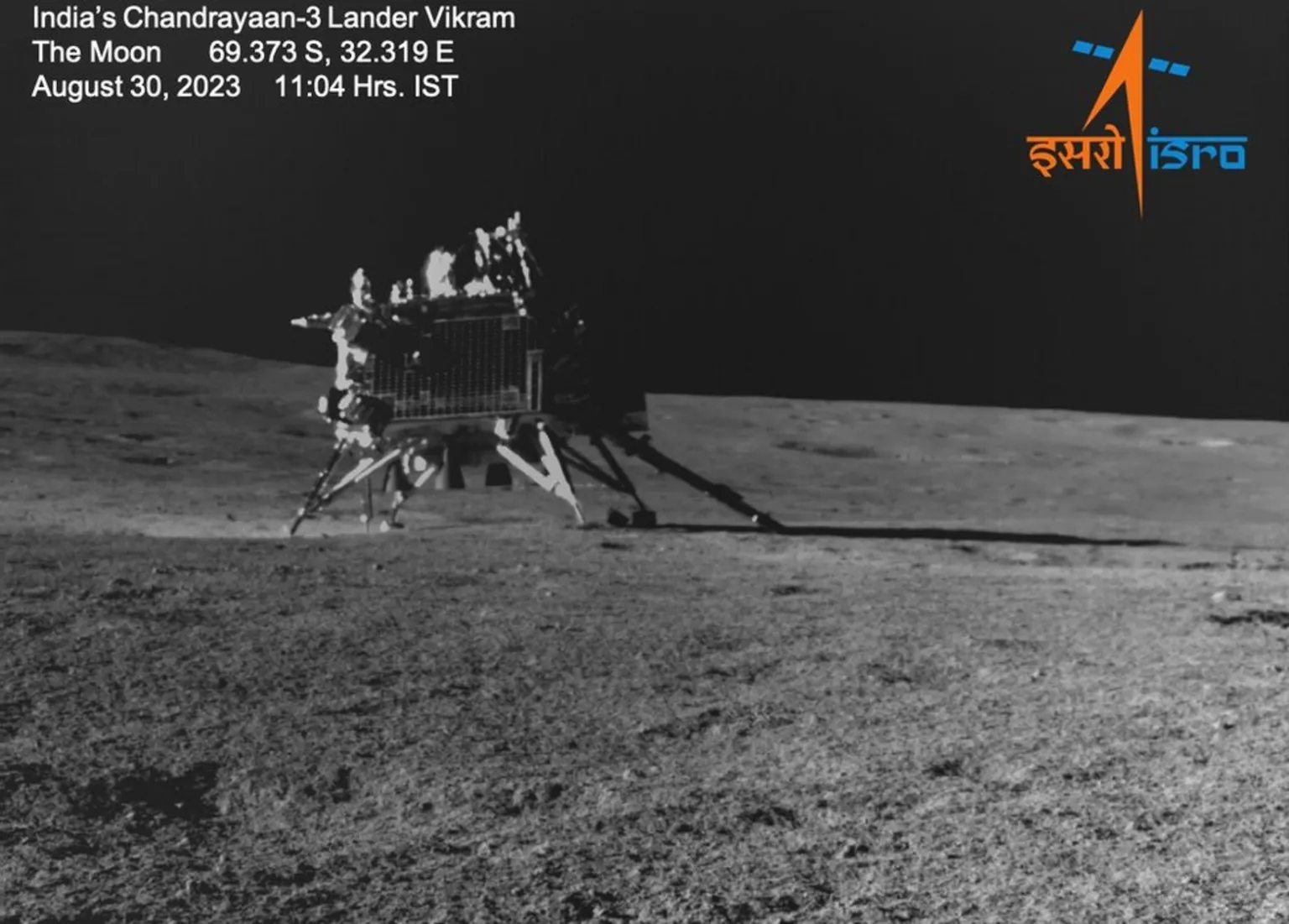
Experts globally have noted the cost-effectiveness of the Indian Space Research Organisation’s (ISRO) missions. For instance, India spent $74 million on the Mars orbiter, Mangalyaan, and $75 million on last year’s Chandrayaan-3 mission, significantly lower than the $100 million budget for the Hollywood film Gravity. In comparison, NASA’s MAVEN orbiter cost $582 million, and Russia’s Luna-25 mission, which unfortunately crashed before Chandrayaan-3’s landing, had a budget of 12.6 billion roubles ($133 million).

Despite operating on a modest budget, Indian scientists are making substantial contributions to space research. Chandrayaan-1 was the first mission to confirm water presence on the Moon, while Mangalyaan provided critical data on methane in Mars’ atmosphere. The images and data sent back by Chandrayaan-3 have garnered worldwide interest among space enthusiasts.

So, what allows India to maintain such low costs?

According to Sisir Kumar Das, a retired civil servant who managed ISRO’s finances for over two decades, the frugality of India’s space program dates back to its inception in the 1960s. At that time, ISRO’s founder, Vikram Sarabhai, had to convince the government that a space program could serve practical purposes in a newly independent and resource-strapped country. Sarabhai emphasized that satellites could help improve the lives of citizens, justifying the investment in space exploration.

ISRO has consistently operated under tight budgets, shaped by the country’s competing priorities. Historical photographs depict scientists transporting rockets and satellites using bicycles or bullock carts, reflecting their resourcefulness. Currently, ISRO’s budget is approximately 130 billion rupees ($1.55 billion), in stark contrast to NASA’s annual budget of $25 billion.

A critical factor in ISRO’s low-cost operations is its commitment to developing homegrown technology. Following India’s first nuclear test in 1974, which prompted Western nations to impose technology transfer restrictions, ISRO saw this as an opportunity to foster domestic technological advancements. Consequently, all required equipment is manufactured in India, benefiting from significantly lower labor costs compared to the U.S. or Europe.

Science writer Pallava Bagla explains that while ISRO handles satellite manufacturing internally, NASA outsources much of this work to private companies and incurs additional costs through insurance. Furthermore, ISRO typically forgoes extensive engineering models used for testing before launches, opting instead to create a single model meant for flight. This approach carries inherent risks but allows for cost savings due to the nature of government funding.

Mylswamy Annadurai, who led India’s first two Moon missions and the Mars mission, notes that ISRO operates with smaller teams and lower salaries, making projects more competitive. Often, team members work extended hours out of passion for their work without additional compensation. The tight budget constraints often push scientists to innovate and find efficient solutions.

For instance, during Chandrayaan-1, budget constraints prompted scientists to reduce the spacecraft’s thrusters from 16 to 8 and streamline other components, which resulted in maintaining a strict launch schedule to avoid solar eclipses that could affect power supply.

The low cost of Mangalyaan was partly due to using hardware designed for Chandrayaan-2, which faced delays. This reuse of components is indicative of ISRO’s resourcefulness.

Despite ISRO’s impressive achievements at minimal costs, Bagla warns that as India expands its space ambitions, expenses are likely to rise. The current reliance on smaller rocket launchers means longer travel times for spacecraft. For example, Chandrayaan-3 orbited Earth multiple times before reaching the Moon, while Russia’s Luna-25 utilized a powerful Soyuz rocket for a quicker trajectory.

Looking forward, India has announced plans for a manned Moon mission by 2040, necessitating a more powerful rocket for faster travel. The government has already approved work on a new Next Generation Launch Vehicle (NGLV), expected to be ready by 2032, which will enhance payload capacity but also increase costs. Additionally, the opening of the space sector to private players is likely to drive expenses higher, potentially altering the cost-effectiveness that has characterized India’s space program.


Novel Way to Beat Dengue: Deaf Mosquitoes Stop Having Sex

Scientists have discovered a unique strategy to combat mosquito-borne diseases like dengue, yellow fever, and Zika by rendering male mosquitoes deaf, thereby hindering their ability to mate. This innovative approach takes advantage of the fact that male mosquitoes rely on their hearing to locate and pursue females, responding to the attractive wingbeats that signal potential mates.

Researchers at the University of California, Irvine, conducted experiments on Aedes aegypti mosquitoes, known for transmitting viruses to approximately 400 million people annually. The team focused on the insects’ aerial mating behaviors, which typically last from a few seconds to just under a minute, and sought to disrupt these interactions using genetic modification.

The scientists targeted a specific protein, trpVa, which plays a crucial role in the hearing process of male mosquitoes. By altering a genetic pathway linked to this protein, the team successfully created male mosquitoes that were unable to detect the flight tones or wingbeats of females. As a result, these genetically modified males were unable to make physical contact with females even after being housed together for three days.

The impact of this gene modification was profound; the altered males did not mate at all, while their wild counterparts copulated multiple times, successfully fertilizing nearly all the females in the same enclosure. This complete elimination of mating among the deaf males suggests a potential avenue for controlling mosquito populations by reducing reproduction rates.

Dr. Joerg Albert, a mosquito mating expert from the University of Oldenburg in Germany, praised the study as a promising direction for mosquito control, though he emphasized the need for careful study and management. He noted that the findings provide the first direct molecular evidence confirming that hearing is not only important but essential for mosquito reproduction. Without the ability to hear and acoustically pursue females, male mosquitoes could face extinction.

In addition to this approach, researchers are also exploring the release of sterile males in regions with outbreaks of mosquito-borne diseases as another method of population control. While mosquitoes are often viewed as disease carriers, they play a critical role in the ecosystem as a food source for various animals, including fish, birds, bats, and frogs, and some species are essential pollinators.

Quincy Jones, Musical Titan and Entertainment Icon, Dead at 91

Quincy Jones, the legendary composer and producer renowned for his influential contributions to music across genres, has passed away at the age of 91, as confirmed by his representatives. He died on Sunday night at his home in Bel Air, California, surrounded by family, including his children and siblings.

In a heartfelt statement, the Jones family expressed their sorrow, stating, “Tonight, with full but broken hearts, we must share the news of our father and brother Quincy Jones’ passing. And although this is an incredible loss for our family, we celebrate the great life that he lived and know there will never be another like him.” They emphasized the enduring impact of his music and the love he shared with the world.

Jones was a prolific figure in the music industry, known for his work as a jazz and pop musician, arranger, conductor, record label executive, and civil rights advocate. His impressive career spans decades, featuring collaborations with icons such as Ray Charles, Frank Sinatra, and Michael Jackson. Notably, he composed the score for the Oscar-winning film “In the Heat of the Night,” produced Michael Jackson’s record-breaking album “Thriller,” and organized the star-studded charity single “We Are the World” in 1985.

Born in Chicago to a carpenter father and a mother with mental health struggles, Jones developed a passion for music early in life, beginning with piano lessons. His family later relocated to Seattle, where he studied under the famous horn player Clark Terry and forged a lifelong friendship with Ray Charles.

At just 15 years old, Jones was invited to tour with bandleader Lionel Hampton, though he was advised to finish school first. After graduating, he joined Hampton’s band, marking the start of a remarkable journey that would see him arrange and record for legendary figures including Count Basie, Duke Ellington, and Sarah Vaughan.

In 1961, Jones joined Mercury Records as an A&R director and made history in 1964 when he became the first African American vice president of a major white-owned record label. His first pop hit came with Leslie Gore’s “It’s My Party,” which reached No. 1 on the charts. His achievements during this period included multiple Grammy awards, beginning with his arrangement of the Count Basie Band’s “I Can’t Stop Loving You.”

The 1960s marked Jones’ foray into film, composing soundtracks for “In the Heat of the Night” and “In Cold Blood.” He later worked with A&M Records and launched his own label, Qwest. His partnership with Michael Jackson on the album “Thriller” in 1982 remains one of his most celebrated collaborations.

In addition to his music career, Jones produced the acclaimed film “The Color Purple” and the popular television series “The Fresh Prince of Bel-Air,” starring Will Smith, whom he mentored. He also founded the music and culture magazine Vibe in 1993.

Despite suffering a brain aneurysm in 1974 that temporarily curtailed his activities, Jones continued to thrive both personally and professionally. Reflecting on his life, he once recounted attending his own memorial service while recovering from surgery.

Jones was married three times and had seven children. His marriages included his high school sweetheart Jeri Caldwell, model Ulla Andersson, and actress Peggy Lipton, with whom he shared two daughters, actresses Rashida Jones and Kidada Jones. He also had a daughter with dancer Carol Reynolds and another with actress Nastassja Kinski.

In recent years, Jones remained active in the industry, producing the documentary “Keep on Keepin’ On” in 2014 about his mentor, Clark Terry. He reflected on his extraordinary career in a 2014 interview, stating, “I have been blessed to work with every major music star in the history of America.”

In his 2022 book, “12 Notes On Life and Creativity,” Jones emphasized the transformative power of creativity, stating, “If utilized properly, not only does it serve as an outlet, but it also holds the power to transform heartache into something beyond a singular sentiment.”