
China on Track to Record Its Lowest Number of New Marriages, Official Data Shows

China is projected to experience its lowest number of new marriages since record-keeping began, with official data revealing a significant decline in marriage registrations amid a deepening demographic crisis. This trend poses serious challenges for Beijing, as a shrinking workforce and an aging population threaten the country’s economic stability.

In the first three quarters of 2024, approximately 4.74 million couples registered their marriages, marking a 16.6% decrease from the 5.69 million reported during the same period in 2023, according to data released by the Ministry of Civil Affairs. This downward trajectory aligns with a broader trend since reaching a peak of over 13 million new marriages in 2013, and it is anticipated that marriages will fall below 2022’s record low of 6.83 million.

While there was a temporary rebound in marriages last year following the lifting of strict COVID-19 restrictions, this was largely viewed as a short-term spike driven by pent-up demand. The country has faced two consecutive years of population decline, with last year recording the lowest birth rate since the establishment of the People’s Republic in 1949. In 2022, India surpassed China to become the most populous nation in the world.

Chinese officials have identified a direct correlation between the decline in marriages and the plummeting birth rate. Social norms and governmental regulations complicate childbearing for unmarried couples, prompting officials to implement various measures aimed at reversing this trend. These include financial incentives, public awareness campaigns, and events such as blind dating and mass weddings to encourage young couples to marry and have children.

Additionally, efforts have been made to reduce the traditional “bride price,” which can hinder marriage prospects for many poorer men, particularly in rural areas. Since 2022, pilot programs initiated by China’s Family Planning Association have sought to cultivate a “new-era marriage and childbearing culture,” promoting the societal benefits of childbearing and encouraging young people to marry and start families at a suitable age.

However, these initiatives have not succeeded in persuading many young adults, who are facing high unemployment rates, rising living costs, and insufficient social welfare amid an economic downturn. As a result, many are delaying marriage and childbirth, with an increasing number choosing to forgo them altogether.

The decline in marriages and births is also attributed to decades of population control policies that have resulted in fewer young people of marriageable age. Although China ended its one-child policy in 2015, allowing for two children, and further expanded this to three children in 2021, both marriage and birth rates continue to drop.

Changing attitudes towards marriage, particularly among young women who are becoming more educated and financially independent, further complicate the situation. Many women are growing disillusioned with marriage due to prevalent workplace discrimination and traditional gender roles that often assign them the majority of childcare and household responsibilities.

In response to rising divorce rates, China implemented a mandatory 30-day “cooling-off” period for individuals filing for divorce in 2021, despite criticisms that this may complicate exits from unhappy or abusive relationships. In the first nine months of 2024, around 1.96 million couples registered for divorce, reflecting a slight decrease of 6,000 compared to the previous year.

China’s situation mirrors trends seen in other countries, such as Japan and South Korea, where falling marriage and birth rates have prompted the introduction of various incentives, including financial support and childcare subsidies, yet with limited effectiveness.

 

Why You’re More Likely to Solve Your Problems on a Therapist’s Sofa Than on Social Media

In an era where mental health issues are increasingly acknowledged, many individuals are turning to platforms like TikTok for guidance rather than seeking professional help. A recent 2024 KFF Health Misinformation Tracking Poll revealed that 66% of adult TikTok users have encountered mental health content on the app.

Dr. Thomas Milam, a psychiatrist and chief medical officer at Iris Telehealth, noted that many TikTok users seek mental health advice through the platform due to the shortage of mental health providers and the difficulty in accessing affordable care. “The majority of people that are accessing TikTok are going to at some point seek some type of mental health guidance,” he explained.

While the rise of mental health discussions on social media can be seen as a positive development, it poses significant risks. Lindsay Liben, a psychotherapist based in New York City, cautioned against diagnosing problems based on social media content. Many posts are created by individuals without proper mental health training, leading to the spread of misleading or inaccurate information. For instance, a 2023 study published in the Journal of Autism and Developmental Disorders found that 41% of TikTok videos related to autism were inaccurate, and a 2022 study in The Canadian Journal of Psychiatry reported that 52% of ADHD-related videos contained misleading claims.

Despite TikTok’s efforts to combat misinformation by working with independent partners and providing a Safety Center for reliable health information, diagnosing mental health conditions through social media remains problematic. Symptoms such as low energy and fatigue can indicate various issues, from anxiety to sleep deprivation, complicating self-diagnosis efforts.

Moreover, parents seeking solutions for their children’s sleep issues might overlook deeper problems, like bullying, as highlighted by Liben. Misinterpreting normal feelings of worry or sadness as mental health disorders can also lead to confusion and unnecessary anxiety.

A further concern is that some creators on social media promote products like sleep aids and vitamins alongside their mental health content, often oversimplifying complex issues. Milam emphasized that quick fixes are rarely effective for serious conditions like anxiety or depression, which require nuanced approaches. When solutions fail, it can exacerbate feelings of inadequacy among individuals trying to improve their mental health.

For those looking for credible mental health resources online, experts recommend seeking content from licensed professionals, such as doctors or licensed therapists, who are transparent about their qualifications. It’s essential to verify the educational backgrounds and training of content creators and to rely on sources that reference high-quality research.

Milam suggests that individuals who suspect they may have mental health concerns should first reach out to their primary care physicians, who can offer guidance and referrals to mental health specialists. Resources from the American Psychiatric Association and the American Psychological Association can also provide reliable information.

Ultimately, while social media can facilitate discussions around mental health, experts agree that addressing these issues effectively requires more than a quick video. The most reliable answers are often found on the traditional therapist’s sofa, where professional support can lead to meaningful solutions.


Kim Kardashian Gives Princess Diana’s Famed Cross Necklace Its First Public Outing

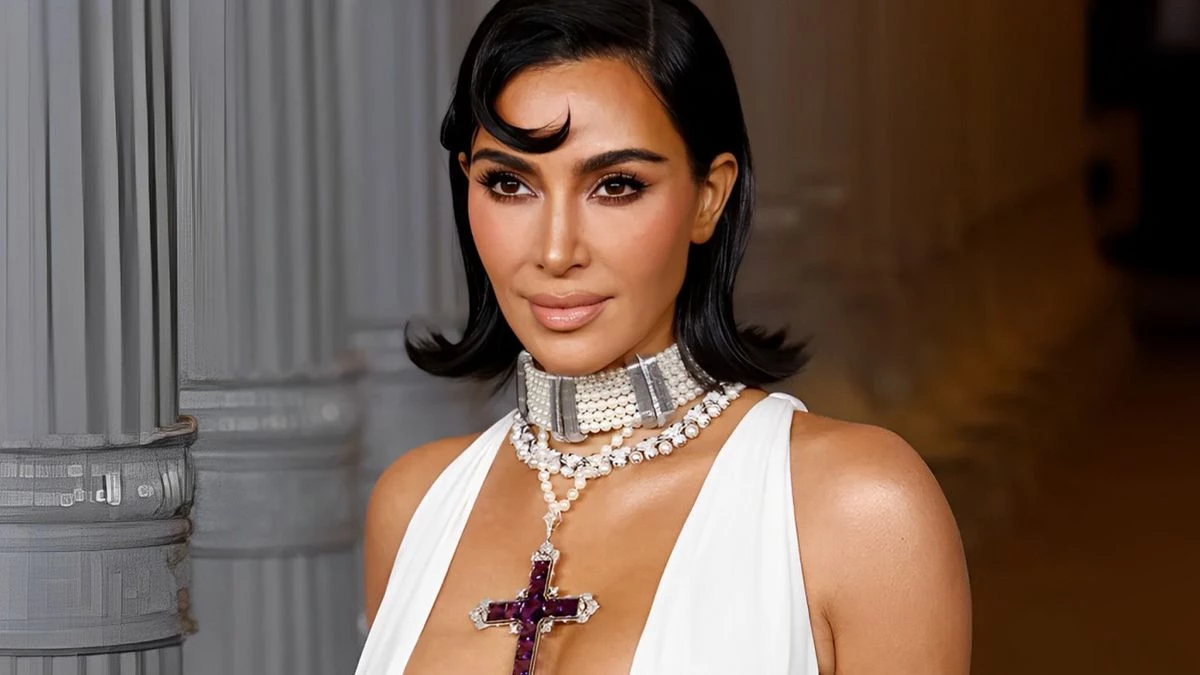
Kim Kardashian, known for her penchant for fashion history, showcased another significant cultural artifact at the LACMA Art+Film Gala in Los Angeles on Saturday: a diamond-lined cross pendant once beloved by Princess Diana.

Kardashian acquired the necklace for £163,800 (approximately $212,000) in January 2023 during the final moments of a Sotheby’s auction. Her red carpet appearance marked the first public display of the piece since Diana’s passing in 1997.

This remarkable necklace, crafted by Garrard, the British court jewelers, in the early 20th century, features approximately 5.25 carats of diamonds and measures 5.4 inches by 3.7 inches. Originally purchased in the 1980s by the late Palestinian-British businessman Naim Attallah, the necklace was lent to Diana multiple times, including for a notable charity gala in 1987 that supported Birthright, an organization dedicated to protecting human rights during pregnancy and childbirth. At that event, Diana paired the striking piece with a matching maroon velvet gown designed by Catherine Walker.

For her debut, Kardashian chose to style the necklace differently, significantly shortening the pearl chain and pairing it with a stack of other jewels, including a six-strand pearl choker. Rather than coordinating her outfit with the necklace’s amethyst hue, she used it as a bold accent against her otherwise all-white ensemble. However, the deep plunge of her gown’s neckline alongside the necklace’s historical significance sparked debate online. Some commentators felt that the daring cut clashed with the religious symbolism of the cross, while others expressed concern over Kardashian’s ability to wear such heirlooms, particularly in light of past controversies regarding the preservation of historical garments. One Instagram commenter remarked, “Why are we still giving this woman precious heirlooms like Diana’s necklace after she broke Marilyn’s dress?”

As for the future of the pendant, it remains unclear whether Kardashian will continue to wear it or if it will be added to her extensive collection. When she purchased the piece, Kristian Spofforth, Sotheby’s head of jewelry in London, expressed enthusiasm for its new ownership. “This is a bold piece of jewelry by its size, color, and style which cannot fail to make a vibrant statement, whether it be of faith or fashion – or indeed both,” he stated in a press release. “We are delighted that this piece has found a new lease of life within the hands of another globally famous name.”