
Another Disappointing Search for Bitcoin’s Creator Ends in Mystery

Bitcoin, now at the heart of a multi-trillion-dollar cryptocurrency industry, still holds one of the tech world’s most intriguing mysteries: the true identity of its founder, Satoshi Nakamoto. This enigmatic figure’s influence would carry enormous weight in the crypto world, given their revolutionary impact on digital currencies and a billion-dollar Bitcoin stash. Yet, the quest to uncover Nakamoto’s identity has once again hit a dead-end.

The latest attempt to reveal Nakamoto came when a press conference was held in London by organizer Charles Anderson, who claimed that Nakamoto was finally ready to step forward. The high-profile event offered reporters front-row seats at £100 each and an additional £500 for exclusive interviews, which many found unusual given the claimed wealth of Bitcoin’s inventor.

When the event took place, the venue, Frontline Club, clarified it was merely providing the space without endorsing the occasion. The anticipation quickly turned to skepticism as only a handful of reporters attended. Stephen Mollah eventually came forward, announcing himself as Nakamoto and claiming responsibility for Bitcoin’s creation. However, Mollah provided no substantial evidence, such as unlocking Bitcoin from Nakamoto’s original wallet, which would have solidified his claims. Reporters soon left, unconvinced and frustrated, noting yet another failed attempt to identify Nakamoto.

This unsuccessful attempt joins a long list of claims surrounding Nakamoto’s identity. Dorian Nakamoto, an American of Japanese descent, was identified as Nakamoto by Newsweek in 2014 but denied the claim. Later, Australian scientist Craig Wright asserted he was Nakamoto but has yet to produce convincing evidence despite extensive media coverage. Elon Musk has also been speculated as Nakamoto, though he has publicly denied any connection. Most recently, Canadian Bitcoin expert Peter Todd was suggested as Nakamoto by an HBO documentary, though Todd dismissed the claim and described the attention as an invasion of privacy.

For many, Nakamoto’s anonymity is central to Bitcoin’s ethos. Natalie Brunell, a Bitcoin podcaster, believes the concealment was intentional, allowing Bitcoin to develop as a decentralized system, free from influence by a central figure. “By concealing his true identity, Satoshi ensured that Bitcoin wouldn’t have a leader or central figure, whose personal agenda could influence the protocol,” she explained. Adam Back, a core Bitcoin developer and another candidate, shared a similar view, noting on social media that the unresolved mystery strengthens Bitcoin’s decentralized nature.

Yet, some experts argue that the obsession with Nakamoto’s identity distracts from Bitcoin’s broader impact. Carol Alexander, a finance professor at Sussex University, suggests that the focus on Nakamoto takes away from essential discussions about cryptocurrency’s potential to reshape global finance. Despite the ongoing fascination, Nakamoto’s identity remains elusive, fueling speculation while preserving Bitcoin’s unique place as a leaderless and decentralized system in the financial world.

 

IKEA to Compensate Victims of Forced Labor in East Germany with €6 Million Payment

IKEA has agreed to contribute €6 million ($6.5 million) to a new German government fund aimed at compensating former political prisoners who were forced to work for companies during East Germany’s communist rule. This landmark decision marks a significant step for victims’ rights and sets a precedent for other companies that profited from forced labor during the Cold War era.

The revelations about IKEA’s reliance on forced prison labor surfaced over a decade ago, prompting the company to initiate an independent investigation. The report by Ernst & Young confirmed that political prisoners in the German Democratic Republic (GDR) were indeed forced to produce IKEA furniture during the 1970s and 1980s. Furthermore, IKEA representatives were likely aware that prison labor was being used to supplement the workforce in East German factories.

The GDR, a Soviet satellite state from 1949 to 1990, used its political and criminal prisoners to produce goods for Western markets, creating an environment where foreign companies benefited from cheap labor. Many GDR prisoners were jailed for minor political dissent or opposition to the authoritarian government, which suppressed criticism through the feared Stasi secret police.

IKEA Germany announced this week that it would contribute to the compensation fund voluntarily. The German parliament will soon formalize the fund, a measure that is seen as a formality following years of advocacy by victim groups. For IKEA, the payment represents a commitment to redress past wrongs and provide support for individuals affected by forced labor practices.

Walter Kadner, CEO and Chief Sustainability Officer at IKEA Germany, acknowledged the company’s involvement in forced labor during East Germany’s communist rule, expressing deep regret. “We deeply regret that products for IKEA were also produced by political prisoners in the GDR. Since it became known, IKEA has consistently worked to clarify the situation,” Kadner stated, adding that the company was pleased to uphold its promise to support the new fund.

This agreement with the Union of Victims’ Associations of Communist Dictatorship (UOGK) represents the first time a major company has offered reparations for its historical use of GDR prison labor. Dieter Dombrowski, chairman of UOGK, praised IKEA’s commitment to engaging openly with victims and acknowledging their suffering. He expressed hope that IKEA’s actions would inspire other companies with similar pasts to contribute to the fund.

The fund will provide compensation for the emotional and psychological toll endured by former prisoners, many of whom still bear the scars of forced labor and confinement. Evelyn Zupke, the German parliament’s representative for GDR victims, described IKEA’s decision as a responsible approach to addressing the darker parts of the company’s history. Zupke noted that while the suffering of prisoners cannot be undone, supporting victims today shows respect for their experiences and provides a path to healing.

Advocates such as Rainer Wagner, a former chairman of UOKG, stress that IKEA’s case is likely just the “tip of the iceberg.” Many companies may have profited from GDR labor practices, and advocates are calling on others to follow IKEA’s example by acknowledging their historical complicity and contributing to victim support initiatives.

This voluntary payment represents a significant moment for corporate accountability in Europe, particularly as societies grapple with the legacy of totalitarian regimes. IKEA’s actions may pave the way for other corporations to recognize their roles in historical injustices and provide restitution to those who suffered as a result.


Scientists Uncover Clues to Origins of America’s Oldest Tombstone in Jamestown

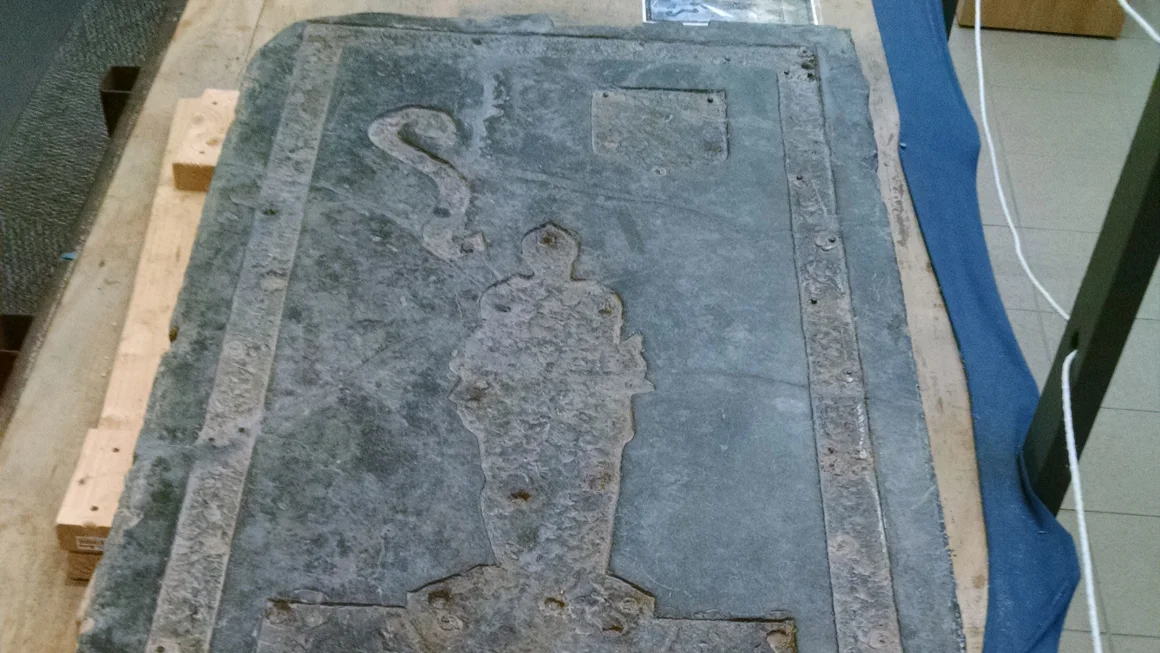
In Jamestown, Virginia, the oldest known tombstone in the United States has yielded new insights into its origins. Often called the “Knight’s Tombstone” for its engraved knight and shield, the intricately carved black limestone slab dates back to 1627 and lies within the remains of the first permanent British settlement in North America. Until recently, its origins were a mystery, but new research has traced the stone to Belgium, highlighting its symbolic and economic value in the early colonial period.

Researchers analyzing the limestone’s microfossils found traces of four ancient foraminiferan species that only exist in parts of Europe, particularly Belgium and Ireland. The study, published in the International Journal of Historical Archaeology, suggests that this stone—formed between 340 million and 336 million years ago—likely came from a thriving Belgian tombstone export business of the time. From there, the stone traveled first to London to be engraved and then across the Atlantic, a journey that would have taken a year.

This tombstone is believed to mark the grave of Sir George Yeardley, an early colonial governor and influential figure in Jamestown. Yeardley, knighted in 1618, led the General Assembly, North America’s first representative governing body, and played a significant role in early colonial governance and trade. His status and wealth, rare among Jamestown colonists, would have enabled him to afford this elaborate burial marker, which included brass inlays and a prominent placement in the church. Most colonial-era graves were unmarked or had simple wooden markers, making Yeardley’s tombstone a unique artifact of early American history.

The limestone’s journey from Belgium to Jamestown speaks not only to Yeardley’s high status but also to Jamestown’s role in early transatlantic trade. Mary Anna Hartley, an archaeologist with Jamestown Rediscovery, notes that the substantial cost of such a memorial was “prohibitive to all but the most affluent” and underscores the colony’s connection to Europe. While the stone itself was found inside the third Jamestown church built around 1640, it may have originally been in an earlier church where Yeardley was interred. Excavations in 2018 revealed human remains thought to be Yeardley’s within the second church’s chancel. Researchers are conducting DNA analyses to confirm the identity by next summer.

Jamestown remains a vivid historical site, showcasing the complex cultural dynamics of early America. As Hartley noted, the settlement is significant because of its role in forming the foundation of American society, with interactions among English settlers, other Europeans, Indigenous people, and enslaved Africans shaping the colony’s early identity. The discovery of Yeardley’s tombstone, preserved and hidden by vegetation, emphasizes both the fragility and resilience of historical artifacts.

Interestingly, Sir George Yeardley’s tombstone resembles the black marble stone marking Queen Elizabeth II’s resting place at St. George’s Chapel, suggesting that symbols of respect for high-status individuals have remained consistent across centuries. Yet most Jamestown settlers had no such luxuries due to limited resources, which, along with the high mortality rates of the time, left many graves unmarked.

Jamestown’s archaeology reveals a layered narrative of colonial life and death, with its historical artifacts providing a unique window into the daily lives, societal structures, and enduring cultural practices that defined early American society.