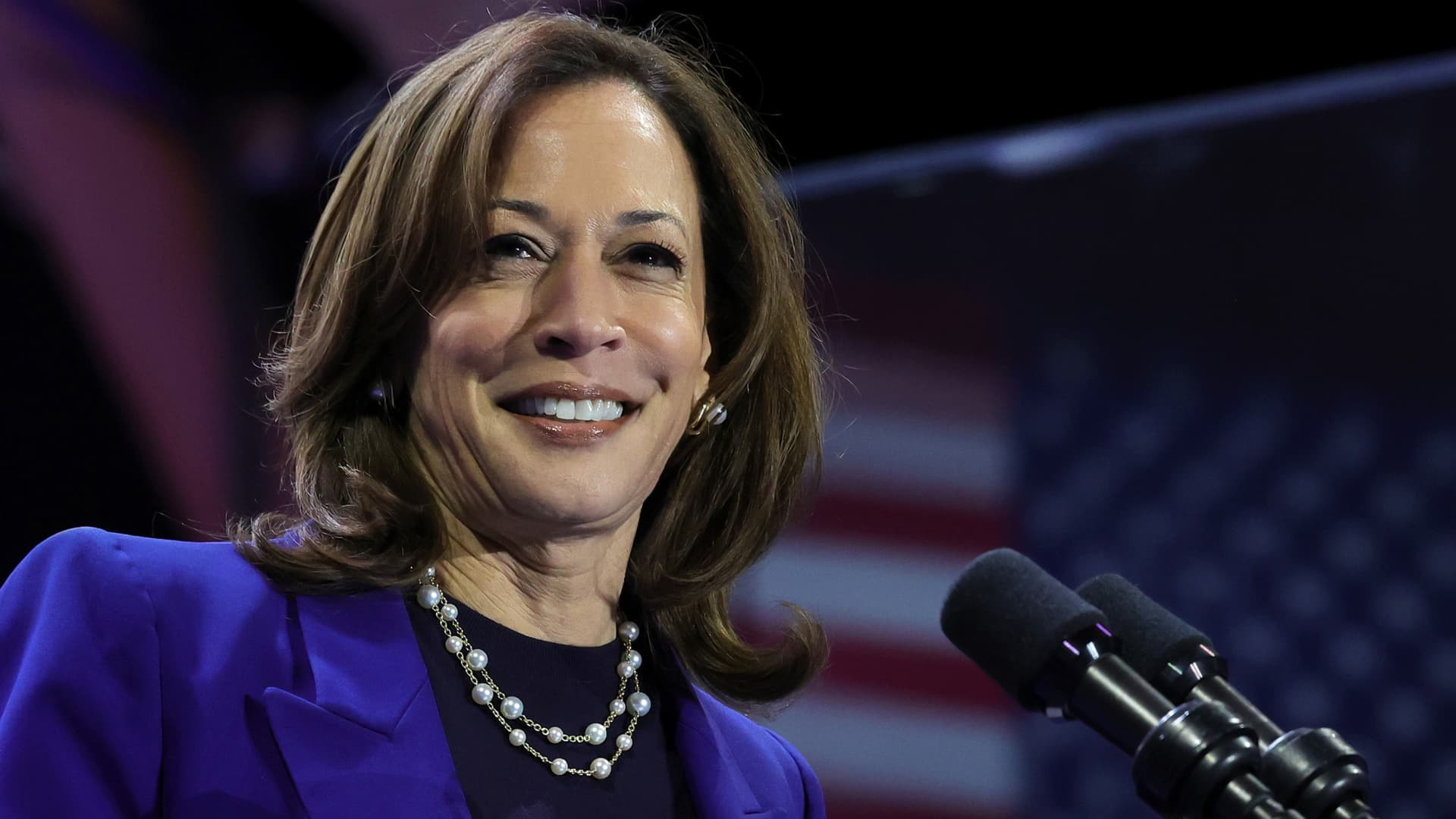
Harris Takes Unexpected Lead Over Trump in Iowa as Election Nears

A new poll from the Des Moines Register/Mediacom shows Democratic presidential candidate Kamala Harris leading Republican candidate Donald Trump in Iowa by 47% to 44%, just days before the election. Although the lead falls within the poll’s margin of error of 3.4%, this result represents a surprising 7-point shift in favor of Harris since September. Political experts and observers were taken aback by these findings, as Iowa, a state Trump easily won in both 2016 and 2020, was not anticipated to swing in Harris’s favor.

J. Ann Selzer, president of Selzer & Co., the highly regarded polling firm responsible for the survey, commented on the unexpected result, saying, “It’s hard for anybody to say they saw this coming. She has clearly leaped into a leading position.” The survey, conducted from Monday through Thursday, included 808 likely voters, giving weight to the results among political strategists and campaigns.

The poll indicates Harris’s edge is largely driven by female voters, particularly older and politically independent women. According to Selzer, “Age and gender are the two most dynamic factors that are explaining these numbers.” This demographic support has played a critical role in propelling Harris ahead in Iowa, where neither she nor Trump has campaigned significantly since the primaries.

In contrast to this poll, an Emerson College poll released the same day shows a different picture, with Trump leading Harris by 53% to 43%. The Trump campaign quickly released a memo dismissing the Des Moines Register poll as an “outlier,” stating that the Emerson poll is a more accurate reflection of the Iowa electorate.

Adding another layer of complexity, 3% of likely voters in Iowa still support independent candidate Robert F. Kennedy Jr., who recently exited the race and endorsed Trump. The poll shift is notable given Iowa’s recent voting history, with Trump winning the state by 8 points in 2020 and by 9 points in 2016.

With Election Day just around the corner, Harris’s apparent surge underscores the volatile nature of the current political landscape, especially in states that were previously considered securely Republican.

Understanding Daylight Saving Time and Its Ongoing Debate

Daylight saving time (DST) is a long-standing practice in North America, impacting nearly 400 million people. Originating over a century ago, it involves setting clocks forward an hour in spring and back in autumn. However, public and legislative scrutiny around DST has increased in recent years, prompting reconsideration of its place in modern life.

WHEN DOES DAYLIGHT SAVING TIME OCCUR?

In the U.S. and several other countries, DST ends annually on the first Sunday in November at 2 a.m. local time, granting an extra hour of sleep as clocks “fall back.” This shift makes mornings brighter but causes earlier sunsets. The U.K. and other European nations also observe DST, though they follow slightly different schedules. DST in the U.S. runs from the second Sunday in March to the first Sunday in November, while in Europe it spans from the last Sunday in March to the last Sunday in October.

The Winter Solstice

In 2024, the shortest day will be December 21, marking the winter solstice, when daylight hours reach their minimum. In northern latitudes, daylight is extremely limited, with regions near the North Pole in full darkness, while areas farther south still enjoy over 10 hours of daylight.

THE HISTORY AND PURPOSE OF DAYLIGHT SAVING TIME

DST traces its roots back to the late 19th century when New Zealand entomologist George Hudson suggested adjusting clocks to extend daylight hours for post-work activities. Though slow to catch on, DST gained momentum during World War I as a fuel-saving measure. Germany adopted DST in 1916, and the United States followed in 1918. Various modifications occurred before the U.S. standardized DST in 1966 through the Uniform Time Act, allowing states to opt out of DST but not to adopt it permanently.

CONTROVERSIES SURROUNDING DAYLIGHT SAVING TIME

Despite popular belief, DST was not introduced for the benefit of farmers, who generally find the practice disruptive. The original goal—energy conservation—has also come under question, as recent studies indicate minimal energy savings associated with DST. Additionally, research shows potential health risks linked to DST, such as increased heart attacks, strokes, and traffic accidents immediately following the spring shift. A 2023 poll by YouGov revealed that 62% of Americans support ending the biannual clock change, though opinions vary on whether permanent DST or standard time is preferable.

DO ALL U.S. STATES OBSERVE DST?

Not all states observe DST. Hawaii and most of Arizona, except the Navajo Nation, follow standard time year-round. Additionally, U.S. territories such as American Samoa, Guam, Puerto Rico, the Northern Mariana Islands, and the U.S. Virgin Islands do not observe DST. While 19 states have passed measures to adopt permanent DST if allowed by Congress, current federal restrictions prevent permanent DST.

IS THE U.S. MOVING TOWARD PERMANENT DAYLIGHT SAVING TIME?

While the U.S. is not set to end DST immediately, federal legislation called the Sunshine Protection Act proposes making DST permanent. This bipartisan bill passed the Senate in 2022 but stalled in the House over disagreement about permanent standard time versus DST. Reintroduced in 2023, the bill is currently under review by the Committee on Commerce, Science, and Transportation and must pass both chambers before the President can sign it into law.


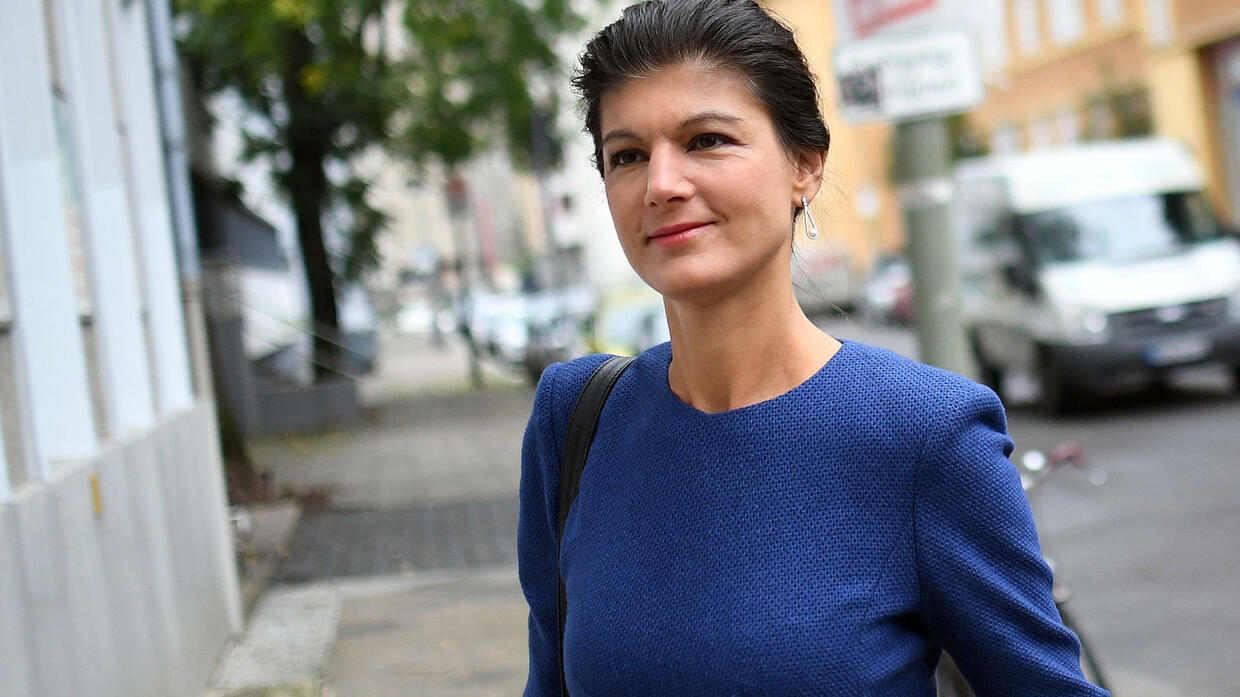
Germany’s Left-Wing BSW Challenges Pro-Ukraine Consensus with Growing Influence

Germany’s recently established leftist-populist party, the Sahra Wagenknecht Alliance (BSW), is challenging the country’s strong support for Ukraine. As the BSW rises in three eastern states—Brandenburg, Thuringia, and Saxony—it demands that any regional coalition partners advocate for an end to military support for Ukraine. This anti-military stance risks eroding Germany’s established pro-Ukraine consensus, even as the country ranks as Kyiv’s second-largest military backer against Russia. Moreover, these developments are intensifying friction within Chancellor Olaf Scholz’s three-party federal coalition, already under strain in Berlin.

Formed in January, the BSW is Germany’s only anti-war party, apart from the far-right Alternative for Germany (AfD), which remains isolated as mainstream parties refuse to collaborate with it. Now a key player in the eastern states after its strong performance in recent elections, the BSW is positioning itself as an indispensable partner for coalition-building, with party leader Sahra Wagenknecht insisting that any alliances endorse her party’s anti-war policies.

This stance recently led to controversy when the Social Democratic Party (SPD) in Brandenburg, Scholz’s own party, endorsed a joint statement with the BSW, asserting that “the war will not be ended by further weapons deliveries.” The statement, which also criticized the potential deployment of U.S. long-range missiles in Germany, faced backlash in Berlin and within the SPD itself. Agnieszka Brugger, a prominent Green Party lawmaker, called the SPD’s collaboration “cynical and populist,” warning that ending support for Ukraine jeopardizes the security of Germany and its allies.

While state governments cannot directly influence foreign policy, BSW’s stance arrives amid shifting public opinion, with some polls showing cooling support for Ukraine, especially as Russia advances militarily and U.S. policy on Ukraine hinges on the November 5 election.

This shift has also emboldened the SPD’s Russophile faction, evident in the recent promotion of Matthias Miersch, who has been seen as rehabilitating Gerhard Schröder, the former SPD chancellor with ties to Russian energy firm Gazprom and a personal relationship with Vladimir Putin.

A Party in Flux

BSW’s blend of economically paternalistic policies with an anti-migration stance has resonated with voters, particularly in the eastern states, where it secured double-digit percentages in recent elections. Polls suggest it could attract 7-9% of the vote in the federal election next year. This trajectory has transformed Wagenknecht, a former Leninist and long-standing cult figure, into a regular on talk shows. However, internal challenges are surfacing as local BSW leaders, particularly in Thuringia, grapple with Wagenknecht’s strict anti-war stance.

In Thuringia, Katja Wolf, BSW’s regional leader and a popular former mayor of Eisenach, prioritized coalition-building over rigid anti-war statements in talks with SPD and conservative partners. Her focus on stability led her to agree to a vague preamble about peace rather than committing to BSW’s anti-war messaging, drawing criticism from Wagenknecht, who called for a “recognizable BSW signature” in the coalition.

Political scientist Oliver Lembcke of the University of Bochum highlights the fragility of Wagenknecht’s political ventures, noting that a similar movement, “Rise Up,” she launched in 2018, dissolved within a year. As BSW gains national traction, some analysts question whether the party can withstand internal divisions and maintain cohesion through to the next federal election.