OPEC+ Delays Oil Production Strategy Meeting to Dec. 5 Amid Market Uncertainty

OPEC+, the global oil alliance, has postponed its upcoming meeting to discuss future oil production strategies until December 5, sources familiar with the matter told CNBC. The meeting, initially set for December 1, will now take place virtually.

Delayed Decision on Production Cuts

The OPEC+ coalition, which includes the Organization of the Petroleum Exporting Countries (OPEC) and its allies, is currently managing multiple production cuts in response to unpredictable global oil demand. The group’s formal output strategy aims to limit production to 39.725 million barrels per day (bpd) into 2025. In addition, eight members have committed to reducing production by 1.7 million bpd voluntarily, with a second round of cuts of 2.2 million bpd set to end in December.

The rescheduling of the meeting is reportedly due to the attendance of key member ministers at the Gulf Summit in Kuwait City on December 1.

Impact of Geopolitical Factors and Price Pressures

The question of whether to extend the second set of 2.2 million bpd cuts remains uncertain. Global oil prices have been under pressure recently, partially due to the implementation of a ceasefire between Israel and Lebanon, which has lessened the risk of oil production disruptions in the Middle East.

Further complicating matters is the ongoing conflict involving Iran, a key OPEC member, which has been engaged in hostilities with Israel and supporting militant groups in the region. Markets are particularly concerned about the potential impact on Iran’s oil infrastructure.

As of the morning of the meeting delay announcement, the price of Brent crude was trading at $72.68 per barrel, a slight decrease of 0.2%. Meanwhile, U.S. WTI crude futures for January delivery were at $68.58 per barrel, also down by 0.2%.

Uncertainty Surrounding U.S. Policy

Adding to the uncertainty in the global oil market is the anticipated return of President-elect Donald Trump in January. Trump has historically promoted a “drill, baby, drill” policy, encouraging increased U.S. oil production. He has also pursued aggressive sanctions against Iran, which could further complicate Tehran’s oil exports, especially to China, the world’s largest crude importer.
 

South Korea’s Export Growth Slows to 14-Month Low Amid U.S. Tariff Uncertainty

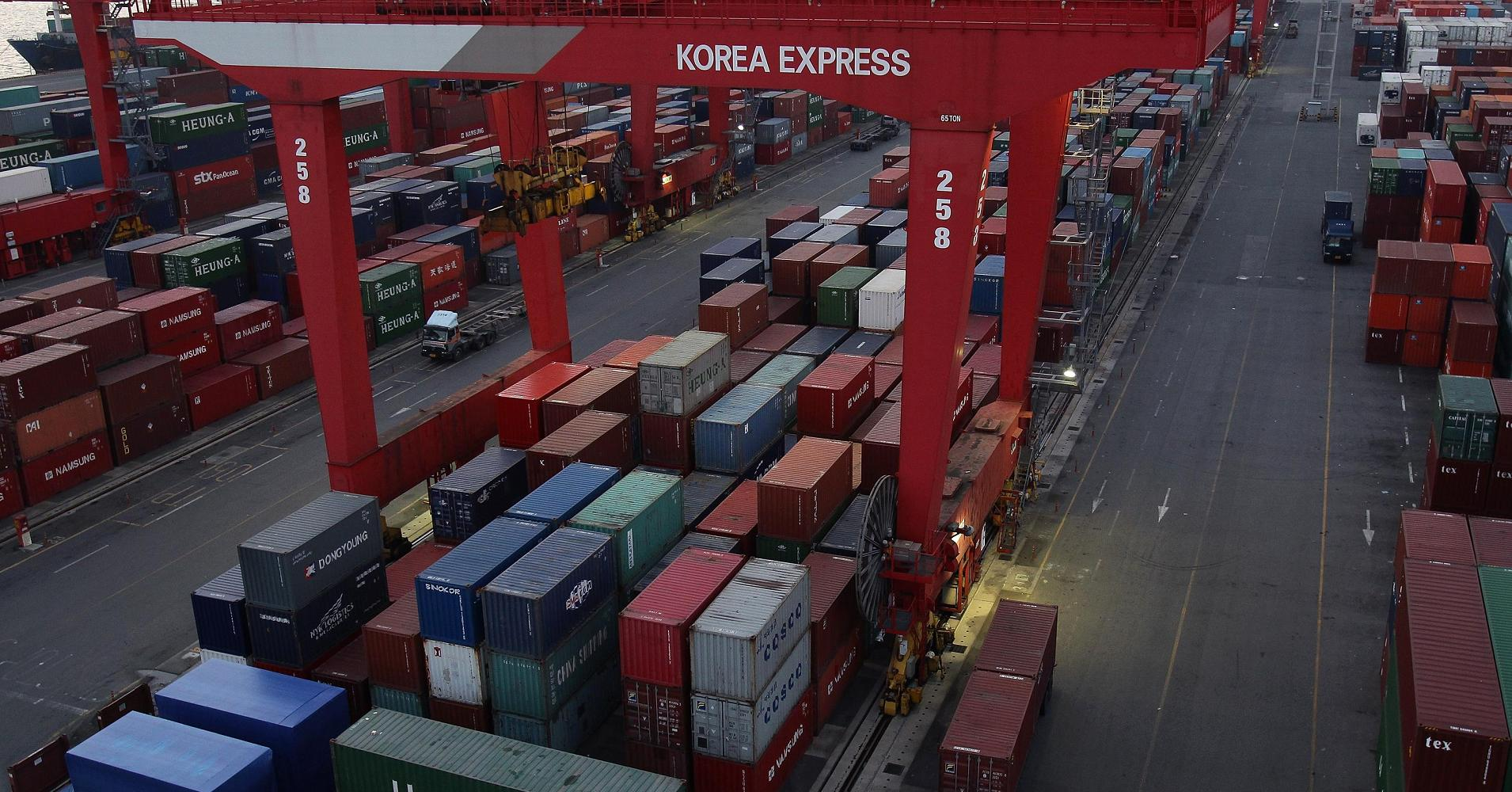
South Korea’s export growth in November is expected to have reached its weakest level in 14 months, continuing a four-month slowdown, according to a Reuters poll. Economists cited declining demand in the United States, driven by trade policy uncertainties under the incoming Trump administration, as a major factor impacting outbound shipments.

Declining Export Growth

Exports are forecast to have increased by just 2.8% year-on-year in November, a slowdown from the 4.6% rise recorded in October. This marks the 14th consecutive month of export growth, but the smallest gain during the streak. The slowdown is attributed to weaker demand for goods beyond semiconductors, including automobiles and IT products.

“Non-semiconductor exports, particularly auto sales to the U.S., are slowing, while IT demand is gradually weakening,” said Chun Kyu-yeon, an economist at Hana Securities.

Impact of U.S. Tariff Policies

U.S. President-elect Donald Trump has pledged to impose significant tariffs on imports from Canada and Mexico. These policies are expected to create a challenging environment for South Korean manufacturers reliant on U.S. demand.

In the first 20 days of November, South Korea’s exports rose by 5.8%, supported by a jump in semiconductor shipments. However, automobile exports declined, and shipments to the U.S. fell by 2.5%, marking the first drop since July 2023. Meanwhile, exports to China grew by 3.5%.

Economist Lee Seung-hoon of Meritz Securities stressed the importance of U.S. manufacturing recovery, stating, “A recovery in U.S. manufacturing activity will be critical for broader strength across South Korea’s export sectors.”

Trade Outlook

The survey forecast a modest 0.4% rise in imports for November, compared to a 1.7% increase in October. The trade balance is projected to show a surplus of $5.15 billion, a significant increase from October’s $3.15 billion.

While the semiconductor sector has remained a strong performer, other sectors’ weaknesses could weigh on South Korea’s economic growth prospects. “The semiconductor rebound offers some comfort, but it will be overshadowed by broader export sector challenges,” noted Oh Suk-tae, an economist at Société Générale.

South Korea’s official trade data for November will be released on Sunday, December 1, at 9 a.m. local time.


Indian Central Bank Likely to Delay Rate Cuts to 2025 Amid Inflation Concerns

The Reserve Bank of India (RBI) is expected to keep its key repo rate at 6.50% during its December 4-6 meeting, according to a Reuters poll conducted from November 18-27. The move comes as surging inflation, fueled by rising food prices, has delayed forecasts for the central bank’s first rate cut in this cycle to February 2025, rather than December 2024 as previously anticipated.

Inflationary Pressures and RBI Stance

Annual retail inflation exceeded the RBI’s 6% tolerance threshold in October, driven by escalating food prices. Despite shifting its monetary policy stance to ‘neutral’ in October, the central bank remains cautious. Governor Shaktikanta Das has emphasized the risks of prematurely lowering rates, signaling a more conservative approach.

Of the 67 economists surveyed, 62 predicted no change in rates in December, while five expected a 25-basis-point (bp) cut. This marks a shift from last month’s poll, where a slight majority anticipated a cut to 6.25%.

“Governor Das has been one of the more hawkish voices on the Monetary Policy Committee. His extension could mean continued caution on rate cuts,” noted Shilan Shah, deputy chief emerging markets economist at Capital Economics.

Easing Cycle Delayed

The survey indicated a growing consensus that the RBI would initiate its easing cycle later, with 21 of 48 economists revising their forecasts from December to February or later. Median projections show the repo rate falling to 6.00% by June 2025, with no further cuts expected until early 2026.

Pranjul Bhandari, HSBC’s chief India economist, remarked, “RBI officials appear less inclined to dismiss spikes in vegetable price inflation and may opt to wait until February or April to ease rates.”

Global and Domestic Economic Impacts

The RBI’s cautious approach contrasts with other major central banks like the U.S. Federal Reserve, which is expected to continue cutting rates in 2025. Factors such as expansionary U.S. fiscal policies and potential tariff increases under President-elect Donald Trump’s administration could influence global monetary trends and limit rate cuts for emerging markets like India.

Domestically, India’s economic growth is projected to slow to 6.8% in the current fiscal year and 6.6% in the next, a decline from over 8% in FY 2023/24. Some economists warn that weaker-than-expected growth could pose downside risks to terminal rate forecasts.

“The interplay between global and domestic conditions will shape the pace and extent of rate cuts in the coming years,” said Gaura Sengupta, chief economist at IDFC Bank.