
Avoid These 3 Common Mistakes When Asking for a Promotion, According to INSEAD Negotiation Expert

Preparing for a Promotion Discussion

Asking for a promotion can be intimidating, but navigating the process successfully is a critical skill, especially in the workplace. Horacio Falcão, a negotiation professor at INSEAD, stresses that people often approach these discussions with the wrong mindset. Instead of focusing on pushing through a predetermined solution, he advises focusing on becoming a better negotiator by enhancing emotional intelligence, patience, empathy, and preparation.

Here are three common mistakes employees should avoid when negotiating for a promotion:

1. Moving Too Fast

Falcão’s first piece of advice is to avoid waiting until the annual review to ask for a promotion. He argues that waiting for a formal evaluation is a mistake because trust needs time to build. Rather than rushing into the conversation at the end of the year, employees should initiate discussions about their career development early on.

Falcão suggests regularly meeting with supervisors—whether through coffee chats or one-on-one meetings. These conversations allow employees to gather feedback and improve throughout the year while also helping to strengthen relationships with their bosses. Furthermore, they provide an opportunity to clearly express career ambitions. A proactive approach could sound like: “I’m excited about growing here. I’m ready to put in the effort to be the next person up. What do I need to do?”

2. Not Asking Questions

Negotiations can be high-pressure situations, often leaving individuals unsure of how to respond. Falcão advises that if you find yourself at a loss for words, take a pause and ask questions instead. Doing so can help you better understand the context and ensure a more productive conversation. Here are three key questions Falcão recommends:

  1. “How did you come up with that number?”
    If offered a salary or position figure, it’s important to understand the reasoning behind it. Falcão explains that numbers are often based on formulas or internal benchmarks, but the specifics matter to assess whether the offer is fair.
  2. “Why would you do this if you were me?”
    This question encourages empathy and offers a chance to see things from the other party’s perspective. It can also expose gaps in the employer’s reasoning or provide insight into the company’s budget constraints.
  3. “How are we doing?”
    Long negotiations can sometimes lead to disconnection or emotions running high. Falcão recommends checking in with this question to assess where the conversation stands and to create space for both sides to reset and continue in a more productive direction.

3. Having a Too Clear Idea of Success

Another mistake Falcão warns against is having a rigid, predefined notion of success. He explains that negotiation is inherently messy and involves co-constructing a solution with the other side. Many people mistakenly think that one party must “win” while the other “loses.” In reality, successful negotiations often result in a compromise or a mutually beneficial outcome.

The key to effective negotiation is listening and being willing to collaborate to find a win-win solution. Flexibility and openness are crucial, as the process may lead to a different but equally valuable outcome than originally envisioned.

Conclusion

By avoiding these common mistakes—moving too quickly, failing to ask insightful questions, and insisting on a rigid outcome—employees can enhance their chances of successfully negotiating a promotion. Ultimately, the goal is to foster a collaborative and open environment where both sides work toward a mutually beneficial result.
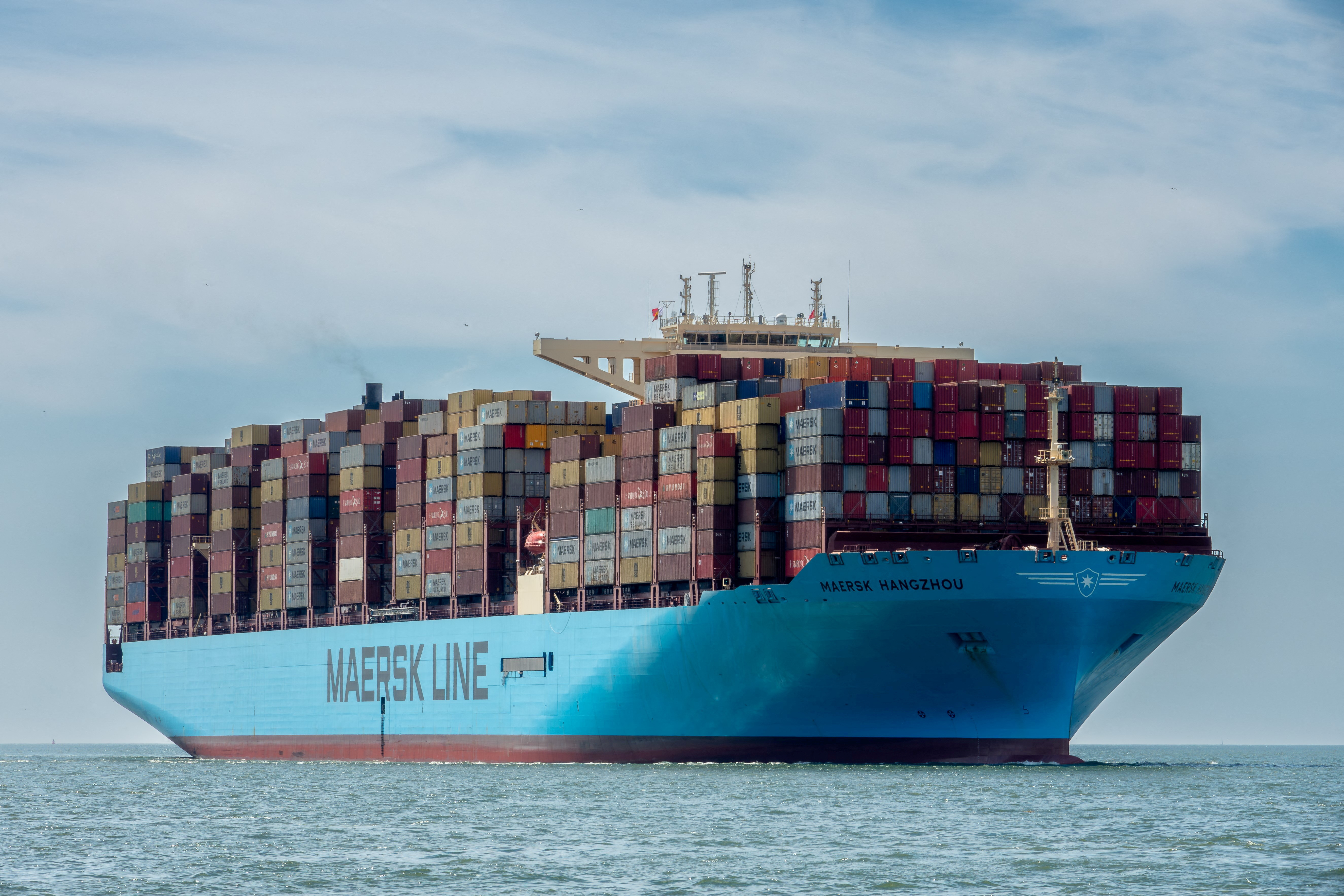

 

Maersk Unveils Dual-Fuel Methanol Vessel as Shipping Industry Pushes for Decarbonization

Maersk’s Latest Move Toward Sustainability

Danish shipping giant Maersk has unveiled its latest dual-fuel methanol vessel, the A.P. Møller, marking a significant step in the company’s decarbonization efforts. The 350-meter-long ship, launched in Southeast Asia, is part of a growing fleet of vessels capable of running on both traditional marine fuels and methanol, a more sustainable alternative.

Ditlev Blicher, Maersk’s president for the Asia-Pacific region, shared in an interview with CNBC’s “Squawk Box Asia” that this technology represents the cutting-edge solution for decarbonizing the shipping industry. “This allows the industry to shift from black fuels or fossil fuels into what we call e-methanol, or green methanol, significantly reducing the carbon outlets of normal shipping,” Blicher said.

Maersk defines green fuels as those offering at least a 65% reduction in greenhouse gas emissions compared to fossil fuels on a lifecycle basis. While methanol is traditionally made from fossil fuels, it can also be produced sustainably from renewable energy sources, as highlighted by the International Renewable Energy Agency.

Environmental Benefits of Green Methanol

Maersk claims that vessels running on green methanol, such as the A.P. Møller, can save up to 280 tons of CO2 per day. This aligns with Maersk’s ambitious goal to achieve net-zero emissions by 2040. In addition to reducing carbon emissions, green methanol has a lower sulfur content, which cuts down on sulfur oxides—pollutants that contribute to air pollution and acid rain.

The A.P. Møller is Maersk’s ninth dual-fuel methanol vessel out of 25 planned to be completed by 2027. According to the company, if just 12 of its existing vessels were replaced with large dual-fuel methanol ships like the A.P. Møller, the company could save 1.5 million metric tons of CO2—almost double the emissions produced by the Municipality of Copenhagen in 2022.

A Step Toward Industry-Wide Change

Maersk, the largest maritime shipper in the world, is setting the pace for the global shipping industry, with other companies also increasingly adopting methanol as an alternative fuel. Blicher noted that about 170 dual-fuel methanol vessels are currently on order across the industry, contributing to the scaling up of this sustainable technology.

As companies look to meet their own decarbonization targets, Maersk is pushing for broader adoption of methanol-based fuels. However, Blicher acknowledges that while building economies of scale is crucial, the cost of producing methanol is currently higher than traditional marine fuels. He believes that further regulatory action will be necessary to incentivize the industry to move away from fossil fuels.

“We’re talking about adding to the price of black fuel to make sure that the black fuel price is reflective of the impact that it has on the economy,” Blicher explained, advocating for regulations that would make fossil fuels more expensive and thus less attractive to the shipping industry.

Singapore’s Role in Sustainable Shipping

Singapore, the world’s largest bunkering port, has been a leader in promoting sustainable shipping practices. The country’s government has expressed strong support for Maersk’s green methanol efforts. Murali Pillai, Singapore’s minister of state for law and transport, highlighted that the arrival of the A.P. Møller reinforces the city-state’s commitment to reducing greenhouse gas emissions. Pillai emphasized the ongoing collaboration with Maersk to establish Singapore as a hub for new maritime fuels.

Maersk’s Strong Financial Performance

In addition to its environmental initiatives, Maersk has seen robust financial results. In October, the company raised its full-year forecasts after reporting strong third-quarter earnings. With revenue of $15.8 billion, up from $12.1 billion the previous year, Maersk attributed its performance to heavy demand and higher prices, particularly due to disruptions in the Red Sea.


Ireland Heads to Polls Amid Economic Growth and Political Uncertainty

A Key Election in Ireland

Ireland is heading to the polls on November 29, with the center-right parties Fianna Fáil and Fine Gael expected to once again form the nucleus of the country’s next government. The two parties, which have shared power alongside the Green Party over the past five years, continue to lead in the polls as the election campaign enters its final stretch.

The country faces a range of economic challenges and opportunities as it prepares for the election. While Ireland is benefiting from a budget surplus fueled by its role as a European headquarters for major U.S. tech and pharmaceutical companies, the election outcome may shape how the country manages this growth. A significant factor in Ireland’s economic windfall is a September ruling from the European Court of Justice, which ordered Apple to pay 13 billion euros ($13.7 billion) in back taxes to the country.

However, there are concerns in Dublin about the potential implications of a Donald Trump presidency. The incoming U.S. president-elect has expressed intentions to crack down on U.S. companies paying taxes abroad, particularly in countries like Ireland. This looming policy shift could impact Ireland’s position as a tax-friendly haven for U.S. businesses.

The Political Landscape

The latest Irish Times/Ipsos B&A poll shows support for Fine Gael has dropped by six points, leaving the party at 19%. Fianna Fáil holds a lead at 21%. Republican Party Sinn Féin, which gained significant ground in the previous general election, is polling at 20%, while independent candidates have 17% support. With Ireland’s proportional voting system, a coalition government is likely, as no party is expected to secure an outright majority.

While housing is a central issue, with the Central Bank of Ireland warning about a decade-long under-supply in the housing market, other significant policy concerns, such as economic strategy and government spending, will likely shape the direction of the new government.

Housing Crisis and Economic Outlook

Homelessness, particularly in Dublin, has reached record levels, with nearly 15,000 people in emergency accommodation, including 4,561 children. Despite these challenges, economist Emma Howard from TU Dublin highlights Ireland’s appeal to workers, noting its status as the only English-speaking country with access to the European Single Market, alongside a relatively younger and more educated workforce compared to other European nations.

On the positive side, Ireland’s finances are on strong footing. The country has seen a budget surplus for the past two years, with Finance Minister Jack Chambers predicting a surplus of up to €24 billion for 2023. The country’s financial health was further boosted when S&P Global Ratings upgraded its outlook for Ireland to “positive,” with the potential for an AAA rating if the country continues to rebuild economic buffers.

However, Howard warns that the “windfall” from corporate taxes, largely driven by multinational U.S. companies, distorts the true state of Ireland’s finances. Without this influx, Ireland would face a deficit, and the country’s current spending plans would result in a €50 billion shortfall over the next six years.

Risks from Trump’s “America First” Policy

The re-election of Donald Trump presents a significant risk for Ireland, especially as Trump seeks to implement his “America First” policy. One concern is the potential for Ireland to lose its status as a tax haven for U.S. companies. The country’s corporate tax rate is among the lowest in the Eurozone, making it an attractive destination for foreign businesses, particularly tech giants like Apple and Google.

Incoming U.S. Commerce Secretary Howard Lutnick has already signaled discontent with Ireland’s trade surplus with the U.S., calling it “nonsense” and hinting at potential action. Lutnick’s position could strengthen his influence over the U.S. Trade Representative’s office under the Trump administration. Moreover, Trump himself has personal business interests in Ireland, owning a golf club in the country, which could complicate the relationship further.

Conclusion

As Ireland prepares to head to the polls, the country’s leaders will have to balance ongoing challenges—such as the housing crisis, homelessness, and a potential change in the U.S. policy toward corporate taxation—with the opportunities presented by the country’s robust financial position. The election results could have significant implications for Ireland’s political and economic future, particularly as it navigates its relationship with the incoming Trump administration.