Scientists Demonstrate Time-Reversal Symmetry in Kagome Superconductor Breakthrough

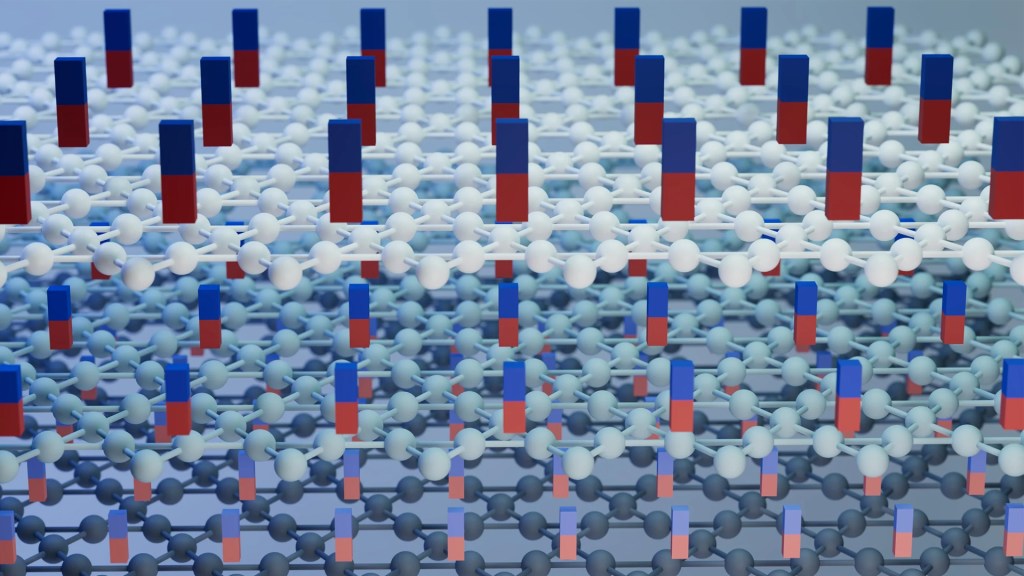
A research team at the Paul Scherrer Institute (PSI) in Switzerland has made a significant advancement in quantum materials by demonstrating time-reversal symmetry (TRS) breaking in the Kagome superconductor RbV3Sb5 at an unprecedented temperature of 175 Kelvin (-98°C or -144.67°F). This breakthrough is particularly noteworthy because quantum systems typically require extremely low temperatures to function properly, as thermal energy can interfere with their delicate states. The ability to induce TRS breaking at such a relatively high temperature opens up exciting possibilities for the future of quantum technology, potentially reducing energy costs and making these systems more practical for real-world applications.

In quantum physics, time-reversal symmetry refers to the idea that the fundamental laws of physics remain the same even when time flows backward. However, in certain materials, such as RbV3Sb5, this symmetry is deliberately broken, leading to the formation of unique quantum states. These states have properties that vary depending on the direction of time, creating opportunities for precise manipulation in quantum devices. The ability to control such states is crucial for the development of advanced quantum technologies, including quantum computing and communication systems, where stability and precision are paramount.

The groundbreaking aspect of this research lies in the ability of RbV3Sb5 to sustain superconductivity down to about two Kelvin, while still maintaining TRS-breaking states at much higher temperatures. This combination of superconductivity and TRS-breaking behavior makes the Kagome superconductor a promising candidate for use in future quantum technologies. As the researchers, including Mahir Dzambegovic from PSI, note, the material’s unique charge order state allows electrons to form an organized pattern that induces a magnetic effect strong enough to break TRS at -144.67°F. This offers a new avenue for controlling quantum systems with less energy input and greater efficiency.

The implications of this discovery are far-reaching. By demonstrating that time-reversal symmetry can be broken in a superconductor at a higher temperature, the researchers have opened a new chapter in the study of quantum materials. If this phenomenon can be replicated in other materials or scaled for practical use, it could significantly lower the barriers to quantum technology adoption, making these powerful systems more accessible and cost-effective. This research not only advances our understanding of quantum mechanics but also paves the way for the next generation of technological innovations in the quantum world.

NASA’s Atmospheric Waves Experiment Detects Gravity Waves Triggered by Hurricane Helene Over Florida

On September 26, 2024, as Hurricane Helene unleashed its fury on Florida’s Gulf Coast, NASA’s Atmospheric Waves Experiment (AWE) aboard the International Space Station (ISS) captured a remarkable atmospheric phenomenon. The storm, which produced intense storm surges and affected communities along the coast, created gravity waves high above the Earth’s surface, approximately 55 miles in altitude. These waves, a rare sight from space, were detected as part of NASA’s ongoing research into space weather and its interactions with Earth-bound systems such as satellites, communication networks, and other technological infrastructure.

The AWE instrument, which was launched in November 2023, is designed to observe the impact of terrestrial weather events on the upper atmosphere. As the ISS passed over the southeastern United States during the height of Hurricane Helene, the AWE detected large, concentric gravity waves caused by the extreme conditions below. The waves, which are visually represented in red, yellow, and blue hues, illustrate changes in radiance within Earth’s mesosphere, offering a striking depiction of how violent weather events can send shockwaves into the higher layers of the atmosphere. The color enhancements in the imagery highlight variations in infrared brightness, helping to track the waves as they stretched westward from northern Florida.

Gravity waves, which are essentially ripples in the atmosphere caused by disturbances such as strong winds or storms, have a significant role in both weather and space weather dynamics. According to Ludger Scherliess, the Principal Investigator for NASA’s AWE at Utah State University, these waves are similar to the ripples that form when a pebble is dropped into a pond. By studying these atmospheric disturbances, scientists can gain a deeper understanding of how terrestrial weather phenomena, like hurricanes, influence the broader atmospheric system, including conditions that can affect satellite operations and communication systems in space.

This discovery underscores the critical role of atmospheric studies in understanding the intricate relationship between weather on Earth and space weather. The data collected by NASA’s AWE could potentially provide valuable information for improving the resilience of space-based technology during extreme weather events, highlighting the interconnectedness of our planet’s weather systems and the technology that relies on them. As scientists continue to monitor these gravity waves, it could open new pathways for protecting both terrestrial and space-based infrastructure from the effects of powerful storms like Hurricane Helene.

Scientists Unveil Four Distinct King Cobra Species After 188 Years of Uncertainty

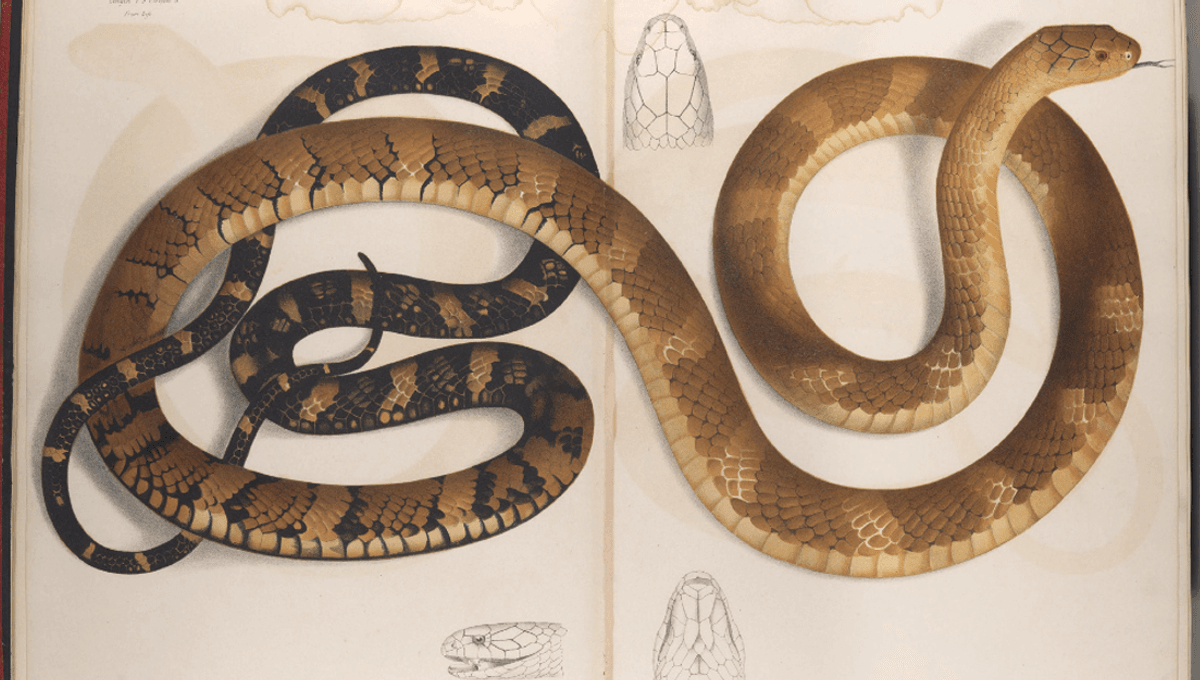
A groundbreaking study has revealed that the king cobra, long believed to be a single species, is actually composed of four distinct species. This discovery, which resolves a longstanding mystery in the field of herpetology, has been over 188 years in the making. For nearly two centuries, the king cobra was classified as Ophiophagus hannah, one of the world’s most famous venomous snakes. However, recent advancements in genetic and physical analysis have challenged this assumption, significantly altering our understanding of this iconic reptile.

The revelation came after scientists noticed variations in physical characteristics such as color patterns and size in king cobra populations across different regions. These discrepancies prompted further investigations into whether there were multiple species masquerading under the same name. In 2021, genetic research provided the first clues, revealing distinct genetic lineages within king cobra populations. This study, which combined genetic evidence with analysis of museum specimens, led by Gowri Shankar Pogiri, further solidified the case for separate species.

The research culminated in the identification of four distinct species of king cobra. These are the Northern king cobra (Ophiophagus hannah), the Sunda king cobra (Ophiophagus bungarus), the Western Ghats king cobra (Ophiophagus kaalinga), and the Luzon king cobra (Ophiophagus salvatana). Each species is native to specific geographic regions, contributing to their physical and genetic differences. The Northern king cobra, for example, is found across northern India, Myanmar, and Indochina, while the Sunda species is located in Southeast Asia, primarily in the Malay Peninsula and nearby islands.

These findings not only provide clarity to a long-standing mystery but also have significant implications for conservation and the study of venomous reptiles. Understanding that the king cobra is not a monolithic species will help researchers better protect these snakes, whose habitats are increasingly threatened. As the world’s longest venomous snake, the king cobra plays a crucial ecological role, and now, with the recognition of its four distinct species, efforts can be more targeted and effective in ensuring their survival.