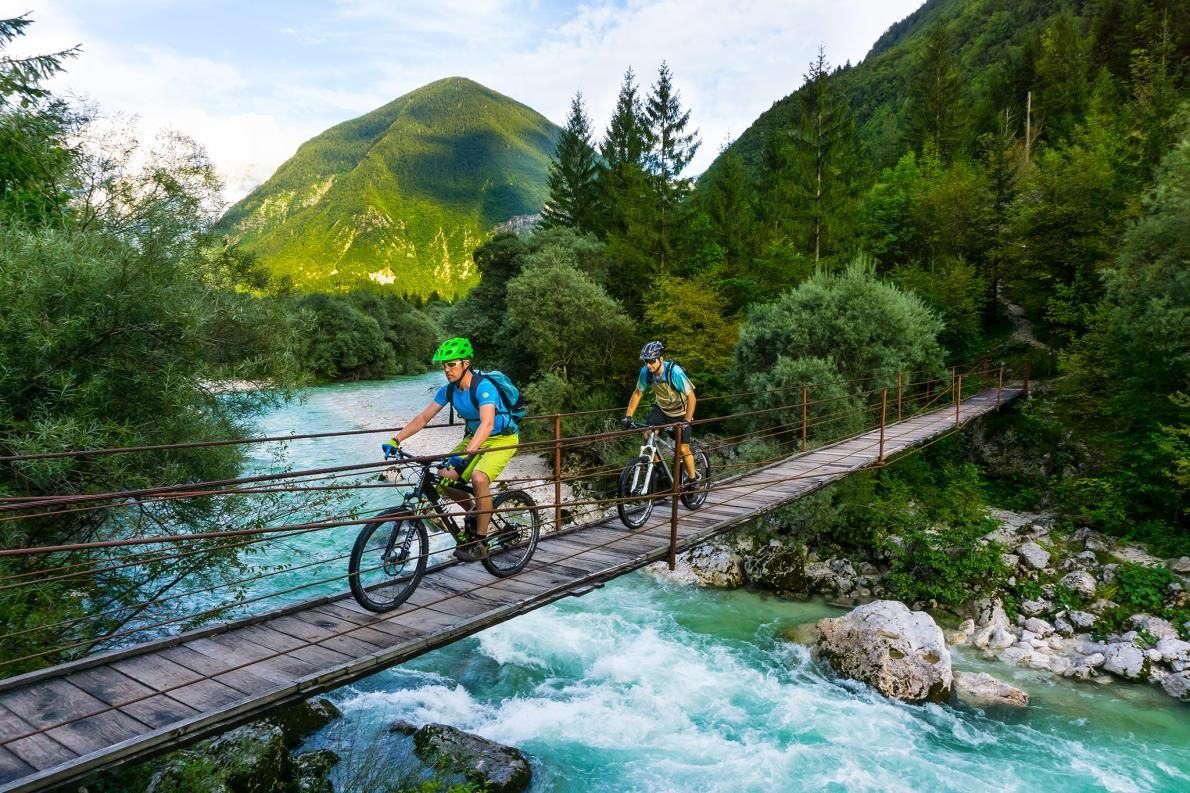
The Trans Dinarica: A 5,500km Bike Trail Connecting the Hidden Treasures of the Balkans

The Trans Dinarica, a new 5,500km cycling route, weaves through the heart of the Balkans, offering a chance to explore some of Europe’s most remote and pristine landscapes. This long-distance trail, launched in July 2024, connects eight countries, including Slovenia, Montenegro, Bosnia and Herzegovina, and Albania, guiding cyclists through rugged national parks, UNESCO World Heritage sites, and culturally rich villages.

The journey begins with a quiet ascent from the asphalt roads of Montenegro, where pastures stretch before you and the sight of a shepherd’s hut is accompanied by the playful barks of two dogs. As the storm clouds gather, the dogs, undeterred, follow the rider through steep gravel roads toward the summit. In Tušinja, a small village, a local man invites the cyclist into his home, offering coffee and rakija. The warmth and hospitality of the village are a stark contrast to the rare sight of a tourist.

Cycling from Podgorica, Montenegro, to Sarajevo, Bosnia and Herzegovina, the Trans Dinarica’s course runs through the Dinaric Alps, which were once a battleground in the 1990s Yugoslav wars. Now, they form a stunningly quiet landscape, largely untouched by the tourism that floods Croatia’s Adriatic coast. The trail not only showcases the natural beauty of the region, such as the Tara River Canyon in Montenegro and Lake Ohrid in Albania, but also highlights the cultural diversity of the area.

One notable example of the region’s unique blend of cultures is the village of Theth in Albania, where, despite the country’s majority Muslim population, the village has preserved its Catholic heritage. The church in Theth, nestled among the soaring peaks of the Accursed Mountains, reflects this deep cultural history, offering a glimpse of the diverse past of the Balkans. Along the route, cyclists encounter a mix of ancient Hellenistic ruins, Ottoman structures, and Orthodox monasteries, each telling a part of the region’s complex story.

The Trans Dinarica was inspired by the Via Dinarica hiking trail, which opened in 2010 and aimed to reconnect people across the borders of the fractured Balkans. The cycling version now offers a chance to explore some of Europe’s most overlooked corners, from remote mountain villages to awe-inspiring natural wonders.

Jan Klavora, CEO of Visit Good Place and a creator of the Trans Dinarica, shared his vision for the trail: “I hope that Trans Dinarica can connect the region in a new way,” he said, recalling his childhood in Yugoslavia when ethnic identities were more fluid. The Trans Dinarica brings together a mosaic of cultures, including Croats, Serbs, Bosniaks, and Albanians, who now live side by side.

The trail covers 5,500km of carefully mapped roads and trails, drawing on a database of 27,000km of cyclable routes. It not only aims to attract international cyclists but also hopes to rejuvenate local economies in depopulated areas. By encouraging tourism and services, the creators hope to give people a reason to stay in these remote areas instead of leaving for better opportunities elsewhere.

However, the creators are mindful of the delicate balance between development and preservation. The planned Vlorë airport in Albania, for example, may bring more tourists but could also strain the fragile environment and local culture. “We want to show that tourism and investment don’t have to ruin the region’s uniqueness,” said Jana Apih, a sustainable tourism expert involved in the project.

The Trans Dinarica showcases the region’s unspoiled nature and its efforts to resist mass tourism. Cyclists experience a serene, intimate journey through the UNESCO-listed Durmitor National Park, where the mountain roads rival the most picturesque passes in the Alps. The route also leads to mountain villages like Tušila in Bosnia and Herzegovina, where cyclists enjoy hearty meals and the warm hospitality of locals.

In the village of Lukomir, on the edge of the Bjelašnica plateau, the trail passes through a landscape dotted with ancient stećci tombstones and shepherds’ cottages. Despite the chilly, mist-filled weather, the village exudes a warmth, with colorful woolen socks and handmade crafts brightening the grey surroundings.

As cyclists continue their journey, they are rewarded with stunning views of Sarajevo, a city where terracotta roofs, mosques, churches, and modern skyscrapers form a patchwork that symbolizes the region’s diversity. “We don’t care about borders,” said Klavora, encapsulating the spirit of the Trans Dinarica. “We don’t care who is Bosniak, Croatian, or Serb. We just want to explore.”


Salmon Return to Klamath River After 100 Years Following Historic Dam Removal

For the first time in over a century, salmon have returned to the Klamath River Basin in Oregon and California, marking a historic ecological milestone following the largest dam removal project in U.S. history.

In October, biologists from Oregon’s Department of Fish and Wildlife identified a Chinook salmon in an area upstream of the Klamath River where the J.C. Boyle Dam once stood. This significant sighting is the first anadromous fish in Oregon’s Klamath Basin since 1912 when the first of four hydroelectric dams was constructed, blocking salmon migration routes.

The removal of the dams—completed in August 2024 after decades of advocacy by Native American tribes—has reopened over 400 miles of the river, allowing salmon and other fish species to reclaim their historical spawning grounds far sooner than expected.

A Triumph for Tribal Advocacy

For the Yurok, Karuk, and other tribes along the Klamath River, the salmon’s return is deeply symbolic. Known as the “salmon people,” these tribes have depended on the river’s fish for sustenance and cultural practices for generations.

“This is incredible news,” said Barry McCovey, senior fisheries biologist for the Yurok Tribe. “The sheer number of fish returning and their geographic range has exceeded all expectations.”

Brook Thompson, a Yurok tribal member and civil engineer, expressed profound relief and joy, stating:

“Seeing the videos of the salmon returning home brought me to tears of happiness and relief. We did it. I am filled with newfound energy and hope to keep up my work in restoration and supporting the rights of tribes and fish.”

The effort to remove the dams began in the 1990s as tribal communities sought to restore the river’s ecosystem and salmon fisheries. After decades of negotiations and setbacks, the final dam was demolished in 2024, clearing the way for the river’s revival.

Restoring a Vital Ecosystem

The Klamath River was once the third-largest salmon-producing river on the West Coast. However, the construction of dams led to a catastrophic decline in fish populations, with fall Chinook salmon numbers plummeting by 90% and spring Chinook by 98%.

Now, biologists and tribal members are witnessing an ecological transformation. Salmon are spawning in tributaries that were previously submerged under reservoirs just nine months earlier. Steelhead trout, coho salmon, and Pacific lamprey are also expected to return in the coming years as the ecosystem heals.

Mark Hereford, leader of Oregon’s Klamath fisheries reintroduction program, expressed amazement:

“The fish are spawning in these tributaries that were underwater just months ago. It offers so much hope for the future.”

Challenges and Optimism Ahead

While the initial results are promising, the restoration project is just beginning. The Yurok Tribe is also restoring 2,200 acres of land newly exposed after the reservoirs were emptied, aiming to rebuild a thriving salmon fishery.

“There’ll be ups and downs,” McCovey acknowledged. “Any restoration project this big does. We know it won’t be easy, but that’s ok. We’re looking to the future.”

The tribes envision a day when they can host their salmon festival using fish from the Klamath River, as their ancestors once did. Brook Thompson shared her dream:

“My future descendants will see so many salmon they could walk across their backs to the other side, just as my grandfather experienced.”

This achievement signals not only the resilience of the salmon but also the enduring determination of the tribes and conservationists who fought for decades to see the river restored.


The Grueling World of the Chess World Championship

The Chess World Championship stands as one of the most demanding and prestigious events in competitive chess. Since its inception 138 years ago, only 17 players have claimed the title, a testament to the extraordinary skill and endurance required. This year, defending champion Ding Liren faces 18-year-old challenger Gukesh Dommaraju in Singapore, with the stakes as high as ever.

A Mental Marathon

The championship is not merely a game of chess; it is a test of mental fortitude over weeks of intense competition. Former champions compare it to monumental feats like climbing Mount Everest. Each move demands unparalleled focus, as a single lapse can alter the outcome of a game.

Vishy Anand, a five-time world champion, described the championship as “our Mount Olympus,” a lifelong dream for those who dedicate themselves to the sport. Malcolm Pein, chess correspondent for The Daily Telegraph, emphasizes the toll:

“You lose weight during a chess tournament of this intensity. The pressure is absolutely enormous.”

Players must not only outthink their opponents but also endure physical strain. Despite minimal movement, the brain’s demands necessitate peak physical condition. Preparing for matches often involves rigorous physical training to maintain concentration for hours at a time.

Historic Rivalries and Unmatched Pressure

The championship’s legacy is shaped by epic rivalries, such as the 1984 duel between Garry Kasparov and Anatoly Karpov. Their contest, lasting five months and 48 games, ended controversially to preserve their health. Kasparov’s comeback from a 5-0 deficit, only to see the match called off, remains legendary.

In today’s era, matches are shorter but no less intense. Ding Liren, for instance, faced significant personal and mental health challenges after his 2023 victory. Speaking ahead of the current tournament, he described himself as an “underdog,” suggesting his struggles could impact his performance.

Inside the Mind of a Champion

Chess players operate in a world of relentless calculations. When an opponent makes a move, players must assess threats, anticipate strategies, and decide on their next steps—all while considering the match’s broader context.

Games can last for hours, with 2021 champion Magnus Carlsen once taking seven hours and 47 minutes to secure a victory. In between games, rest becomes paramount.

“There’s no point tossing and turning,” Anand said, highlighting the importance of deep, restorative sleep to maintain mental clarity.

Training is equally meticulous. Competitors analyze countless game scenarios with the help of computers, train physically to enhance endurance, and collaborate with expert trainers to refine their strategies.

A Path Few Can Follow

Even reaching the championship stage is an extraordinary achievement. Challengers must win the grueling Candidates Tournament, which pits the world’s best against each other. For many, qualifying for the championship is a once-in-a-lifetime opportunity, heightening the pressure.

Losing the title match often leaves lasting scars on players. Pein notes:

“It’s such a blow … It affects people quite badly.”

The Prestige Endures

Despite the rise of faster-paced chess formats like rapid and blitz, the World Championship retains its unique allure. The title is a symbol of mastery that transcends the sport, cementing the champion’s place in history.

For Ding Liren and Gukesh Dommaraju, the stakes couldn’t be higher. As they sit across from each other in Singapore, the world watches, aware that this battle will demand the utmost from both players—mentally, physically, and emotionally.