New Study Reveals Mitochondria Split Functions for Energy and Molecular Synthesis in Low-Nutrient Environments

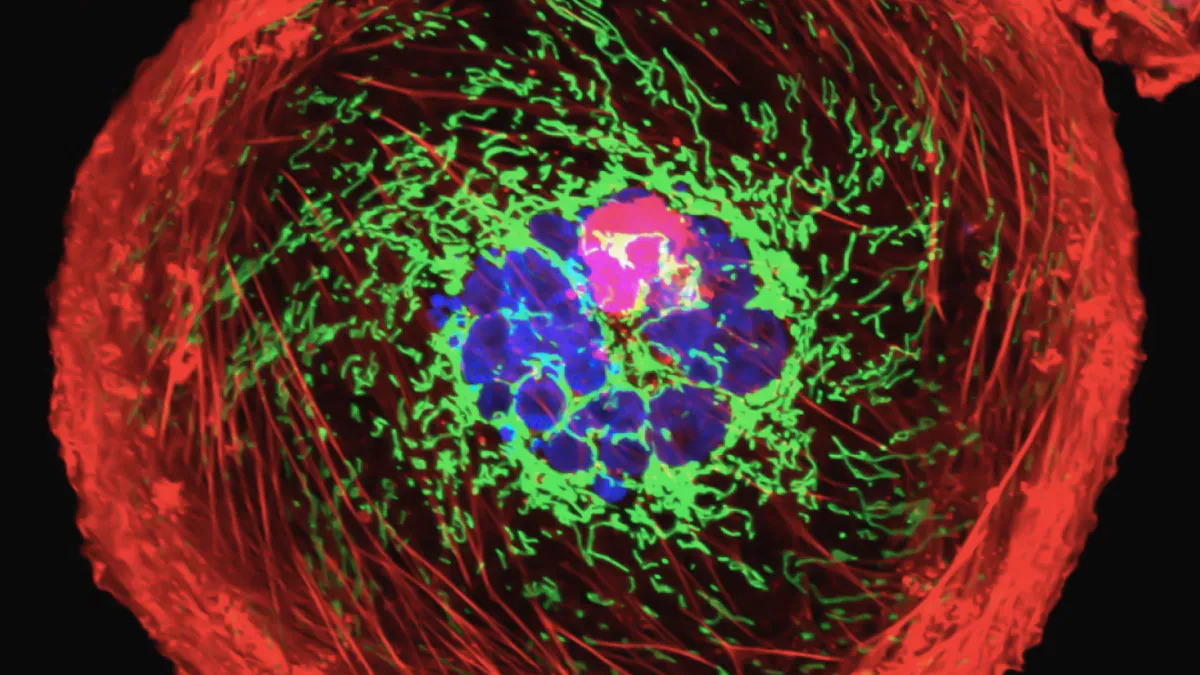
A groundbreaking study has revealed a new “division of labor” within mitochondria, showing that different subpopulations of mitochondria take on distinct functions when cells face nutrient scarcity. Led by Dr. Craig Thompson, a cell biologist at Memorial Sloan Kettering Cancer Center, the research team discovered that under low-nutrient conditions, some mitochondria focus on energy production, while others shift to molecular synthesis for cellular repair and protein production. This newly identified specialisation could have crucial implications for how cells adapt to injury and respond to resource limitations.

Traditionally, mitochondria are known as the powerhouses of the cell, responsible for generating adenosine triphosphate (ATP), which fuels many cellular activities. However, they also play a role in synthesising essential molecules like amino acids, which are crucial for protein production and cell function. When cells are deprived of nutrients—such as during blood loss after an injury—mitochondria may struggle to simultaneously support both energy production and molecular synthesis. Dr. Thompson’s team sought to understand how mitochondria manage this balance under stress, revealing a surprising adaptation mechanism.

In experiments involving mouse cells, the researchers imposed conditions that forced the cells to rely exclusively on mitochondrial ATP production, limiting the use of other energy sources. Surprisingly, despite these constraints, the mitochondria continued to synthesise amino acids, a task usually considered secondary to energy production. Further investigation pinpointed a key enzyme, P5CS, which was found to be crucial for this process. The enzyme was located only in specific mitochondria, which clustered together in a way that enabled amino acid synthesis. When the scientists genetically modified the cells to prevent this clustering, amino acid production ceased, highlighting the critical role of P5CS in enabling mitochondria to perform multiple functions under low-nutrient stress.

This research adds a new layer of understanding to mitochondrial function, showing that these organelles are not just energy producers but also dynamic responders to environmental challenges. The discovery could have significant implications for understanding how cells repair themselves after injury or cope with diseases like cancer, where nutrient availability is often compromised. By uncovering the specialised roles of mitochondria under nutrient stress, this study opens up potential avenues for therapeutic interventions that could harness the adaptability of mitochondria to improve cell survival and function.

Amazon Reportedly Developing Smart Eyeglasses for Drivers to Speed Up Deliveries

Amazon is reportedly working on a new technology aimed at streamlining the final leg of its delivery process. The company is developing smart eyeglasses designed to assist delivery drivers in navigating to, around, and within buildings. According to sources familiar with the project, the smart glasses would provide drivers with real-time, turn-by-turn navigation via a small embedded screen, offering directions along their route and at each delivery stop. This innovation could significantly improve the efficiency of deliveries, particularly in complex or congested environments.

The glasses are intended to guide drivers in ways that go beyond basic road navigation. They would offer specific instructions such as which way to turn off elevators or how to maneuver around obstacles like gates or even aggressive dogs. By providing more precise guidance in these situations, Amazon aims to reduce the time spent at each stop, potentially shaving off valuable seconds that add up over the course of a busy delivery route.

If successful, the smart eyeglasses could represent a major leap forward in delivery logistics, enhancing the speed and accuracy of Amazon’s already impressive delivery network. The project, still in development, could give drivers an edge by eliminating some of the uncertainty and inefficiency of navigating unfamiliar buildings and environments. This would be especially helpful in dense urban areas or large residential complexes, where finding a customer’s doorstep can be challenging.

Although the project remains under wraps and is not yet publicly announced, the sources suggest that Amazon’s focus is squarely on improving the last mile of delivery. As the e-commerce giant continues to explore innovative ways to reduce delivery times, this technology could become a critical component of its operations, potentially setting a new standard for efficiency in the logistics industry.

LG Introduces Stretchable Display Capable of 50% Elongation

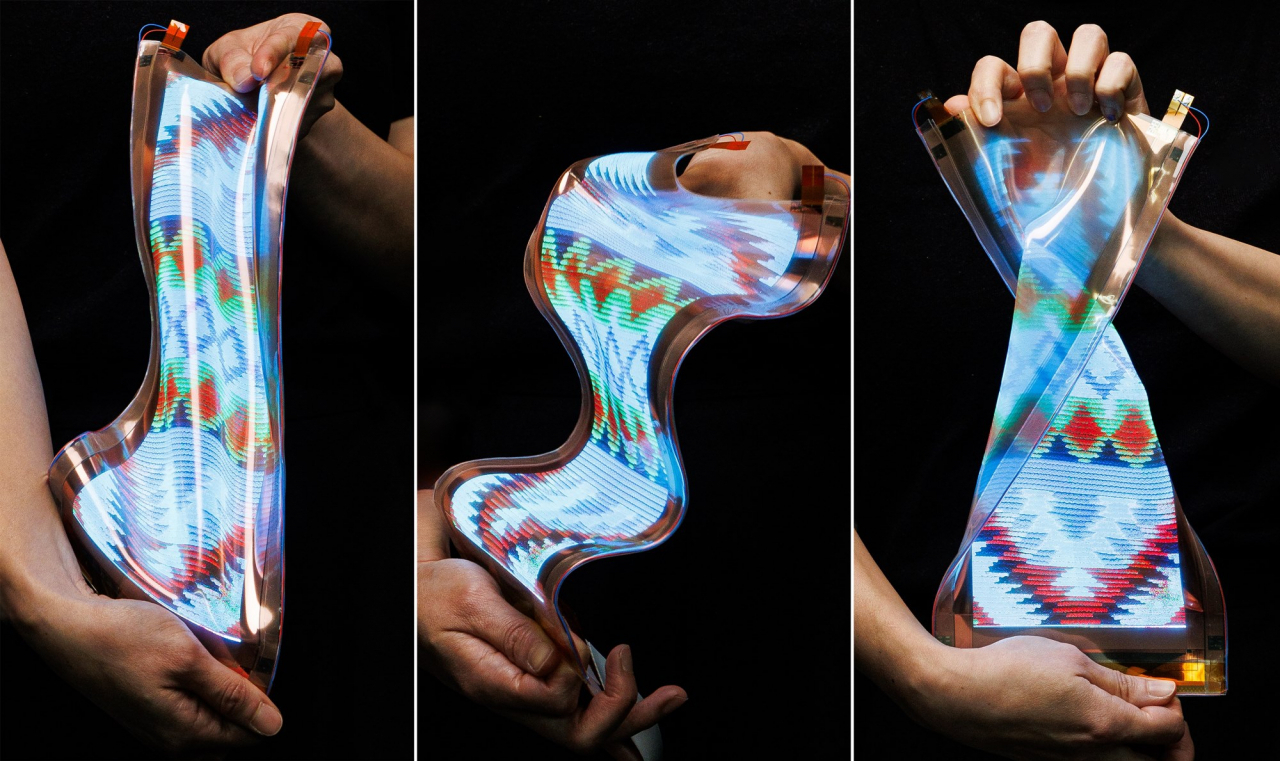
LG Display, a subsidiary of the South Korean technology giant LG, has introduced an innovative stretchable display capable of expanding by 50 percent of its original size. The company revealed the new technology last week during a presentation at LG Science Park in Seoul, attended by over 100 experts from industry, academia, and research. The stretchable display prototype showcased was a 12-inch panel that can extend up to 18 inches while maintaining high resolution and sharp image quality, marking a significant leap forward in display technology.

According to LG, the 50 percent elongation achieved by the new stretchable panel is the highest rate of elongation in the display industry to date. Despite its ability to stretch, the panel retains 100 pixels per inch (PPI) resolution and delivers the full red-blue-green (RGB) color spectrum, ensuring vibrant and clear visuals even at its maximum size. This breakthrough represents a major milestone in flexible display technology, where previously stretchable panels could only achieve modest elongation, such as the 20 percent extension demonstrated by LG’s earlier prototype in 2022.

The development of this new stretchable display was made possible by significant advancements in materials and design. LG’s engineers improved the properties of a special silicon-based substrate, similar to those used in contact lenses, to enhance the display’s flexibility and durability. Additionally, the company restructured the wiring design, enabling the panel to stretch without losing functionality or image quality. This combination of innovative materials and design is what allows the panel to achieve its impressive 50 percent elongation rate.

With this new stretchable display technology, LG is paving the way for a variety of potential applications in consumer electronics, wearables, and other industries where flexible, durable displays could offer new design possibilities. While this is still a prototype, the technology shows immense promise for future products, and LG is expected to continue refining and advancing this display innovation.