
Zomato and Swiggy Accused of Antitrust Violations by Competition Commission of India

Indian Antitrust Probe Finds Zomato and Swiggy Breached Competition Laws
An investigation by the Competition Commission of India (CCI) has concluded that food delivery giants Zomato and Swiggy engaged in practices that violated competition laws. According to confidential documents reviewed by Reuters, these companies leveraged their dominant market positions to strike deals with select restaurants, potentially stifling competition in India’s fast-growing food delivery market.

Exclusivity Contracts and Preferential Deals
The investigation revealed that Zomato entered into exclusivity agreements with restaurant partners in exchange for reduced commission rates. Similarly, Swiggy promised business growth to specific partners if they listed their services exclusively on its platform. These arrangements provided unfair advantages to certain restaurants while limiting opportunities for others, the CCI noted. By securing exclusivity, Zomato and Swiggy potentially limited consumers’ access to broader choices and hindered smaller restaurants from gaining visibility.

Impact on Market Competitiveness
The CCI’s investigative arm stated that these exclusivity practices undermined fair competition in the food delivery ecosystem. By favoring select players, Zomato and Swiggy effectively restricted other restaurants’ ability to compete on equal footing. Such practices, the report argued, prevented the market from fostering greater competition, innovation, and better pricing for consumers.

What Lies Ahead for Zomato and Swiggy?
The findings come as both companies face scrutiny over their market dominance and operational practices. If the CCI formally rules against Zomato and Swiggy, it could result in penalties or corrective measures aimed at promoting fair competition. This case also underscores the increasing regulatory focus on ensuring balanced practices within India’s rapidly evolving digital economy. For now, the spotlight remains on how these companies address the allegations and adapt their strategies to comply with regulatory expectations.

Fewer than Half of IVF Cycles Are Successful, but Scientists Are Working to Improve Odds

Since Louise Joy Brown’s birth in 1978, in vitro fertilization (IVF) has revolutionized infertility treatments, resulting in over 10 million births worldwide. Despite advancements, IVF remains a challenge, with success rates below 50% in many cases. Scientists are exploring cutting-edge methods to enhance these odds, but progress has been incremental.

Current Limitations and Mixed Results

IVF success has improved over decades, with live birth rates for women under 38 tripling since the 1990s. However, the overall live birth rate in the U.S. remains at 45% per embryo transfer. Technologies like time-lapse imaging, though promising, have shown no significant benefit in increasing live birth rates, as evidenced by a July 2024 Lancet study. Despite this, such methods are widely used, often adding considerable cost to patients.

Emerging Innovations in IVF

Researchers are exploring multiple avenues to boost IVF success rates:

  1. Egg Retrieval Improvements:
    A novel needle design by scientists in the UK could improve egg retrieval by inducing fluid motion to capture more eggs. Preliminary tests in cows have shown promise, and human trials are anticipated.
  2. Magnetic Nanoparticles for Egg Handling:
    In Spain, researchers have developed a magnet-based technique to manipulate eggs and embryos without physical contact, potentially reducing damage. While promising in animal studies, its efficacy in humans is still unproven.
  3. Embryo Analysis:
    In Australia, a method using light to measure lipid levels in embryos could predict metabolic activity, a key factor in embryo viability. This technique remains in early testing phases.
  4. Artificial Intelligence in Drug Optimization:
    AI is being used to tailor ovarian stimulation drug doses, aiming to improve egg quality and quantity.

In Vitro Gametogenesis (IVG): A Future Frontier

IVG could revolutionize fertility treatment by generating eggs or sperm from tissue samples like skin cells. This technology might enable same-sex couples, cancer survivors, and even single individuals to have genetically related children. However, ethical and regulatory challenges remain significant, and human applications are years away.

The Reality of IVF

Despite high-tech advancements, IVF is still emotionally and physically taxing, with many cycles ending in failure. Ethical concerns, like the misuse of IVG for unauthorized reproduction, highlight the need for stringent oversight as these technologies develop.

While breakthroughs are rare, small, evidence-based improvements continue to provide hope. IVF, for all its challenges, has already transformed millions of lives. As one patient recently shared with a reproductive specialist, after years of struggle, their baby’s heartbeat on an ultrasound was the culmination of hope and perseverance.


Russia Achieves Milestone with Successful Deployment of 53 Satellites into Orbit

Russia’s Record Satellite Launch Marks Milestone in Space Efforts
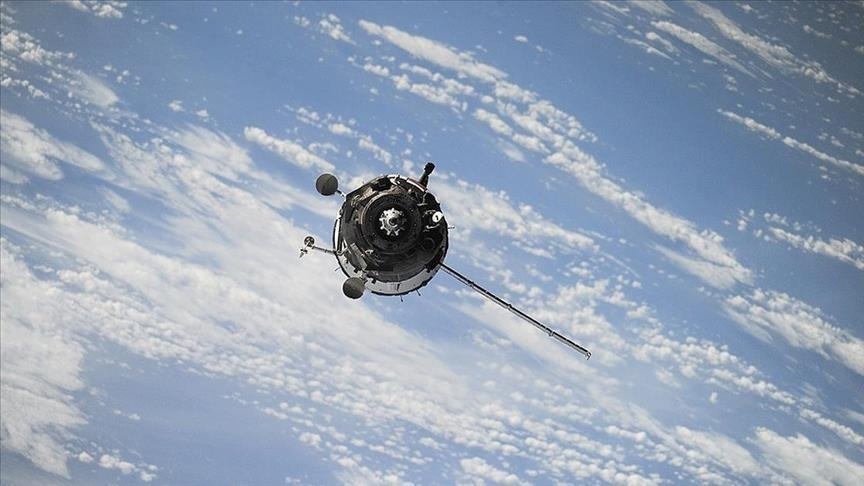
On November 4, 2024, Russia achieved a significant feat in space exploration, successfully launching 53 satellites into orbit. This record-breaking deployment, led by the Russian space agency Roscosmos, utilized a Soyuz-2.1b rocket with a Fregat upper stage. The mission lifted off from the Vostochny Cosmodrome in Russia’s Far East at 6:18 pm EST (2318 GMT or 2:18 am IST on November 5). All satellites reached their designated orbits, marking a seamless accomplishment in Russia’s ongoing efforts to strengthen its presence in the global space industry.

A Global Collaborative Effort
This mission was notable not only for its scale but also for its international collaborations. Among the 53 satellites were 49 of Russian origin, alongside a joint Russian-Chinese satellite and a Russian-Zimbabwean satellite. Additionally, two Iranian satellites joined the payload: the Kowsar imaging satellite, capable of high-resolution imagery, and the Hodhod communication satellite. While this mission set a national record for domestic satellite launches, it fell short of the global benchmark established by SpaceX in January 2021, when 143 satellites were launched in a single mission.

Advancing Ionospheric Research
Included in the payload were two Ionosfera-M satellites, designed to monitor Earth’s ionosphere. These satellites, each weighing 430 kilograms (948 pounds), aim to provide critical data on atmospheric conditions and ionospheric changes, furthering scientific understanding of space weather. Their inclusion underscores Russia’s commitment to leveraging space-based technologies for both scientific and strategic applications.

Significance for Russia’s Space Program
This launch marks the thirteenth of the year for Russia, highlighting a steady, albeit moderate, pace in its space activities compared to global leaders like the United States and China. It reflects Roscosmos’s ambition to expand its satellite infrastructure and international partnerships. With advancements like these, Russia continues to position itself as a key player in the competitive domain of satellite launches and space exploration.