
Italian Village Offers $1 Homes to Americans Post-Election

Ollolai’s Plan to Attract American Expats

The picturesque village of Ollolai, located in Sardinia, Italy, has renewed its initiative to sell homes for as little as $1 following the 2024 U.S. presidential election. This effort is part of a broader strategy to attract American expatriates and revitalize the rural community.

Ollolai’s one-euro home scheme, first introduced in 2018, gained traction after the launch of a dedicated website aimed at American audiences. The website highlights the opportunity for a “European escape” in Sardinia, promising a serene lifestyle away from political strife.

“Are you worn out by global politics? Looking to embrace a more balanced lifestyle while securing new opportunities?” the site asks potential buyers, emphasizing the village’s appeal as a peaceful haven.


Mayor Columbu’s Vision

Francesco Columbu, the mayor of Ollolai, confirmed that the initiative’s timing was intentional. “We created this website specifically to cater to Americans post-election,” Columbu said. While avoiding direct political references, he acknowledged the village’s aim to provide an escape for those disillusioned by recent political developments in the U.S.

Columbu expressed optimism about the role Americans could play in reviving the village, describing them as “the best people” for the job. “We are betting on Americans to help us rejuvenate Ollolai. They are our winning card,” he stated.

To encourage American applicants, Ollolai has implemented a fast-track process exclusively for U.S. citizens. However, the program is open to other nationalities as well.


Housing Options in Ollolai

The village offers three tiers of housing to cater to varying needs and budgets:

  1. Free Temporary Homes: Designed for digital nomads meeting specific criteria.
  2. One-Euro Homes: Affordable properties requiring renovations, ideal for those willing to invest in repairs.
  3. Move-In-Ready Houses: Properties priced at approximately €100,000 (around $106,000), requiring no additional work.

Detailed information, including photos and property plans, will soon be available on the program’s website.


A Growing Demand

Since the new website’s launch, over 35,000 inquiries have poured in, predominantly from U.S.-based individuals. The initiative has sold 10 homes since its inception in 2018, and roughly 100 properties remain available, ranging from budget-friendly fixer-uppers to ready-to-occupy residences.


A Second Chance for Ollolai

Ollolai’s initiative aligns with broader trends in rural Italy, where depopulated villages are leveraging international interest to spark economic and cultural revival. By focusing on Americans, the village hopes to infuse new energy into its community while offering expats a chance to experience the idyllic Mediterranean lifestyle.

With its renewed effort, Ollolai continues to stand as an enticing option for those looking to start afresh abroad.

Mixed Forecasts Cloud Holiday Shopping Season Ahead of Black Friday

Holiday Spending Trends: Optimism vs. Caution

The 2023 holiday shopping season is shaping up to be a mixed bag, with consumers keeping budgets tight and focusing on price comparisons for essentials like apparel, electronics, and toys. Walmart and Target, key retail bellwethers, have presented contrasting outlooks as they gear up for the year’s busiest retail period.

Walmart raised its annual sales and profit expectations, attributing its success to aggressive pricing strategies and an expanded customer base that includes higher-income households. Meanwhile, Target issued subdued forecasts, citing weak demand for high-margin categories such as electronics and home goods.

Despite the first Federal Reserve rate cut in four years, consumer spending on non-essentials remains lackluster. Analysts predict another deal-heavy season, with overall holiday shopping growth expected to slow to its weakest pace in six years, according to reports from the National Retail Federation (NRF) and Deloitte.


Challenges in a Shorter Shopping Window

With only 26 days between Black Friday and Christmas—compared to 31 days in 2022—retailers have pushed early promotions, beginning as far back as July. Record numbers of shoppers, an estimated 183.4 million, plan to shop in-store and online from Thanksgiving through Cyber Monday, up slightly from last year.

However, Walmart CEO Doug McMillon tempered expectations, noting that momentum may mirror trends from earlier in the year. “The calendar isn’t ideal, and it’s a unique environment. But I expect stable trends to continue,” McMillon said on a recent earnings call.


Mobile Shopping and Loyalty Programs on the Rise

Mobile shopping continues to dominate, accounting for an estimated 53% of online spending during November and December. Adobe Analytics predicts mobile sales will grow by 12% this year, contributing to an 8.4% rise in overall online spending.

Gen Z consumers, who heavily influence shopping trends, are driving this shift to mobile purchases. Retailers like Target and Walmart have leaned into loyalty programs, offering perks like same-day delivery, personalized promotions, and streamlined in-store checkouts.

Walmart’s Walmart Plus membership program, discounted by 50% through early December, has seen double-digit growth in global membership income. Target’s revamped loyalty initiatives have fueled a 20% rise in same-day delivery orders, helping to offset weaker overall performance.


Targeting Specific Shopper Demographics

Retailers are increasingly tailoring promotions to attract new customers. Target’s exclusive holiday deals on Taylor Swift merchandise aim to tap into the artist’s massive fanbase, while budget-conscious shoppers gravitate toward discounters like TJX Cos., which recently raised its annual profit forecast.

M Science analyst John Tomlinson highlighted the fierce competition for incremental customers this season. “Retailers will intensify targeted promotions to gain new shoppers at an accelerated rate,” he noted.


Outlook for the 2023 Shopping Season

Retailers face a challenging season with cautious consumer spending, a shorter holiday window, and economic uncertainty. Yet, early promotions, loyalty incentives, and the growing influence of mobile shopping and social media may drive last-minute sales.

The battle for customer loyalty and efficient delivery will likely define the success of major players, setting the tone for retail in 2024.

Musk, Ramaswamy Aim to Curb Federal Agency Power Using Supreme Court Precedents

Leaning on Landmark Rulings

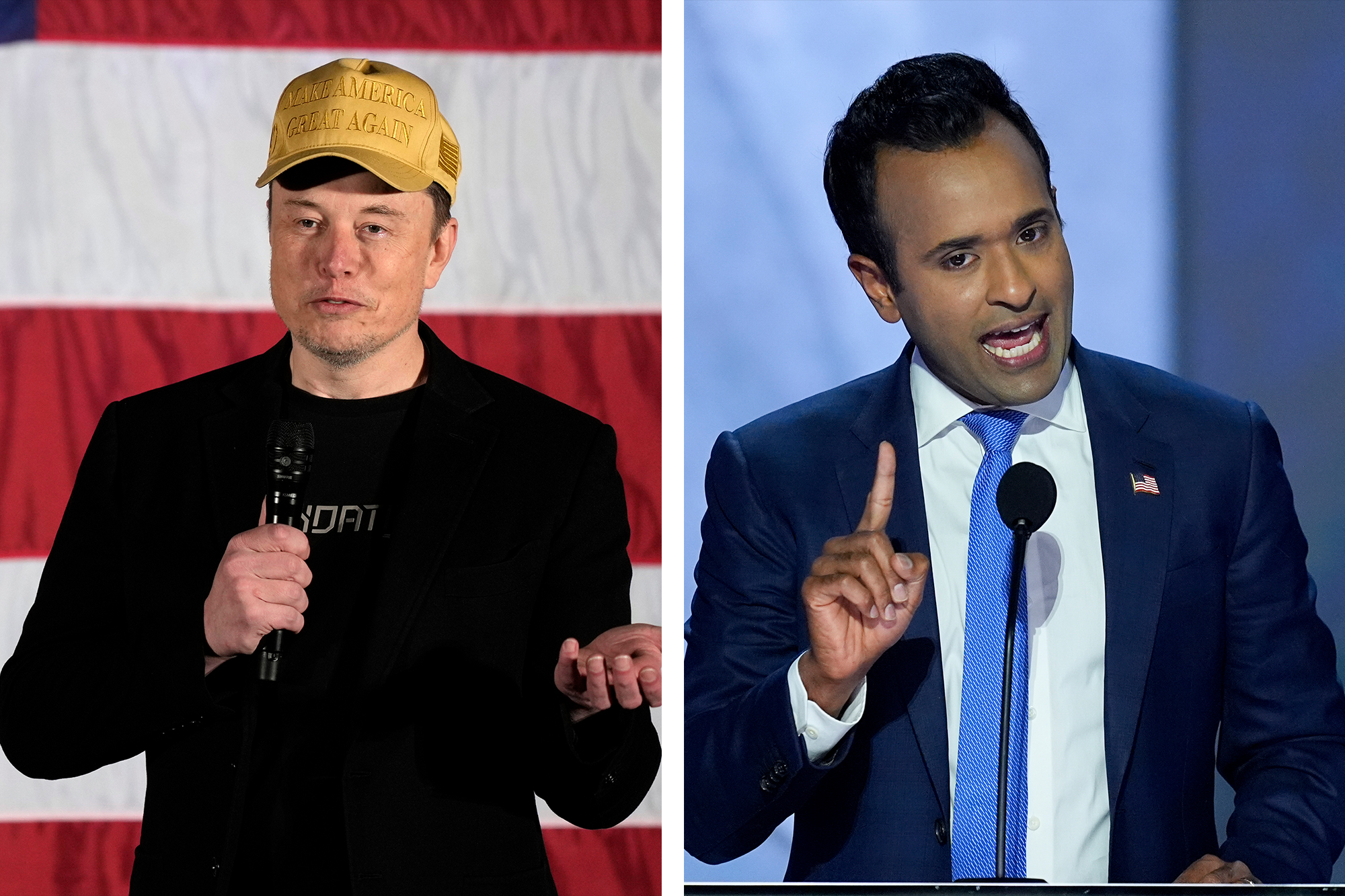
Elon Musk and Vivek Ramaswamy, leaders of the newly formed Department of Government Efficiency (DOGE), announced plans to leverage recent Supreme Court decisions to reduce federal regulatory power. In a Wall Street Journal op-ed on Wednesday, they highlighted their intent to target what they describe as unnecessary, costly, and inefficient regulations.

The effort is rooted in the Supreme Court rulings in West Virginia v. EPA (2022) and Loper Bright v. Raimondo (2023), which curbed federal agencies’ ability to act without explicit Congressional authorization. Musk and Ramaswamy claim many current regulations exceed the legislative powers granted by Congress and argue the rulings provide a blueprint for dismantling overreach.


Partnership with Trump Administration

President-elect Donald Trump tapped Musk, the billionaire CEO of Tesla and SpaceX, and Ramaswamy, a biotech entrepreneur and former presidential candidate, to lead DOGE. They aim to identify regulations that could be suspended via executive action, allowing time for their review and potential repeal.

The duo emphasized their collaboration with Trump’s transition team to recruit a cadre of “small-government crusaders” tasked with reforming federal governance. These efforts will be coordinated with the White House Office of Management and Budget (OMB).


Strategic Focus

DOGE plans to focus on regulations across various sectors, targeting rules they believe stifle innovation and economic growth. Musk and Ramaswamy view the current conservative 6-3 Supreme Court majority as an opportunity to implement structural downsizing of federal agencies.

They argue that the initiative aligns with what they interpret as a public mandate for reducing government overreach. “This electoral moment presents a unique opportunity to modernize governance by eliminating burdensome regulations that hamper progress,” they wrote.


Criticism and Challenges

While the plan has drawn support from deregulation advocates, critics warn it could undermine critical protections related to health, safety, and the environment. Legal experts also anticipate challenges to sweeping regulatory rollbacks, potentially leading to protracted court battles.

Observers highlight that balancing deregulation with public accountability and governance effectiveness will be a key test for DOGE’s approach.


Looking Ahead

As DOGE prepares its list of regulations for President Trump’s review, the agency’s impact will depend heavily on its ability to navigate legal, political, and public scrutiny. With Musk and Ramaswamy at the helm, the initiative underscores a broader push to redefine federal oversight in favor of private-sector-led innovation and efficiency.