
Government Issues Notice to Wikipedia Over Alleged Bias and Editorial Control Issues

The Indian government has issued a formal notice to Wikipedia, questioning the platform’s editorial practices and raising concerns about potential bias and inaccuracies on the site. The Ministry of Information and Broadcasting sent the notice, demanding clarification on why Wikipedia should be treated as an intermediary, rather than as a publisher, with editorial control over its content. This scrutiny comes at a time when Wikipedia is facing a high-profile case in the Delhi High Court, where it is accused of protecting users who made defamatory edits to the page of Asian News International (ANI). The case has raised further questions about the accountability and governance of online platforms that host user-generated content.

The Ministry’s concerns extend beyond just defamation claims, highlighting issues of bias and factual inaccuracies within Wikipedia’s vast repository of articles. Reports indicate that the government has specifically pointed out how editorial control appears to be in the hands of a small group of individuals or specific interest groups, which may affect the neutrality of content. Given the platform’s widespread influence and its role in providing information on a range of topics, the government believes that the platform should be subject to the same accountability standards as traditional publishers, which are legally responsible for the content they distribute.

Wikipedia, however, has long operated under the premise that it is not a publisher but rather an intermediary, relying on a global community of volunteer editors to create and curate its content. This decentralized model allows for a wide variety of perspectives but has also led to criticisms about the accuracy and neutrality of its articles, particularly on contentious topics. Wikipedia’s structure means that anyone can edit articles, which raises concerns about the platform being vulnerable to bias or misinformation, either intentionally or unintentionally.

The government’s notice reflects a growing trend of global scrutiny on large digital platforms and their role in shaping public discourse. As the case against Wikipedia moves forward, it will be interesting to see how the platform responds to these concerns and whether it will implement stronger editorial oversight or transparency measures. The debate around the nature of user-generated content platforms like Wikipedia could have broader implications for how online platforms are regulated in the future, especially in terms of responsibility for the content they host.

Android 16 Update Could Arrive Sooner Than Expected, Leak Suggests Faster Rollout

Android 16 Set to Arrive Sooner Than Expected, With June Release Date Leaked

Android 16, the next major update to Google’s mobile operating system, is slated to succeed Android 15, which launched in September of this year. While Google has yet to announce an official release date for Android 16, a recent leak has hinted that the update may arrive much earlier than previous Android versions. According to the leak, Android 16 is expected to roll out as early as the summer of next year, marking a significant shift in the typical release timeline for Android updates.

The leaked information suggests that Android 16 will be moved to the Android Open Source Project (AOSP) on June 3, 2024. AOSP serves as the core repository for the Android operating system, where the source code is made available to developers. On the same day, the update is expected to be pushed out as an over-the-air (OTA) update for Google Pixel devices, which traditionally receive the latest Android versions first. This marks a shift from previous years, where major updates were typically released later in the summer.

The Android Open Source Project plays a crucial role in the Android ecosystem, as it allows developers to access the raw source code of Android. With Android 16’s source code becoming available on AOSP, developers will have the opportunity to begin working on custom versions of the OS for a range of devices, ensuring that Android 16’s features are tailored and optimized across different manufacturers and models. This early release could lead to faster adoption of the new operating system and a more seamless experience for users across a wide range of devices.

If the leak proves accurate, Android 16’s earlier-than-usual release would represent a significant departure from previous patterns, where Android updates have often been delayed or staggered throughout the summer months. The move could also indicate Google’s commitment to streamlining the update process, offering users faster access to the latest features and improvements. With this new timeline, Android enthusiasts and developers alike are eagerly anticipating the upcoming changes and innovations that Android 16 will bring.

India’s Gaganyaan Mission Delayed to 2026 as ISRO Prioritizes Safety, Training, and Testing

India Delays Gaganyaan Mission to 2026, Emphasizing Safety and Comprehensive Testing

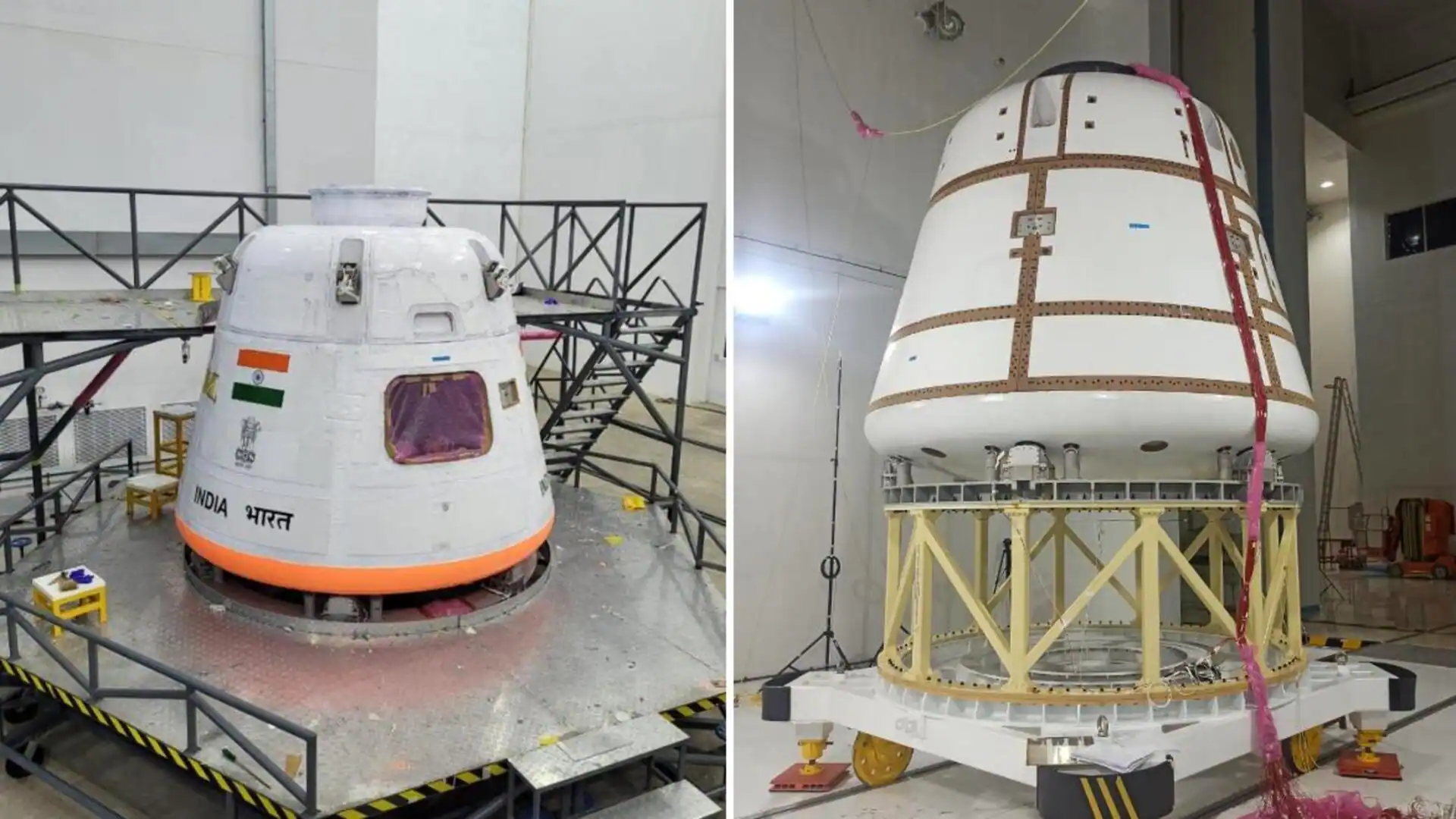
India’s ambitious Gaganyaan mission, which aims to send its first astronauts into space, has been postponed to 2026. This delay comes as the Indian Space Research Organisation (ISRO) prioritizes comprehensive testing, safety protocols, and astronaut training. Originally scheduled for 2025, the new timeline reflects ISRO’s cautious approach in light of recent setbacks in the aerospace industry. The announcement was made by S. Somanath, Chairman of ISRO, who assured that India’s first crewed mission would follow a series of uncrewed test flights to ensure everything is in place for a safe and successful launch.

ISRO has committed to conducting a series of rigorous tests to guarantee the safety of the astronauts. The first of these uncrewed trials is scheduled to take place in December 2023, with further tests planned throughout the following years. These flights will verify key systems, including the spacecraft’s life support, emergency escape mechanisms, and recovery systems, all of which are critical for the success of the Gaganyaan mission. ISRO is determined to avoid any potential mishaps similar to the challenges faced by other space programs, such as the Boeing Starliner, which faced technical difficulties during its own test flights.

Somanath emphasized that the safety-first approach is integral to ISRO’s strategy. To mitigate risks and ensure reliability, the Gaganyaan mission will be preceded by four uncrewed test flights. These flights will test essential technologies, including the spacecraft’s parachute system and its ability to safely return to Earth after re-entry. One of the key elements of these tests will be the use of Vyomitra, a humanoid robot that will simulate astronaut conditions and test the spacecraft’s ability to re-enter Earth’s atmosphere, deploy its parachutes, and execute a controlled splashdown in the Bay of Bengal.

The delay in the Gaganyaan mission is seen as a step toward strengthening India’s space capabilities, ensuring that it can join the ranks of the United States, Russia, and China in sending humans to space independently. With careful planning and thorough testing, ISRO is taking a methodical approach to space exploration, aiming for a safe and successful crewed mission in 2026. As the program progresses, the agency is also focusing on astronaut training, which will be vital for the mission’s success, as India prepares to send its astronauts on a historic journey into low Earth orbit.