Nvidia’s Engagement with Activist Hedge Fund Starboard: A Pivotal Moment in the Tech Giant’s Growth

In 2013, Nvidia faced growing pressure from its shareholders. Despite holding a strong cash reserve of $3 billion, the company’s stock had remained stagnant for years, with modest sales growth and declining earnings. The company’s market value was $8 billion, but its growth rate was slow, which led to a relatively low price-to-earnings (P/E) ratio of 14 times earnings. The company’s core assets were undervalued, according to activist hedge fund Starboard Value, which had accumulated a $62 million stake in Nvidia by June of that year.

Starboard, founded by Jeff Smith, expressed dissatisfaction with Nvidia’s performance and raised concerns over its underwhelming growth. Nvidia’s leadership, however, was wary of Starboard’s influence, fearing it might push for drastic changes, including a potential restructuring. Despite initial concerns, the relationship never escalated into a full-blown confrontation, with Nvidia’s board avoiding a “DEFCON 1” crisis. Instead, Starboard advocated for aggressive stock buybacks and a strategic de-emphasis on non-core projects like phone processors. By November 2013, Nvidia agreed to buy back $2 billion in stock, a move that triggered a 20% surge in its stock price. Starboard sold its shares by the following March, marking the end of its involvement.


The Mellanox Acquisition: A Strategic Move Prompted by Activists

Though Starboard’s direct influence on Nvidia was short-lived, it played a crucial role in a later, transformative acquisition. In 2017, Starboard invested in Mellanox Technologies, a company that specialized in high-speed networking for data centers. After Mellanox struggled to achieve strong financial returns, Starboard pressured its leadership for better performance, eventually paving the way for a potential sale.

In 2018, Mellanox received a nonbinding offer for $102 per share, prompting a bidding war between Nvidia, Intel, and Xilinx. Nvidia emerged victorious with a $6.9 billion cash offer, finalizing the deal in March 2019. Jensen Huang, Nvidia’s CEO, saw the acquisition as pivotal for Nvidia’s push into high-performance computing and AI, areas where Mellanox’s networking technology, particularly its InfiniBand products, would be indispensable for large-scale data centers.


A Game-Changing Acquisition for Nvidia

The Mellanox acquisition paid off beyond expectations. By May 2024, Nvidia’s former Mellanox division reported $3.2 billion in quarterly revenue, a sevenfold increase from the final quarter of Mellanox as an independent company. Within four years, the Mellanox business had grown into a $12 billion annual revenue stream.

Nvidia’s strategic understanding of the growing demand for high-performance computing, fueled by AI and data analytics, was key to its success. The integration of Mellanox’s advanced networking technology has become essential in scaling AI applications, where minimal latency and efficient data transfer are crucial.


A Strategic Masterstroke

Looking back, Nvidia executives and industry experts view the acquisition as a defining move in the company’s rise to dominance in the AI sector. Jay Puri, Nvidia’s head of global field operations, described it as one of the company’s best-ever acquisitions, thanks to its pivotal role in enhancing Nvidia’s position in the data-center market.

Despite not initially recognizing the potential of Mellanox, Nvidia’s ability to act decisively when the opportunity arose demonstrates its knack for capitalizing on industry trends and executing on large-scale acquisitions. For Jeff Smith of Starboard, the Mellanox acquisition stands as a reminder of the lasting impact activist investors can have on companies, even after their direct involvement ends. As Smith reflected, “We never should have exited the position.”
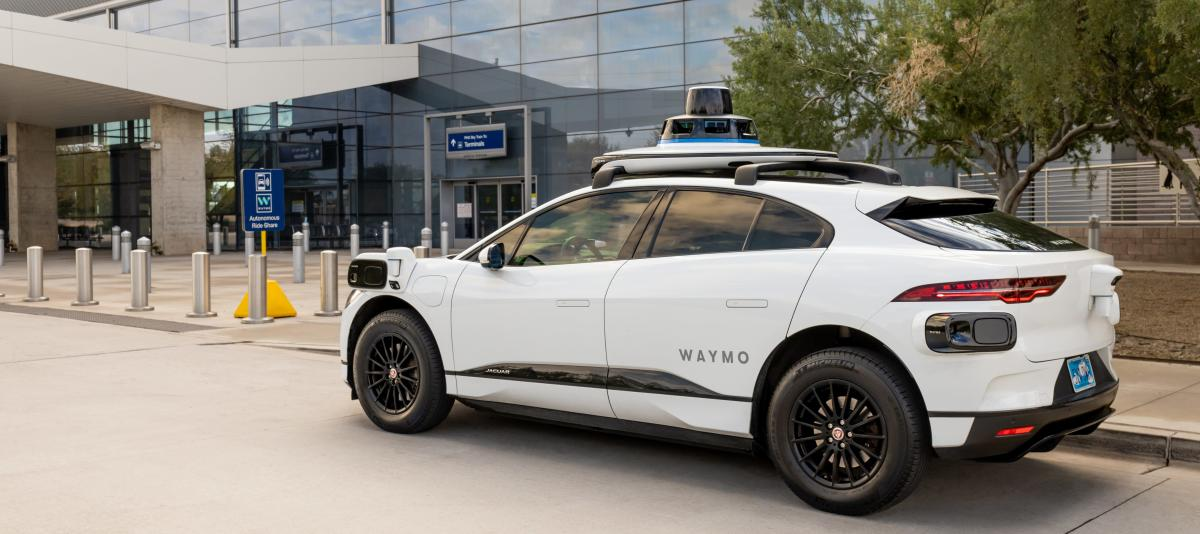
Waymo to Expand Robotaxi Operations to Miami by 2026

Waymo, the Alphabet-owned autonomous vehicle company, is preparing to launch its robotaxi service in Miami. The company announced on Thursday that it will begin testing its self-driving vehicles in the city with human safety drivers in 2025, with plans to open its fully autonomous ride-hailing service to the public by 2026 via the Waymo One app.

This move highlights Waymo’s growing confidence in operating its autonomous vehicles in challenging weather conditions, a significant milestone for scaling its operations in major metropolitan areas across the U.S.


Building Expertise in Adverse Weather

Waymo’s decision to target Miami follows earlier testing in the city in 2019, during which the company focused on refining its vehicles’ ability to handle wet and rainy conditions.

“We deepened our learning and understanding of the Waymo Driver’s performance in adverse weather conditions,” a spokesperson for the company said.

When Waymo resumes operations in Miami in 2025, it will deploy its all-electric Jaguar I-PACE fleet. The initial service territory will encompass select parts of Miami’s larger metropolitan area, home to over 6 million people.


Recent Expansion and Strategic Partnerships

Waymo’s Miami plans come amid rapid nationwide growth. In November, the company removed its waitlist of 300,000 people in Los Angeles, making its robotaxi service available to all across nearly 80 square miles. It also operates citywide in Phoenix and San Francisco, offering more than 150,000 paid rides weekly through the Waymo One app.

In September, Waymo partnered with Uber in Austin and Atlanta to integrate its robotaxis into the Uber app starting in 2025. Uber will oversee fleet management and vehicle maintenance under the partnership.

Waymo also announced a new collaboration with mobility company Moove, which will handle fleet operations, charging, and facilities for Waymo vehicles in Miami and Phoenix. Moove will begin managing Waymo’s Phoenix fleet in early 2025.


Funding and Competition

Waymo secured $5.6 billion in funding in October, led by parent company Alphabet and backed by investors like Andreessen Horowitz, Fidelity, and Silver Lake. These funds are driving the company’s expansion across the U.S.

While Waymo leads in commercial robotaxi operations across multiple cities, competition is intensifying.

  • Cruise (owned by GM) is working to resume services after halting operations following a pedestrian-injury accident in San Francisco.
  • Tesla plans to launch a self-driving ride-hailing service by 2025 but still classifies its current Full Self-Driving system as partially automated.
  • Amazon-owned Zoox and SoftBank-backed Wayve are testing autonomous vehicles, with Zoox focusing on cars without steering wheels.

What’s Next for Waymo

With Miami as its next target, Waymo continues to solidify its position as a leader in autonomous transportation. The company’s expansion underscores its ambition to operate in diverse environments, making robotaxis a reliable and accessible mode of transportation for millions across the U.S.

Thermal Batteries: A Cheaper, Scalable Alternative to Lithium-Ion for Energy Storage

Thermal batteries are emerging as a game-changing solution for renewable energy storage, offering a cost-effective and scalable alternative to traditional lithium-ion batteries. These systems have the potential to revolutionize how industries store and utilize renewable energy.

“Intermittent wind and solar power are now the cheapest forms of energy in human history, and energy storage technologies are critical to harnessing this,” said John O’Donnell, founder and chief innovation officer of Rondo Energy. “Heat batteries are a fundamentally new way of storing energy at a fraction of the cost.”

How Thermal Batteries Work

Unlike lithium-ion batteries that store energy as electricity, thermal batteries convert excess electricity into heat, stored in materials like bricks or graphite. These materials can reach extreme temperatures, often exceeding 3,000°F.

When energy is needed, the stored heat is released, making thermal batteries particularly suitable for energy-intensive industrial processes such as steel, cement, and chemical manufacturing.

“What a thermal battery does is allow you to soak up clean, inexpensive electrons from wind and solar, store them as heat, and deliver that energy later to industrial customers,” explained Justin Briggs, COO of Antora Energy.


Cost and Environmental Benefits

Thermal batteries stand out for their affordability and efficiency. For example, Rondo Energy’s systems use simple materials like clay bricks, which are far cheaper and more energy-dense than lithium-ion batteries.

“A pound of brick stores more energy than a pound of lithium-ion battery, at less than 10% of the cost,” O’Donnell noted.

Rondo Energy has already deployed its first commercial thermal battery at Calgren Renewable Fuels in California’s Central Valley. The system stores solar energy during the day and delivers high-temperature heat continuously, around the clock.

By scaling production to 90 gigawatt-hours annually by 2027, Rondo Energy estimates its technology could prevent 12 million tons of carbon dioxide emissions each year. This impact is comparable to removing 4 million gas-powered cars from the roads.


Challenges Ahead

Despite their promise, thermal batteries face significant challenges. High upfront costs and a lack of awareness among industrial users remain key obstacles to broader adoption.

“The biggest hurdle is educating the market that this technology is available,” O’Donnell said.

However, with increasing demand for clean and cost-effective energy storage, thermal batteries are well-positioned to play a major role in reducing industrial carbon footprints and supporting the transition to renewable energy.