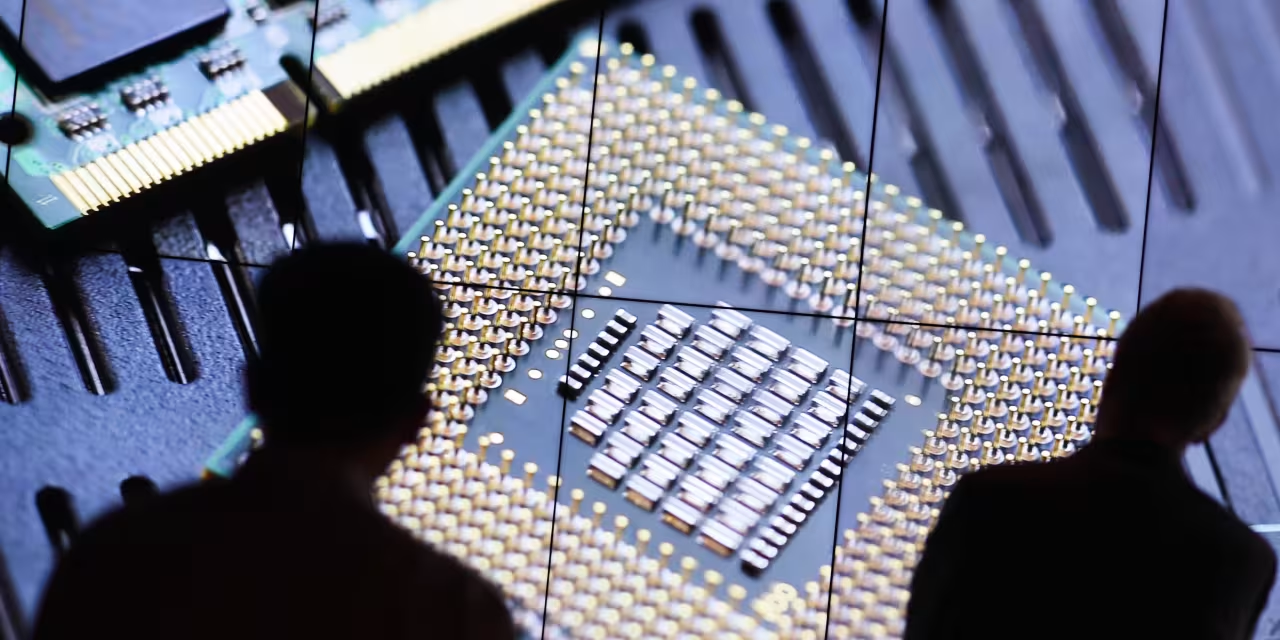
Asian Chip Stocks Mostly Rise Despite New U.S. Semiconductor Export Curbs on China

INTRODUCTION

On Tuesday, major Asian chip stocks, excluding those in China, saw positive gains despite the announcement of a new round of U.S. semiconductor export restrictions targeting China’s chip production capabilities. The Biden administration’s latest move aims to hinder China’s access to advanced semiconductor technology that could potentially aid its military advancements.


KEY POINTS

Performance of Asian Chip Stocks

  • Taiwan Semiconductor Manufacturing Company (TSMC):
    The world’s largest contract chip supplier saw a 2.4% increase in its stock price.
  • Japanese Chip Stocks:
    Several Japanese chip-related companies experienced gains:

    • Tokyo Electron rose 4.7%.
    • Lasertec climbed 6.7%.
    • Advantest gained 3.9%.
    • Renesas Electronics advanced 2.2%.
  • Softbank:
    Softbank, which holds a stake in the British chip designer Arm, saw its shares rise by 3.6%.

Impact on South Korean Chip Makers

  • Samsung and SK Hynix:
    Despite the new U.S. restrictions, shares of Samsung Electronics rose by 0.9%, and SK Hynix saw an increase of 1.8%.

    • Derrick Irwin, portfolio manager at Allspring Global Investments, stated that the impact on high-bandwidth memory chips from South Korean players would be limited. He believes that these companies could shift demand to markets like the U.S., minimizing the effect of the curbs.

Details of U.S. Export Restrictions

  • Targeted Companies:
    The U.S. Department of Commerce imposed restrictions on 140 new companies, including major Chinese firms like Naura Technology Group, Piotech, and ACM Research. These companies are now on the U.S. export control list.

    • In China, Naura Technology’s shares fell 3%, while ACM Research dropped by 1%. Piotech, however, saw a 1% rise.
    • Semiconductor Manufacturing International Corporation (SMIC), China’s largest chipmaker, saw a 1.5% drop in Hong Kong.
  • Scope of Restrictions:
    The new U.S. controls also include restrictions on 24 types of manufacturing equipment and three types of software tools essential for semiconductor production.

    • Reason for Restrictions: U.S. Secretary of Commerce Gina Raimondo emphasized that these measures were designed to impair China’s ability to produce advanced technologies that pose a national security risk to the U.S.

Concerns and Compliance Issues

  • Huawei and TSMC:
    A report last month raised questions about the effectiveness of U.S. chip restrictions after a TSMC-made chip was found in a Huawei product.

    • In response, the U.S. has implemented new “red flag guidance” to address compliance concerns and introduced several regulatory changes to enhance the effectiveness of its semiconductor controls.

CONCLUSION

Despite the recent U.S. export curbs targeting China’s semiconductor sector, major Asian chip stocks largely rose, with companies like TSMC and key Japanese players leading the charge. While the new restrictions may impact Chinese companies and South Korean chipmakers to some extent, analysts suggest that the overall effect on the broader market could be limited, as companies pivot to other markets.

 

Tesla CEO Elon Musk Loses Bid to Reinstate $56 Billion Pay Package

INTRODUCTION

Tesla CEO Elon Musk has lost his bid to reinstate his $56 billion pay package after a Delaware judge upheld a previous ruling that declared the compensation plan to be improperly granted. Musk has expressed intentions to appeal the decision, calling the ruling “absolute corruption.”


KEY POINTS

Court Ruling on Pay Package

  • Delaware Judge’s Decision:
    In a ruling on Monday, Chancellor Kathaleen McCormick affirmed her January decision to void Musk’s pay package, which was the largest in U.S. corporate history. She cited that Musk, as the controlling figure at Tesla, had dictated the terms of his compensation without proper negotiation from the board.

    • Flawed Process: McCormick described the process leading to the approval of Musk’s pay plan as “deeply flawed” and ruled that it was not a fair decision-making process.

Shareholder Vote and Appeal Attempts

  • Tesla’s Shareholder Vote:
    After the initial ruling, Tesla held a shareholder vote in June 2023, attempting to ratify the pay package. Musk’s legal team pushed for a reversal of the court’s opinion, citing the results of this vote. However, the judge rejected the argument, stating that shareholder votes cannot retroactively alter the fairness of the original compensation plan.

    • Court’s Stance: McCormick dismissed the argument that a new vote could change the outcome, calling such efforts an attempt to revise facts for the sake of litigation.

Attorney Fees and Legal Costs

  • Attorney Fees Awarded:
    As part of the ruling, the judge approved a $345 million attorney fee award for the lawyers who successfully challenged the pay package on behalf of Tesla shareholders.

    • Plaintiffs’ Satisfaction: The law firm representing the plaintiffs expressed satisfaction with the ruling, praising the judge’s work and the successful outcome for Tesla shareholders.

Musk’s Reaction and Financial Outlook

  • Musk’s Response:
    Musk expressed outrage over the ruling on X (formerly Twitter), calling the decision “absolute corruption” and urging others to avoid incorporating companies in Delaware. He also continued to criticize the Delaware court system, a sentiment he has previously expressed.

    • Financial Impact: Despite the legal loss, Musk’s wealth has grown significantly, with his net worth rising by over $43 billion since November 2020. Tesla shares have surged 42% in recent weeks, contributing to his financial gains.
    • Stock Value: Musk still holds significant Tesla stock, which is valued at around $150 billion based on the current stock price. His 2018 pay package, excluding stock options, could now be worth an estimated $101.4 billion.

CONCLUSION

Musk’s bid to reinstate his controversial $56 billion pay package was denied by a Delaware court, with the judge reaffirming that the compensation was improperly granted. While Musk plans to appeal, he has seen significant growth in his wealth, largely due to a recent surge in Tesla stock. The case highlights the ongoing legal battles surrounding Musk’s compensation and corporate governance issues at Tesla.

Jim Cramer Says AI-Driven PC Upgrade Cycle Is “On Hold” Despite Industry Expectations

INTRODUCTION

CNBC’s Jim Cramer shared his thoughts on the state of the PC market, noting that the much-anticipated AI-driven PC upgrade cycle has yet to materialize. Despite being four years since the last refresh phase, Cramer suggested that current trends indicate a slower-than-expected pace of technological adoption.


KEY POINTS

AI-Driven PC Upgrade Cycle Not Yet in Full Swing

  • Cramer’s Analysis:
    Cramer pointed out that while there’s widespread confidence in an AI-driven PC upgrade cycle, the industry is still seeing a “normal” refresh cycle rather than the revolutionary shift many had hoped for.

    • Slow Pace: Cramer expressed concern that the expected AI-driven upgrade cycle appears to be stalled for now, with no substantial acceleration in demand for AI-enhanced PCs.

Earnings Reports and Stock Reactions

  • Disappointing Results:
    • Dell, HP, and Best Buy all experienced declines in their stock prices after reporting earnings that failed to meet Wall Street’s expectations.
    • Best Buy’s Outlook: Best Buy did show some positive signs, especially in PC sales, which were fueled by demand for new models replacing older ones. However, the sales weren’t driven by AI capabilities, with the company noting that AI integration is being phased in gradually.
    • PC Sales and AI: While Best Buy management expressed optimism for AI in the future, the sales figures were more tied to standard PC upgrades rather than any significant push for AI-driven tech.

Dell and HP Sales Trends

  • Enterprise vs. Consumer Sales:
    • Both HP and Dell showed stronger sales in enterprise PCs than consumer units, signaling that businesses are upgrading their PCs at a faster rate than individual consumers.
    • Dell’s Transparency: Cramer praised Dell for its transparency regarding its challenges and its view that a full PC refresh cycle is nearing, especially with the end of Windows 10 support in 2025.

Cramer’s Conclusion

  • No Cause for Panic:
    Despite the slower-than-expected pace of the PC upgrade cycle, Cramer believes it’s too early to dismiss the idea of a major refresh. He noted that, even if the AI-driven aspect is delayed, the traditional cycle is still likely to pick up speed soon.

CONCLUSION

While the industry eagerly anticipates an AI-driven shift in the PC market, the reality appears to be a more gradual upgrade cycle. With continued uncertainty over the role of AI and upcoming software changes like Windows 10’s end of support, the PC refresh may take longer to materialize than previously expected, though Cramer remains optimistic about its eventual occurrence.