
Indonesia Pushes Apple for Bigger Investment to Sell iPhone 16

The Indonesian government is urging Apple to increase its proposed $100 million investment as the tech giant negotiates clearance to sell its iPhone 16 in the country. The new model currently fails to meet Indonesia’s stringent 40% domestic content requirement, which aims to bolster local industries and create jobs.

Current Proposal

Apple’s $100 million proposal includes:

  • Establishing a research and development center program.
  • Launching a professional development academy.
  • Commencing production of AirPods Max accessory components, including mesh, by July 2025.

While the offer is a significant increase—10 times higher than earlier proposals—Indonesian officials believe it is insufficient.

Government’s Stance

A spokesperson for Indonesia’s Ministry of Industry, Febri Hendri Antoni Arif, emphasized the need for a larger investment to bolster the country’s manufacturing sector. He highlighted the domestic industry’s readiness to support the production of Apple components, such as chargers and accessories.

“From the government’s perspective, we want this investment to be larger,” Arif told state media.

Market Potential

Although Indonesia accounts for a small fraction of Apple’s global market, the nation offers tremendous growth opportunities due to:

  1. Population Size: Indonesia is the world’s fourth-largest country by population.
  2. Demographics: A young, tech-savvy population with increasing digital literacy aligns with Apple’s global sales strategy.
  3. Supply Chain Diversification: Indonesia’s manufacturing and assembly capabilities complement Apple’s efforts to reduce reliance on existing production hubs.

Le Xuan Chiew, an analyst from Canalys, notes that Apple’s proposal reflects its long-term approach to securing a foothold in this promising market.

Next Steps

  • Apple is expected to revisit its offer to meet Indonesia’s demands for a “fair” commitment.
  • The negotiations are seen as pivotal for Apple’s broader supply chain diversification and regional sales strategy.

As Indonesia leverages its regulatory framework to attract investments, Apple faces a balancing act of complying with local demands while safeguarding its global operations.
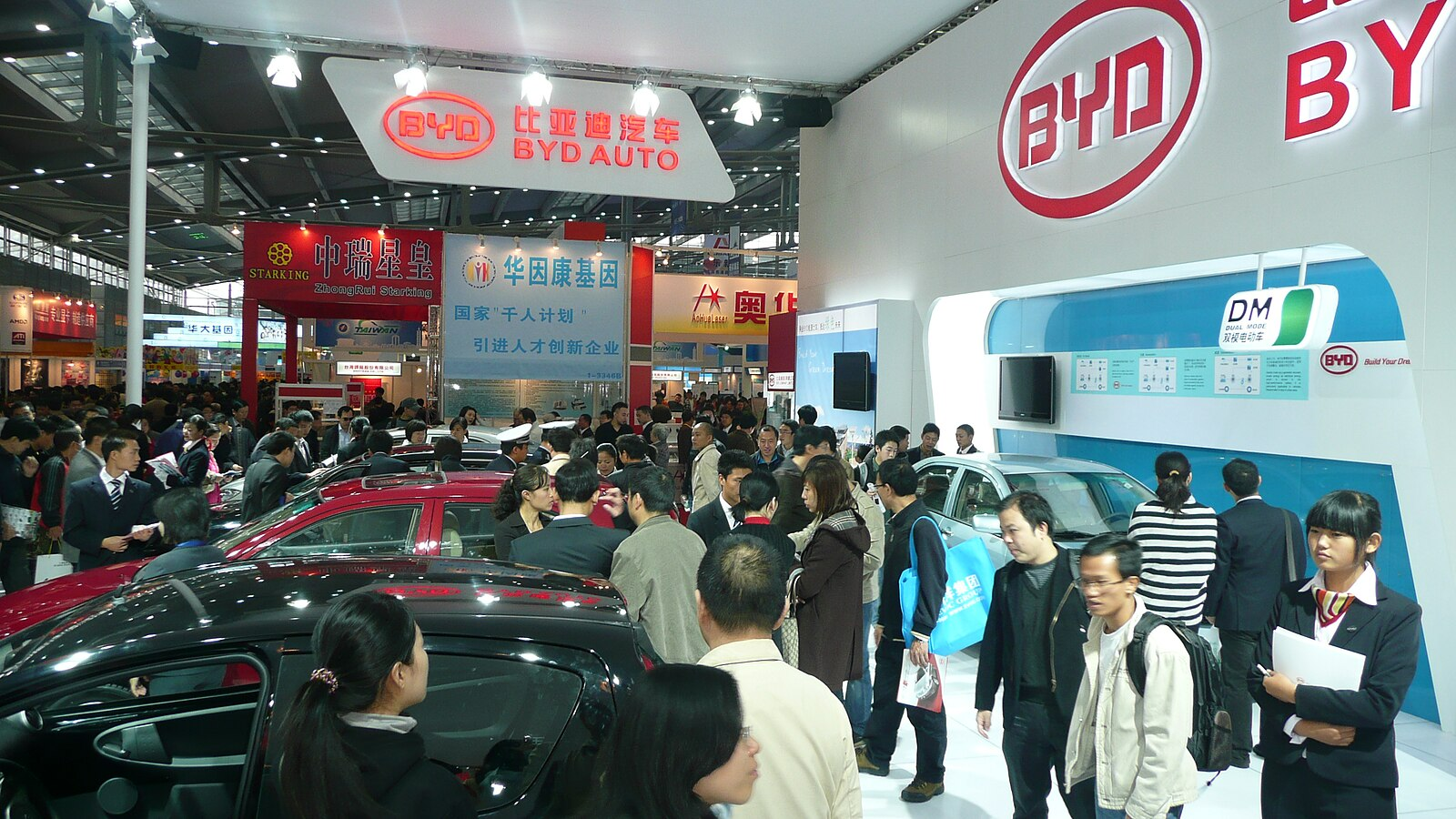

 

Chinese Automakers Exceed Annual Delivery Targets Amid Strong Market Demand

Leading Chinese automakers BYD, Leapmotor, Xiaomi, and others have surpassed their 2023 delivery targets ahead of schedule, highlighting the burgeoning growth in China’s electric vehicle (EV) market as the year nears its close.

Key Performers

  1. BYD
    • Delivered 504,003 passenger vehicles in November, a slight increase from October’s 500,526.
    • Year-to-date deliveries total 3,740,930, exceeding the initial full-year target of 3.6 million vehicles.
  2. Leapmotor
    • Recorded 40,169 deliveries in November, reflecting a 5.22% monthly increase and a 117% year-on-year surge.
    • Year-to-date deliveries reached 251,207, surpassing the target of 250,000 vehicles.
  3. Xiaomi
    • Surpassed its initial target of 100,000 deliveries in mid-November, following the March launch of its first car, the SU7.
    • November saw over 20,000 deliveries for the second consecutive month. The revised target now stands at 130,000 deliveries by year-end.
  4. Zeekr
    • Delivered 27,011 vehicles in November, marking a 7.83% increase from October and a 106% year-on-year growth.
    • Year-to-date deliveries total 194,933, closing in on the target of 230,000 vehicles.
  5. Xpeng
    • Achieved a record 30,895 deliveries in November, up 29% month-on-month.
    • Deliveries included 10,000 units of the mass-market Mona M03 for the third consecutive month, alongside 7,000+ units of the new P7+ sedan.
  6. Nio
    • Delivered 20,575 vehicles in November, reflecting a 28.9% year-on-year increase.
    • Year-to-date deliveries total 190,832, with a quarterly goal of 72,000–75,000 vehicles in Q4. The company plans to launch its new Firefly brand on Dec. 21.
  7. Li Auto
    • Delivered 48,740 cars in November, a 5.25% drop from October.
    • Year-to-date deliveries reached 441,995, close to the revised annual goal of 480,000 vehicles.

Market Dynamics

  • Tesla’s Price Cut: In response to the intensifying price war in China, Tesla slashed 10,000 yuan off the Model Y price, reducing it to 239,900 yuan through December.
  • Diverse Strategies: Automakers are leveraging innovative models, expanded lineups, and competitive pricing to capture market share. Brands like BYD and Xpeng continue to dominate with broad EV portfolios, while others like Xiaomi are rapidly scaling operations in their debut year.

Challenges and Outlook

Despite strong growth, companies face challenges including price wars, evolving consumer preferences, and high competition. However, the sector remains optimistic about further expansion, with firms like BYD and Nio outlining ambitious delivery goals for 2024 and beyond.


Growing Space Traffic Demands Urgent Global Cooperation, Experts Warn

The increasing number of satellites and space debris in low Earth orbit (LEO) is raising serious concerns about potential collisions and the sustainability of space operations. Experts and industry leaders are calling for global cooperation and data sharing to mitigate the risks associated with overcrowded orbits.

Current Space Traffic Crisis

  1. The Scale of Congestion
    • Over 14,000 satellites, including 3,500 inactive ones, currently occupy LEO, alongside 120 million pieces of debris, according to Slingshot Aerospace.
    • Only a fraction of this debris is large enough to track, with smaller fragments still posing significant collision risks.
  2. Recent Incidents Highlight the Risk
    • In August, a Chinese rocket stage explosion created thousands of fragments, further congesting LEO.
    • A defunct Russian satellite exploded in June, leading to emergency shelter protocols for astronauts aboard the International Space Station.
  3. Increase in Close Approaches
    • Slingshot data reveals a 17% rise in close approaches per satellite over the past year, reflecting escalating congestion.

Call for Global Coordination

  1. United Nations Efforts
    • A U.N. panel in October called for a comprehensive shared database of orbital objects and an international framework to track and manage them.
    • Panel co-chair Aarti Holla-Maini emphasized the urgency, warning that delays could compromise critical global systems like communication and navigation.
  2. Challenges to Implementation
    • Geopolitical Tensions: Nations hesitate to share data due to security concerns, especially since many satellites serve dual civilian and military purposes.
    • Commercial Competition: Companies are reluctant to disclose proprietary information, fearing a loss of competitive advantage.
  3. Proposed Solutions
    • Experts suggest leveraging existing technologies like telescopes, radars, and sensors to improve object tracking.
    • Drawing inspiration from the International Civil Aviation Organization, stakeholders propose enforceable space traffic rules.

Growing Commercial Activity

  1. Satellite Proliferation
    • SpaceX’s Starlink system alone accounts for 6,764 satellites in orbit, with collision-avoidance manoeuvres nearly doubling in the first half of 2024.
    • Upcoming launches from China and other operators threaten to push LEO’s carrying capacity to its limits.
  2. Economic Risks
    • A collision probability model predicts potential damages of $556 million over five years, emphasizing the financial stakes of unmanaged space traffic.

The Path Forward

  1. Need for International Consensus
    • Industry leaders stress the importance of unified global regulations to prevent collisions and ensure the sustainable use of space.
    • The U.N. aims to present actionable steps at a Committee on the Peaceful Uses of Outer Space meeting next year.
  2. Barriers to Progress
    • Building consensus amidst geopolitical tensions remains a major challenge.
    • Informal methods, such as reliance on data from the U.S. Space Force, offer temporary solutions but lack standardization and accountability.

Final Thoughts

The rapid increase in space traffic underscores the urgency of global cooperation to avoid a “tragedy of the commons” in LEO. While technical tools exist, achieving consensus and trust among nations and commercial entities remains the critical hurdle.