Mysterious Drone Sightings in New Jersey Raise Questions About Big Drones

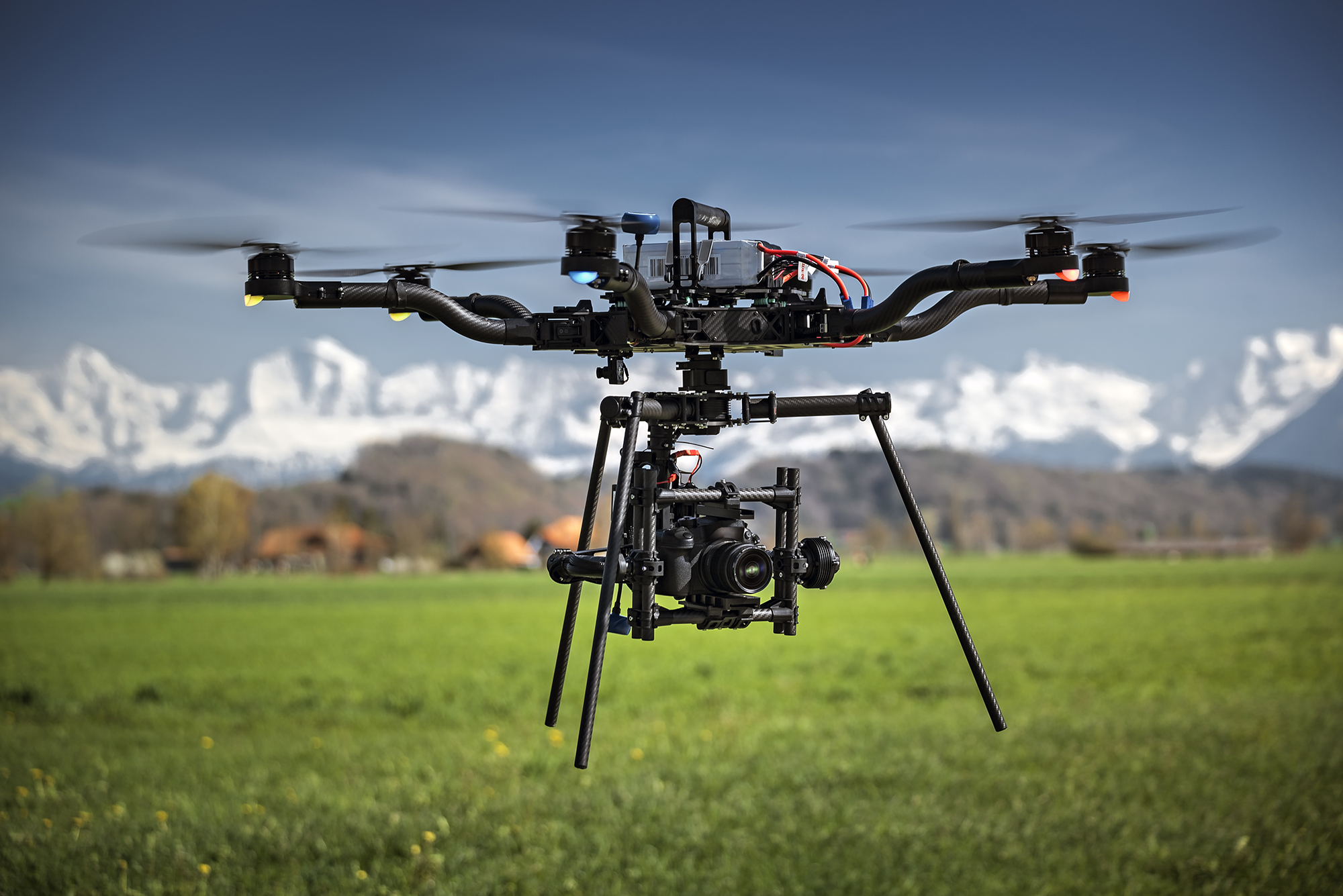
Recent reports of large drones flying over New Jersey have sparked a mix of intrigue and concern. Residents have described sightings of drones the size of small cars flying at night, often in clusters. While law enforcement agencies, including the FBI, work to confirm the nature of these objects and determine whether they are indeed drones or misidentified aircraft, experts suggest large drones are increasingly common and serve various purposes.

The sightings have been concentrated in Morris and Somerset counties, part of the New York metropolitan area. On December 3, the FBI field office in Newark acknowledged that reports from the public and law enforcement had been received for several weeks. Some residents claim to have seen objects exhibiting unusual flight patterns, such as rapid directional changes, that would be difficult for conventional planes to replicate.

Despite the intrigue surrounding the mysterious sightings, the U.S. Coast Guard, which operates under the Department of Homeland Security, also reported encounters with the objects. However, both the Department of Homeland Security and White House officials have clarified that many of the sightings were determined to be “manned aircraft” operating legally. According to John Kirby, a national security spokesperson, there is currently no evidence linking these incidents to national security or public safety threats.

Nonetheless, local officials, including New Jersey Governor Phil Murphy, have expressed frustration over the lack of answers. Murphy has pressed federal authorities for further clarification, especially after residents voiced concerns over the objects’ erratic movements.

While it’s still unclear what these mysterious objects are, experts emphasize that large drones do exist and are increasingly used for commercial, military, and industrial purposes. Ryan Wallace, an associate professor of aeronautical engineering at Embry-Riddle Aeronautical University, explained that drones have a wide range of uses, from agriculture and infrastructure surveying to law enforcement search-and-rescue missions. However, drones larger than 55 pounds require special approval from the Federal Aviation Administration (FAA), and they can cost tens of thousands of dollars.

Though large drones are most commonly used for commercial and military purposes, some have been employed for transportation, such as deliveries, or even surveillance. The military utilizes drones equipped with a variety of sensors for surveillance tasks, including infrared cameras. Experts predict that in the future, even larger drones, such as those capable of transporting people, may enter the skies. However, these will require extensive FAA approvals before becoming widespread.

For now, while the mysterious New Jersey sightings remain unexplained, experts are clear that large drones have a range of potential uses and are becoming an increasingly familiar sight in many sectors.


 

Meta Urges California Attorney General to Block OpenAI’s For-Profit Conversion

Meta Platforms has called on California’s Attorney General Rob Bonta to intervene and prevent OpenAI from transitioning to a for-profit business model, according to a report by the Wall Street Journal on Friday. In a letter sent to the attorney general on Thursday, Meta expressed concerns that permitting OpenAI to become a for-profit company would create a troubling precedent.

Meta argued that such a move would allow startups to benefit from nonprofit status until they are ready to become profitable, thereby unfairly giving investors the advantages of both nonprofit tax benefits and for-profit gains. The letter cautioned that if OpenAI’s shift to a for-profit model were allowed, it could have “seismic implications” for Silicon Valley.

The company’s concerns center around the potential for nonprofit investors to receive the same financial benefits as traditional for-profit investors, while still enjoying the tax write-offs associated with nonprofit status. Meta has not yet responded to a request for comment, and the California Attorney General’s office was also silent on the issue.

This latest development comes after OpenAI, in its own legal battle, urged a federal judge in California to dismiss Elon Musk’s request to halt the conversion of the company to a for-profit entity. Musk, a former co-founder of OpenAI, filed a lawsuit in August, accusing the organization of prioritizing profit over public good in its AI development.

Musk, who launched his own AI company, xAI, has argued that OpenAI’s shift undermines its mission and represents a violation of contract agreements. In November, Musk sought a preliminary injunction in federal court to stop the transition.

OpenAI has responded by asserting that any restructuring would preserve the nonprofit’s continued existence and ensure it receives full value for its stake in the new for-profit entity, with a mission-driven focus. OpenAI’s chairman, Bret Taylor, emphasized that the nonprofit would continue to thrive and be able to pursue its goals.

In their letter, Meta also expressed support for Musk’s efforts to ensure public interests are considered in the decision to allow OpenAI to convert to a for-profit structure.


OpenAI Pushes Back Against Musk’s Attempt to Block For-Profit Conversion

OpenAI has asked a federal judge in California to reject Elon Musk’s attempt to block the company’s conversion to a for-profit entity. In a court filing on Friday, OpenAI argued that Musk, one of its co-founders, initially supported the move toward a for-profit structure before leaving the company due to disagreements over control and equity stake.

To bolster its case, OpenAI released a series of emails and text messages involving Musk, which it claims demonstrate that he was in favor of the company’s for-profit status. Musk, however, has since launched his own artificial intelligence firm, xAI, and filed a lawsuit against OpenAI in August, accusing the company of prioritizing profits over public benefit in its drive to advance AI.

Musk’s lawsuit also claims that OpenAI’s actions are anticompetitive, alleging that the company is working to monopolize the generative AI market and sideline rivals. He sought a preliminary injunction in November, asking U.S. District Judge Yvonne Gonzalez Rogers to block the conversion to a for-profit company, arguing that it violated contract provisions.

In response, OpenAI argued that Musk’s request is based on “unsupported allegations” and that he should focus on competing in the marketplace rather than through litigation. OpenAI also denied any conspiracy to restrain competition, emphasizing that it operates independently from Microsoft, which has heavily invested in the company.

Microsoft, in a separate filing, reaffirmed that it and OpenAI are independent entities that compete with each other and other companies, fueling innovation in the AI sector.

OpenAI, originally founded as a nonprofit in 2014, has become a major player in generative AI, with substantial backing from Microsoft. In October, OpenAI raised $6.6 billion in funding, boosting its valuation to $157 billion. Musk’s xAI, launched earlier this year, raised about $6 billion in equity financing.

The planned restructuring of OpenAI will transition it into a for-profit benefit corporation, with the nonprofit holding a minority stake in the new entity. Judge Rogers is scheduled to hear arguments for Musk’s injunction on January 14.