Philips Sells Xiver Chipmaking Subsidiary, Report Reveals

Philips, the global healthcare technology company, has sold its small chipmaking subsidiary, Xiver, according to a report by the Telegraaf newspaper, citing the company’s CEO. The subsidiary was acquired by a consortium led by Orange Mills Ventures, the investment firm of Dutch businessman Cees Meeuwis. The financial details of the transaction were not disclosed.

Xiver, which specializes in manufacturing micro-electromechanical systems (MEMS)—a combination of mechanical and electronic components on a silicon chip—had been struggling financially and was described as a loss-making business. The subsidiary employed around 100 people. CEO John van Soerland, who retired from VDL last year, confirmed that Xiver supplies to major industry players, including ASML and the French defense firm Lynred.

Philips, which sold most of its semiconductor-related businesses, including ASML, several years ago, has since focused its efforts primarily on the healthcare sector. Xiver’s sale marks another step in the company’s strategy to streamline its operations, continuing its shift away from semiconductor manufacturing. Philips’ former semiconductor businesses, which include NXP and Nexperia, have now been spun off into separate entities.


UK Anti-Trust Regulator to Launch Two Investigations Under New Digital Markets Powers

Britain’s anti-trust regulator, the Competition and Markets Authority (CMA), has announced it will initiate two investigations this month under its newly granted powers aimed at overseeing the country’s largest tech firms. These powers, introduced as part of the UK’s Digital Markets regime, are designed to encourage investment, innovation, and market growth while ensuring fair competition within the digital sector.

Under the new framework, the CMA can designate firms as having “Strategic Market Status” (SMS), which applies to the most dominant tech companies in specific digital activities. The threshold for SMS status is high, meaning only the largest and most influential companies will be subject to such investigations.

In November, the CMA suggested that Apple could be stifling innovation in the smartphone browser market and indicated it might investigate the duopoly of Apple and Google in mobile ecosystems. The new regulatory powers came into effect this month, allowing the CMA to explore these concerns further.

The regulator confirmed it expects to launch two investigations this month, with more details to be provided in due course. A third investigation is slated to begin after approximately six months. Each investigation will have a statutory completion time of nine months.

The CMA’s investigations will likely focus on issues such as preventing dominant players from suppressing smaller competitors by prioritizing their own services, facilitating easier transitions between digital providers while retaining user data, and fostering competition to drive growth.

This move follows increased scrutiny of mergers and acquisitions post-Brexit, with the CMA now playing a more prominent role in regulating the tech sector. Prime Minister Keir Starmer urged the regulator in October to focus more on growth, with the new digital markets regime aimed at boosting the UK’s appeal to tech companies while ensuring consumers have access to competitive options at fair prices.


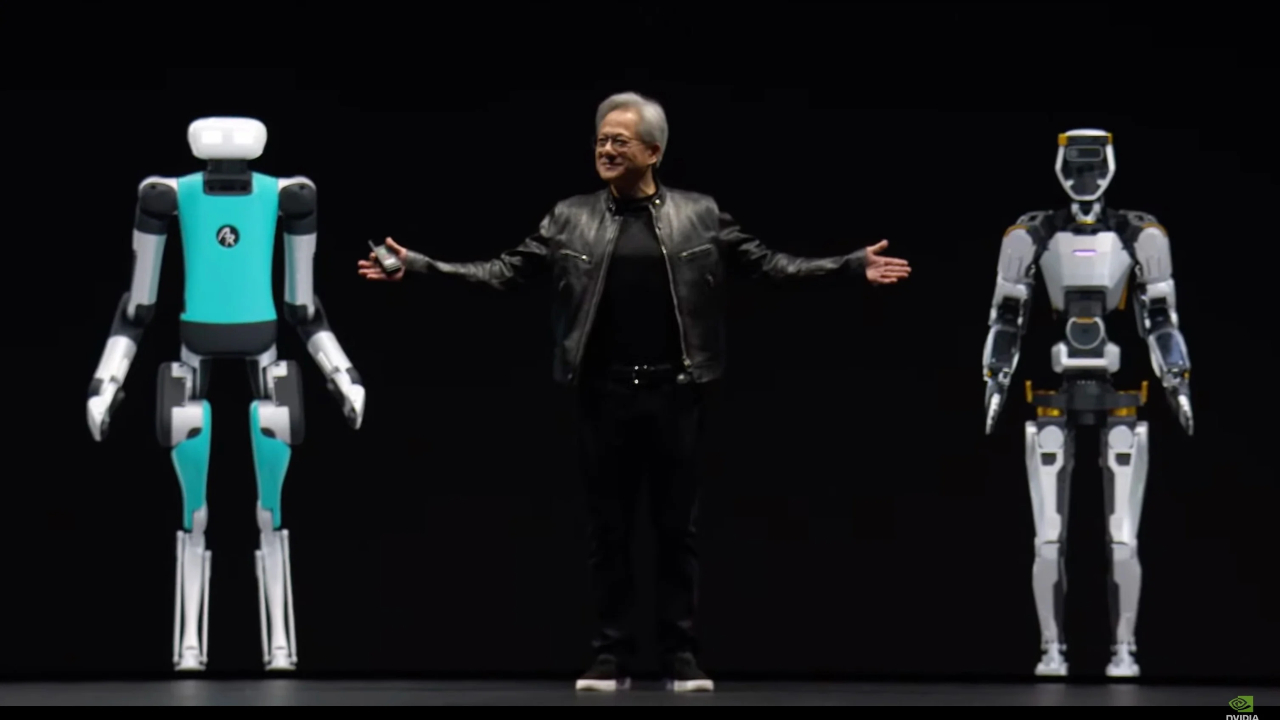
Nvidia Unveils New Robotics, Gaming Chips, and Toyota Deal at CES 2025

At CES 2025, Nvidia CEO Jensen Huang revealed several groundbreaking products, showcasing the company’s ambitions to expand its business across robotics, gaming, and automotive technology. The announcements highlighted innovations in AI, gaming chips, and collaborations, including a new deal with Toyota.

One of the key highlights was the introduction of Nvidia’s Cosmos foundation models, which use artificial intelligence to generate photo-realistic video for robot and self-driving car training. By creating “synthetic” training data, these models simulate physical environments much more affordably than traditional data collection methods. Unlike the typical approach of placing cars on the road or having humans demonstrate tasks, Cosmos can generate videos based on a text description, adhering to the laws of physics. The models will be made available on an “open license,” much like Meta Platforms’ Llama 3 language models, which have seen widespread use in the tech industry. Huang expressed hopes that Cosmos could revolutionize robotics and industrial AI similarly to the impact Llama 3 has had on enterprise AI.

Despite the excitement, analysts, including Vivek Arya from Bank of America, raised concerns about whether the new robotics technology would substantially boost Nvidia’s sales. Arya questioned the challenge of making the products both reliable and affordable enough to create viable business models, similar to the niche opportunities of autonomous vehicles or the metaverse.

In addition to robotics, Nvidia unveiled new gaming chips, part of the RTX 50 series, that use Nvidia’s Blackwell AI technology. These chips aim to enhance gaming graphics, particularly through ‘shaders’ that add realistic imperfections to objects in video games, such as fingerprint smudges on surfaces. The new chips are also designed to improve the realism of human faces, which is a critical area of focus for developers. Prices for the chips range from $549 to $1,999, with the high-end models set to launch on January 30, followed by lower-tier models in February. Analysts, including Ben Bajarin of Creative Strategies, expect these chips to drive short-term sales growth for Nvidia.

Nvidia also debuted its first desktop computer, Project DIGITS, which is designed for software developers rather than regular consumers. Priced at $3,000, the computer runs on Nvidia’s Linux-based operating system and includes the same AI chip used in the company’s data center products. The desktop, which features a central processor co-designed with Taiwan’s MediaTek, is expected to help individual developers quickly test their AI systems. Project DIGITS will be available in March.

Additionally, Huang announced that Toyota Motor will integrate Nvidia’s Orin chips and automotive operating system into several of its models to power advanced driver assistance features. Although the company did not specify which models would feature the technology, the partnership signifies a growing presence in the automotive sector. Nvidia projects automotive hardware and software revenue will reach $5 billion by fiscal 2026, up from an expected $4 billion in the current year.

Nvidia’s stock surged to a record high of $149.43, increasing its market valuation to $3.66 trillion, making it the second-most valuable listed company in the world, behind Apple.