X to Report First Annual Ad Revenue Growth Since Musk’s Takeover

Elon Musk’s social media platform X is on track to achieve its first year of advertising revenue growth since Musk acquired the company in 2022. Data from research firm Emarketer, released on Wednesday, suggests that X’s U.S. ad revenue will increase by 17.5% in 2025, reaching $1.31 billion, while its global ad sales are expected to rise 16.5%, totaling $2.26 billion. This growth marks a significant turnaround for the platform, which had struggled to attract advertising revenue following Musk’s acquisition.

Factors Driving Growth

The growth in ad revenue is partly attributed to the return of brands to the platform, bolstered by Musk’s growing influence, particularly within the U.S. Department of Government Efficiency. Jasmine Enberg, principal analyst at Emarketer, noted that some of the growth is driven by a sense of caution, with many advertisers viewing spending on X as necessary to mitigate potential legal or financial risks.

X has also successfully attracted more small- and medium-sized businesses, which had historically been a challenge for the platform to engage. This shift in advertiser behavior is a positive sign for X as it seeks to rebuild its advertising revenue stream.

Industry Competition and Economic Uncertainty

Despite the growth, X’s advertising business remains smaller than it was when Musk took over, as Emarketer’s data points out. In 2021, prior to Musk’s acquisition, X reported ad revenue of $4.51 billion as a publicly traded company. Even with the projected growth in 2025, X’s ad business still lags behind its previous levels.

In the broader social media landscape, platforms like Meta-owned Instagram and TikTok are competing for a larger share of the ad market. However, the overall advertising market could be impacted by factors such as U.S. tariffs and ongoing economic uncertainty. Research firm MoffettNathanson recently revised its U.S. advertising growth forecast, lowering it from 6.9% to 5.8%, citing the disruptive changes brought on by the new administration.

Outlook for X

Despite these challenges, X’s hiring of NBCUniversal’s former advertising chief, Linda Yaccarino, as CEO in 2023 signals a strategic effort to revitalize its ad business. As X looks to grow its advertising revenue, the platform is focusing on broadening its advertiser base and navigating the complexities of an uncertain economic environment.

European Investors Demand AI Results by 2025 or Risk Losing Patience

European investors, while optimistic about the potential of generative AI to boost productivity and profits, are growing impatient with companies that have yet to show tangible returns on their significant investments in the technology. Many are becoming more selective, shifting focus from hardware suppliers to firms that are adopting AI solutions, such as RELX and SAP. However, the pressure is mounting for these adopters to demonstrate clear financial gains from their AI investments by next year.

The AI Boom and Shifting Investor Preferences

AI-exposed stocks, which had enjoyed a surge of interest, have been under pressure recently, particularly due to fears of a recession and the rise of low-cost Chinese AI models, such as DeepSeek. Despite the broader market challenges, Nvidia, a key player in the AI space, has seen a 29% increase in its stock price year-over-year, even amid the rollout of DeepSeek, which reduces reliance on expensive chips like Nvidia’s.

In Europe, the trend is evident as investors move away from hardware makers, with stocks like ASM International and BE Semiconductor down 25% and 20%, respectively, since the January sell-off. On the other hand, companies adopting AI, such as LSEG and SAP, have shown more resilience, with only modest declines in their stock prices.

Investor Patience Running Thin

Despite the growing interest in AI, an internal survey by Fidelity in January revealed that 72% of analysts did not expect AI to significantly impact the profitability of the companies they cover by 2025. Many European portfolio managers are adopting a shorter timeframe, warning that companies need to start delivering visible results by 2026 to justify their AI investments.

Steve Wreford, lead portfolio manager at Lazard Asset Management, emphasized that investors will be more forgiving of AI adopters in 2025, when many companies are still in the beta testing phase. However, by 2026, these companies must show a significant impact on their revenues, or investors will begin to lose patience.

The Risk of Overhyped Expectations

The current high valuations of AI-exposed stocks, including SAP and LSEG, which trade at significantly higher price-to-earnings multiples compared to the broader market, only add to the pressure. Analysts like Bernie Ahkong of UBS O’Connor warn that investors will begin questioning these premiums if substantial returns are not seen by the end of 2025.

One of the key concerns in AI investments, as noted by Paddy Flood of Schroders, is whether viable, profitable use cases for AI will emerge. To sustain investment in the sector, concrete applications of AI must be developed—whether in the form of a single “killer” use case or multiple impactful ones. Fabio di Giansante of Amundi, Europe’s largest asset manager, echoed this sentiment, stressing that AI companies need to demonstrate real benefits in terms of top-line growth and margin improvement.

Looking Ahead

With AI stocks trading at premium valuations, 2025 could be a pivotal year. If companies fail to show a tangible impact from their AI investments, it could prompt a reassessment of their valuations. As the market waits for concrete results, the pressure is on AI adopters to deliver on the high expectations that have been set.

Anduril Sees Positive Outlook with Trump Administration’s Defense Strategy

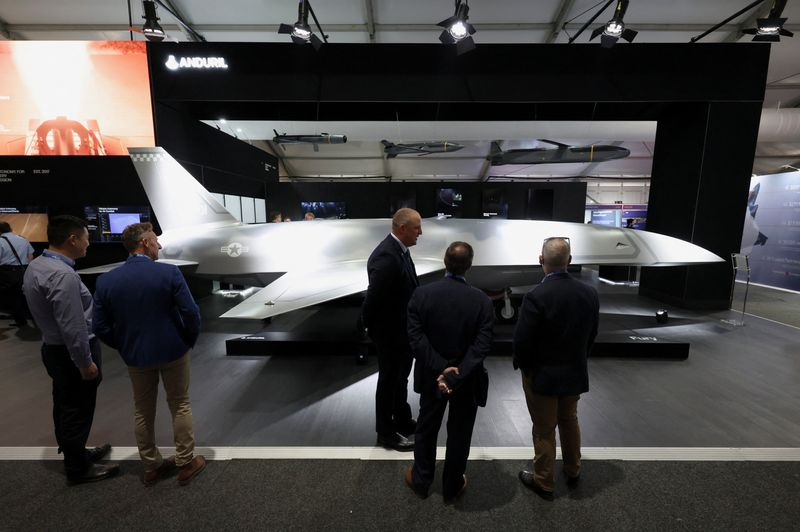
Anduril, the AI-powered defense start-up, is optimistic about its position under the new Trump administration, with its president, Christian Brose, stating that the company feels positive “vibes” from the Pentagon’s recent defense shakeup. Brose, who has previously worked with Republican Senator John McCain, emphasized that Anduril’s focus on low-cost autonomous defense systems aligns well with the Trump administration’s preferences for innovation and efficiency in defense procurement.

Anduril’s Alignment with Trump’s Defense Priorities

Brose noted that Anduril’s approach to autonomous defense technology fits well with the administration’s goals to shake up the military’s traditional procurement processes. The start-up, co-founded by Palmer Luckey—who is a known supporter of Donald Trump—has built strong relationships within the current government. According to Brose, the administration’s willingness to do things differently creates significant opportunities for companies like Anduril.

In December, Anduril announced a partnership with OpenAI to deploy advanced artificial intelligence solutions for national security missions, further aligning itself with emerging defense strategies. Brose also pointed out the Pentagon’s recent $50 billion budget cut directive, speculating that this could be an effort to shift resources into new forms of military capabilities rather than merely reduce spending.

Expansion Plans and International Collaborations

Anduril, which is constructing a mass manufacturing facility for autonomous systems in Ohio, is also eyeing international growth, including potential expansion into Australia. The Australian Defence Force (ADF) is currently trialing Anduril’s AI-driven intrusion detection software at RAAF Base Darwin, where U.S. Marines are stationed.

In addition, Anduril Australia is bidding to produce solid rocket motors for the ADF’s Guided Weapons and Explosive Ordnance Enterprise. The company is also working with the ADF to produce the Ghost Shark underwater autonomous machine, with plans to ramp up production soon. Brose indicated that Anduril could expand its production footprint to other countries if the business case justifies such an investment, with Australia being a potential location.

Defense Technology and the Future of AUKUS

Under the AUKUS treaty, which involves the U.S., the U.K., and Australia, the U.S. and Britain will assist Australia in developing nuclear-powered submarines. Australia plans to spend over A$360 billion on this initiative. Brose emphasized that while autonomous systems like Anduril’s Ghost Shark can be produced faster, in larger quantities, and at a lower cost, they should complement—not replace—crewed submarines in a well-rounded defense strategy.