Japan’s JIC Reaffirms Chip Sector Consolidation Plans Despite JSR Losses

Japan Investment Corporation (JIC), the state-backed investment fund, remains committed to its long-term goal of driving consolidation in Japan’s semiconductor materials sector through its portfolio company JSR, despite the firm’s recent financial struggles.

JSR, a leading photoresist manufacturer, ended the fiscal year in March with a 209 billion yen ($1.45 billion) operating loss, primarily due to its underperforming life sciences division. Nevertheless, JIC Capital CEO Shogo Ikeuchi emphasized in a recent interview that the strategic intent behind JIC’s $6 billion buyout of JSR last year remains unchanged.

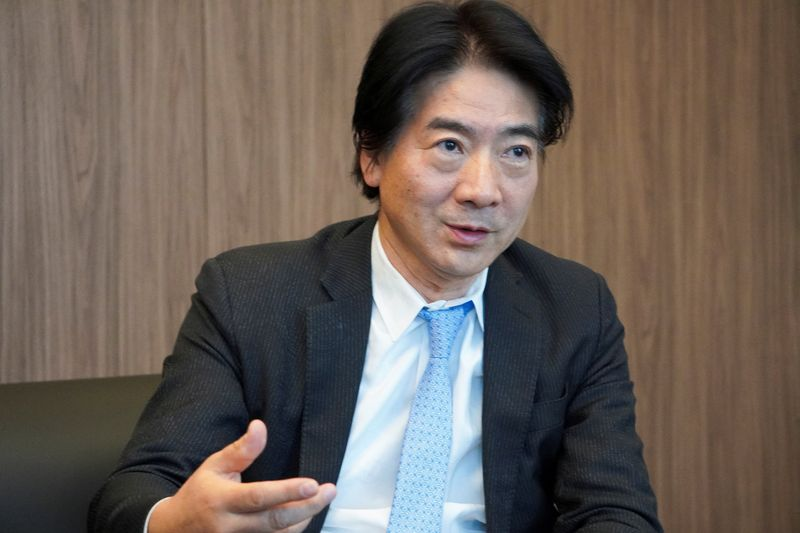
“Our goal was to take JSR private and… through a series of industry reorganizations, such as mergers with similar companies or rivals… to significantly grow the semiconductor business and enhance international competitiveness,” Ikeuchi said. “That goal hasn’t really changed at all even now.”

JSR has since restructured its leadership and is undergoing a strategic overhaul. While its new CEO recently stated that the company isn’t ready to pursue acquisitions yet, JSR has agreed to sell part of its life sciences unit to Tokuyama Corp in an 82 billion yen deal, a move aimed at focusing on its core chipmaking business.

JIC’s involvement in JSR has faced some criticism in Japan’s traditionally conservative corporate environment, with skeptics questioning the necessity and potential of such state-led intervention. Ikeuchi acknowledged these concerns, stating, “Japan is a country where restructuring is structurally difficult.”

Despite these hurdles, JIC maintains its goal of eventually re-listing JSR, likely within five to seven years, though an earlier IPO is not ruled out.

Industry players are already expressing interest in potential partnerships or acquisitions. Resonac, another major player in chip materials, said in February it would be interested in JSR when JIC eventually exits. Ikeuchi confirmed Resonac as one of the options, though noted its current debt burden as a limiting factor.

JIC, created in 2018 under the oversight of Japan’s trade ministry, aims to strengthen Japan’s industrial competitiveness — with semiconductor self-reliance a national priority amid global supply chain tensions.


Andreessen Horowitz-Backed AI Studio Promise Partners with Google, Expands Investor Base

Generative AI content studio Promise, backed by venture capital giant Andreessen Horowitz, announced a strategic partnership with Google to integrate its cutting-edge AI technologies into the studio’s production tools and creative pipeline.

Promise will leverage Google’s AI capabilities, including collaboration with researchers from DeepMind, to enhance its proprietary workflow software MUSE — a platform aimed at streamlining content production for the entertainment industry.

The studio also revealed it has broadened its investor pool. New funding comes from Google’s AI Futures Fund, Crossbeam Venture Partners, and an increased investment from North Road Company, the media firm founded by former News Corp President Peter Chernin, who is also a co-lead investor.

Promise was co-founded by Fullscreen CEO George Strompolos, former YouTube executive Jamie Byrne, and AI artist Dave Clark. The startup aims to position itself at the forefront of the generative AI boom in entertainment, offering tools to reduce production costs and accelerate timelines for content development.

The company is already working with Hollywood partners on a multi-year slate of AI-driven projects. Production for Promise’s first feature-length film is set to begin later this year, marking a major step in its ambition to reshape storytelling with generative AI.

As traditional studios continue to explore the role of AI in filmmaking, Promise’s alliance with Google could set a precedent for deeper integration of AI into Hollywood’s creative and technical ecosystems.

EU Proposes €2 Fee on Low-Value Parcels, Posing Challenge for Shein and Temu

The European Union is preparing to introduce a €2 ($2.27) handling fee on low-value e-commerce parcels entering the bloc, a move that could significantly impact fast-growing Chinese platforms like Shein and Temu. The measure is aimed at addressing a surge in online orders and leveling the playing field for European retailers.

In 2024, EU customs authorities processed 4.6 billion low-value parcels — double the figure from 2023 — with 91% arriving from China. The proposed fee, still pending approval by EU member states and the European Parliament, would be paid by the online retailers, not by consumers.

The European Commission said the fee would help fund compliance checks on the flood of packages, including regulations around toy safety and consumer protections. A smaller fee of €0.50 is also proposed for goods processed through EU-based warehouses, potentially favoring global firms with advanced logistics over smaller retailers.

“It’s fair to ask Alibaba, Temu, or Shein to pay their fair share,” said Bernd Lange, Chair of the European Parliament’s trade committee. He noted the burden these shipments place on customs authorities and the need for proper enforcement.

France has already voiced support for the measure, while the EU had previously announced plans to end the duty-free status of goods under €150 — but not until 2028.

Reactions from European retailers have been largely supportive. Zalando welcomed the proposal and called for fast-tracking the removal of the €150 customs exemption. Germany’s HDE retail association also endorsed the fee as a step toward curbing unfair competition.

However, concerns remain. Allegro, a leading Polish e-commerce platform, warned that the €0.50 fee for goods processed in EU warehouses might unintentionally benefit larger global players, while smaller firms would bear the full €2 cost. “The implementation details will be crucial,” said Allegro’s regulatory manager Ewelina Stepnik-Godawa.

Chinese companies have yet to respond, though China’s foreign ministry urged the EU to maintain a “fair, transparent and non-discriminatory” environment for Chinese businesses.

The proposal comes just weeks after the U.S. scrapped its own de minimis rule allowing duty-free entry for goods under $800, reflecting a broader global shift toward tighter e-commerce trade regulation.