Hong Kong Passes Stablecoin Bill, Paving Way for Regulated Digital Currency Ecosystem

Hong Kong has taken a major step toward becoming a global hub for digital assets, as its legislature on Wednesday passed a new stablecoin bill that establishes a licensing framework for fiat-referenced stablecoin issuers. The legislation marks a critical move toward the potential issuance of Hong Kong’s own regulated stablecoin.

Under the new law, any entity issuing stablecoins in Hong Kong — or even outside the city if the stablecoins are backed by Hong Kong dollars — must now obtain a license from the Hong Kong Monetary Authority (HKMA). The regulation outlines strict criteria for reserve asset management, redemption rights, and risk oversight, aiming to ensure investor protection and financial stability.

“This ordinance adheres to the ‘same activity, same risks, same regulation’ principle, with a focus on a risk-based approach to promote a robust regulatory environment,” said Christopher Hui, Secretary for Financial Services and the Treasury.

The move is part of Hong Kong’s broader strategy to position itself as a competitive player in the digital asset space, especially as global regulatory scrutiny on stablecoins continues to rise. Stablecoins, typically pegged to fiat currencies like the U.S. dollar, are widely used in crypto markets for transferring value between digital assets.

The HKMA has already launched a sandbox program for stablecoin issuers, and three participants are currently testing issuance models under regulatory supervision.

The new law is expected to take effect within the year, giving Hong Kong one of the most comprehensive and forward-looking stablecoin regimes in Asia, potentially attracting global fintech players and blockchain startups.

Paris Overtakes London as Europe’s Leading Tech Ecosystem, Dealroom Finds

Paris has officially emerged as Europe’s new tech capital, overtaking London in key metrics for the first time, according to new data from Dealroom, a platform that tracks startup and venture capital activity.

Between 2017 and 2024, the combined enterprise value of Paris-based startups grew by a remarkable 5.3x, compared to 4.2x for London. While London still attracts larger individual funding rounds, Paris’s startup ecosystem has seen greater valuation growth relative to the capital raised, suggesting a more efficient translation of investment into company value.

In 2023, French startups — including high-profile players like Mistral AI and Poolside — raised $7.8 billion, compared to London’s $11.3 billion. Despite the funding gap, Paris’s growth in enterprise value pushed it to the top spot in Dealroom’s rankings, a shift driven by more impactful fundraising and a stronger valuation trajectory.

Paris is now the only European city featured in Dealroom’s list of the top five global tech champions, a list otherwise dominated by U.S. hubs.

🔍 Europe’s Tech Struggles

The Dealroom announcement comes alongside a sobering report from McKinsey, which highlights Europe’s broader tech stagnation. While the global market capitalization of tech, media, and telecom firms rose from $7 trillion in 2000 to $34 trillion in 2023, Europe’s share fell from 30% to just 7%. Had the region retained its former share, it could have generated $8 trillion more in market value.

🚀 Paris on the Global Stage

The news comes ahead of VivaTech 2024, one of the world’s largest tech conferences, set to take place in Paris next month. The event will host leaders from global tech giants like Nvidia, Alibaba, Meta, OpenAI, Anthropic, and Cohere. Last year’s edition attracted over 165,000 attendees, solidifying Paris’s status as a major global innovation hub.

François Bitouzet, VivaTech’s managing director, emphasized the city’s momentum:

“It’s not just about the competitiveness of Paris on the AI scene today, it’s also about what will happen next and how we can keep on attracting the talent, investment, and the tech activities.”

🇫🇷 Macron’s Vision Paying Off?

Since 2017, French President Emmanuel Macron has championed tech as a national priority, pushing for leadership in AI and deep tech. His administration has encouraged foreign investment, supported ambitious startups, and launched initiatives like Station F, the world’s largest startup incubator.

Paris’s recent rise appears to validate that strategy — and offers a rare beacon of tech success in a European ecosystem otherwise struggling to keep pace with its U.S. and Asian rivals.

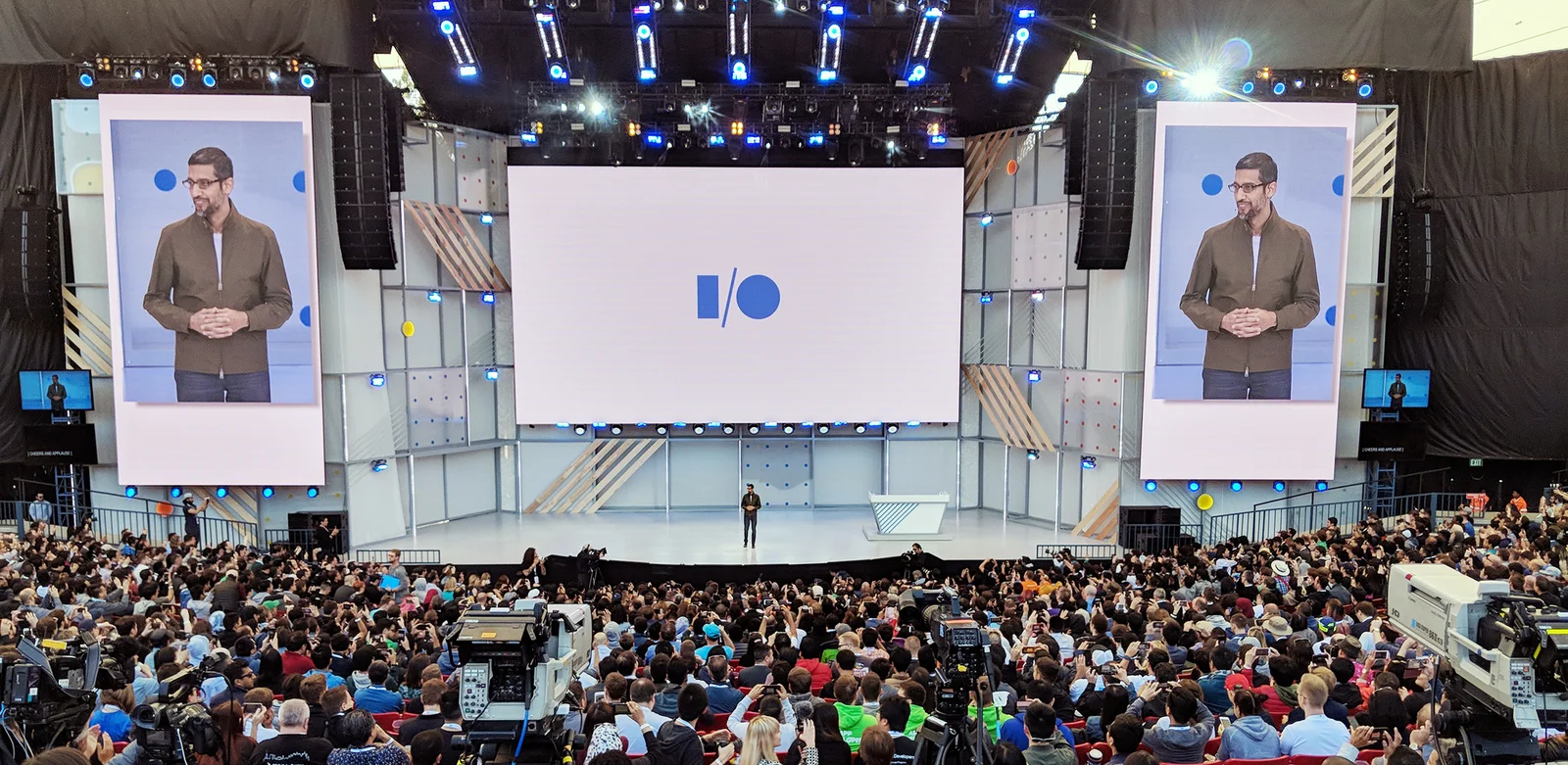
Google Unveils Bold AI Upgrades, Premium Plans, and Smart Glasses at I/O 2024

At its annual Google I/O conference in Mountain View, California, Alphabet unveiled sweeping updates to its artificial intelligence strategy, including new AI tools, a $249.99/month Ultra subscription plan, and a renewed push into smart glasses.

The announcements come amid intensifying competition from rivals like OpenAI, Anthropic, and Meta, and signal Google’s intent to maintain dominance in search, while rapidly expanding AI services for both consumers and professionals.


AI Mode in Google Search

Google introduced “AI Mode” for U.S. users, transforming traditional search by replacing web links with AI-generated responses for complex queries. Rolled out as an experiment in March, it is now available more widely and aims to deliver deeper, contextual answers.

Gemini App and AI Agents

CEO Sundar Pichai announced that the Gemini AI assistant has reached 400 million monthly active users. The company showcased Gemini’s ability to:

  • Perform real-world tasks like adding events to calendars via smartphone camera scans,

  • Fetch email info and contextual data in conversation,

  • Act as a “universal AI agent” requiring minimal prompting.


AI Ultra Plan – $249.99/Month

Google launched its AI Ultra Plan, targeting power users with:

  • Early access to experimental tools like:

    • Project Mariner – browser automation via keystrokes/mouse clicks,

    • Deep Think – enhanced reasoning with the top-tier Gemini model,

  • 30 TB of cloud storage,

  • An ad-free YouTube subscription.

This premium plan rivals OpenAI’s and Anthropic’s ~$200/month enterprise offerings, and reflects the escalating costs of AI development. It joins Google’s growing portfolio of subscription services, which now count 150 million+ paid users.


Return to Smart Glasses & XR Headset

Google returned to the smart glasses race with new frames running Android XR, demonstrated with live real-time language translation and context-aware Gemini responses during a walk around the I/O venue.

In addition, the company announced:

  • A new XR headset co-developed with Samsung, launching later in 2024,

  • Partnerships with Warby Parker and Gentle Monster to build stylish smart glasses with AI integration.


Search Pressure & Market Outlook

Despite these advances, Alphabet is under pressure. It lost $150 billion in market value earlier this month after testimony revealed that AI had reduced searches in Apple’s Safari browser — a key source of Google’s traffic.

Analysts now warn that Google’s search market share could drop from 90% to under 50% in the next five years due to consumer shifts toward AI chatbots over traditional search.

However, Google sees opportunity in this transition. Executive Robby Stein suggested that more complex AI interactions could lead to new forms of targeted advertising, Google’s main revenue source.


New AI Model – Veo 3

Google also introduced Veo 3, a powerful AI model capable of generating high-quality video and audio, allowing creators to produce realistic, cinematic content through natural prompts.


Investment in AI

Alphabet is going all-in: it’s forecasting $75 billion in capital expenditures for 2025, up from $52.5 billion in 2024, with AI development as the central focus.