
Fortnite Returns to Apple App Store in U.S. After Nearly Five-Year Ban

Epic Games’ Fortnite has officially returned to the Apple App Store in the United States, ending a nearly five-year absence triggered by a high-profile legal battle between the video game developer and the iPhone maker. The reinstatement marks a significant legal and strategic victory for Epic Games.

The return follows a federal court ruling on April 30 that found Apple in violation of a prior court order requiring it to enable more open competition in its App Store, particularly in how apps are downloaded and how in-app purchases are processed. The ruling also stated Apple failed to comply with an earlier injunction and would be referred to federal prosecutors for a criminal contempt investigation.

Apple has not publicly commented on the decision or Fortnite’s reappearance. Epic Games CEO Tim Sweeney simply posted: “We back fam” on X (formerly Twitter), signaling the game’s return.

Background: The Legal Dispute

The dispute began in 2020, when Epic attempted to bypass Apple’s up to 30% commission fee by implementing its own payment system within Fortnite. Apple responded by removing Fortnite from its App Store, prompting Epic to file an antitrust lawsuit.

While the case didn’t yield a full victory for Epic initially, recent court decisions have increasingly favored greater developer rights and payment flexibility, with potential implications far beyond gaming.

Implications for the App Ecosystem

At the time of its removal, Fortnite had over 116 million users on Apple devices alone. Its return, though symbolically important, may not fully recapture its previous popularity.

“This was a hard-fought win that carried a very steep price and may be too late to boost Fortnite, now past its prime,” said Gil Luria, analyst at D.A. Davidson.

However, the broader impact could be more significant. Michael Ashley Schulman, CIO at Running Point Capital Advisors, said the ruling opens the door for subscription-based platforms like Spotify and Netflix to improve their margins and for smaller developers to bypass Apple’s transaction fees altogether. This could lead to a reshaping of iOS economics over the next 12–18 months.

Current Availability

Fortnite is already available on Android devices and iPhones in the European Union, where digital market regulations have forced more openness. In addition to Apple’s App Store, Fortnite is also accessible via the Epic Games Store and AltStore in the EU.

The game’s return to U.S. iPhones signifies not just a platform comeback, but also a critical turning point in the ongoing debate over digital platform control, developer rights, and app store economics.

Motorola Solutions Nears $4.5 Billion Deal to Acquire Military Tech Firm Silvus Technologies

Motorola Solutions is in advanced negotiations to acquire Silvus Technologies — a privately held maker of advanced wireless communication systems — in a deal valued at approximately $4.5 billion, according to a report from Bloomberg News citing sources familiar with the matter.

While a final agreement has not yet been reached, the companies may announce the deal within the coming weeks. Motorola Solutions, Silvus, and Silvus’s private equity owner TJC declined to comment when contacted by Reuters.

About Silvus Technologies

Founded in 2004 and headquartered in Los Angeles, Silvus develops high-performance wireless radio systems used in military, defense, and maritime operations. The company has become increasingly relevant amid rising global geopolitical tensions, with many governments investing in the modernization of military communications and surveillance infrastructure.

Silvus had been exploring strategic alternatives, including a potential sale or initial public offering, before emerging as an acquisition target for Motorola.

Motorola’s Strategic Move

Chicago-based Motorola Solutions, best known for its public safety communications equipment such as walkie-talkies, body cameras, and surveillance software, appears poised to expand deeper into the defense and mission-critical communication markets with this acquisition.

In April, Motorola launched the SVX — an all-in-one device combining a remote speaker microphone, AI-powered assistant, and body camera aimed at first responders. The addition of Silvus could strengthen Motorola’s portfolio in military-grade mesh networking and field communications.

Financial Context

  • Motorola recently issued second-quarter guidance that missed analyst expectations.

  • Its stock is down 9% year-to-date.

  • The company holds a market valuation of $70.59 billion.

The acquisition of Silvus could bolster growth prospects and diversify Motorola’s critical communications offerings, especially at a time when demand for secure, resilient wireless infrastructure is rising across defense and public safety sectors.

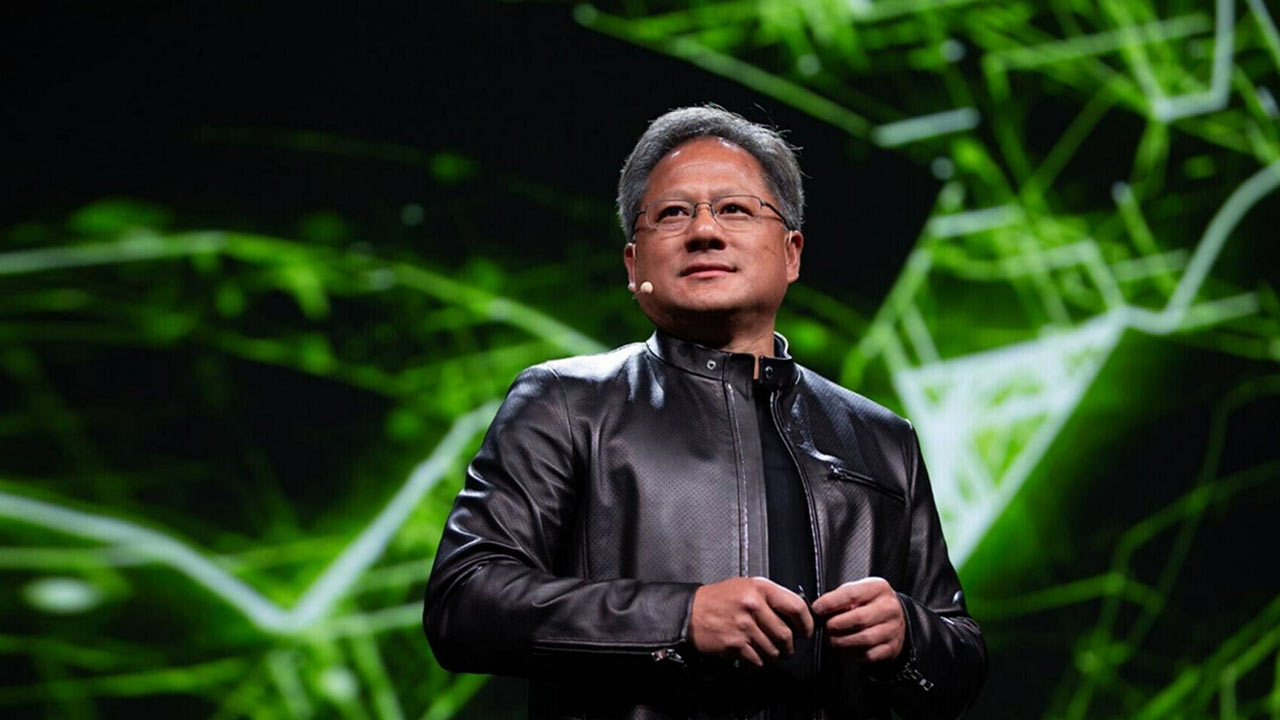
Nvidia CEO Jensen Huang Backs Trump’s Plan to Ease AI Chip Export Curbs

Nvidia CEO Jensen Huang has strongly criticized U.S. export restrictions on AI chips to China, calling them a “failure” that cost American firms billions in lost sales while accelerating China’s self-reliance in semiconductor development. Speaking at the Computex conference in Taipei, Huang welcomed the Trump administration’s decision to reverse some of the Biden-era controls, signaling a shift that could reshape global tech policy.

“The fundamental assumptions that led to the AI diffusion rule have been proven to be fundamentally flawed,” Huang said, referring to the Biden administration’s three-tiered export control regime, which entirely blocked sales of advanced chips to China.

Impact on Nvidia and U.S. Industry

Since the Biden administration’s controls came into effect, Nvidia’s market share in China fell from 95% to 50%, Huang revealed. Nvidia has been hit particularly hard, taking a $5.5 billion charge in April related to its blocked H20 chip, and Huang now estimates total revenue loss at $15 billion.

Despite these setbacks, Huang noted that AI research in China has continued unabated and is now being powered by local technologies, particularly chips from Huawei and other Chinese semiconductor designers. He estimated that China’s AI market will be worth $50 billion in 2025 and called the competition there “intense”.

“They would love for us never to go back to China,” he said.

Trump’s Strategy: A Shift in Direction

Huang praised the Trump administration’s plan to move away from rigid export tiers and toward a global licensing regime based on government-to-government agreements. The proposed shift could provide the U.S. more flexibility and leverage in trade negotiations while also easing pressure on U.S. tech firms.

“President Trump realises it’s exactly the wrong goal,” Huang said, arguing that isolating China from U.S. tech would not stop AI innovation and only encourage the growth of competitive alternatives.

Nvidia’s Workaround

Nvidia is now developing a new version of its Blackwell AI chip that includes slower memory, allowing it to comply with current U.S. restrictions while still serving key markets.

Rising Tensions

China responded sharply to recent U.S. moves that warned firms against using Chinese-made AI chips like Huawei’s Ascend, urging the U.S. to “immediately correct its wrongdoings.” Beijing warned that such measures violate trade agreements and undermine cooperation, threatening “resolute” countermeasures.

Industry Outlook

While the Biden administration had aimed to contain China’s semiconductor and military advancements, the unintended consequence appears to be a rapid buildup of China’s domestic AI and chipmaking capabilities. Huang’s remarks underscore the growing frustration within U.S. tech circles over policies they say are self-damaging.

Meanwhile, Nvidia continues to dominate the global AI infrastructure market, with new product announcements at Computex expected to further boost its $130.5 billion revenue base.