
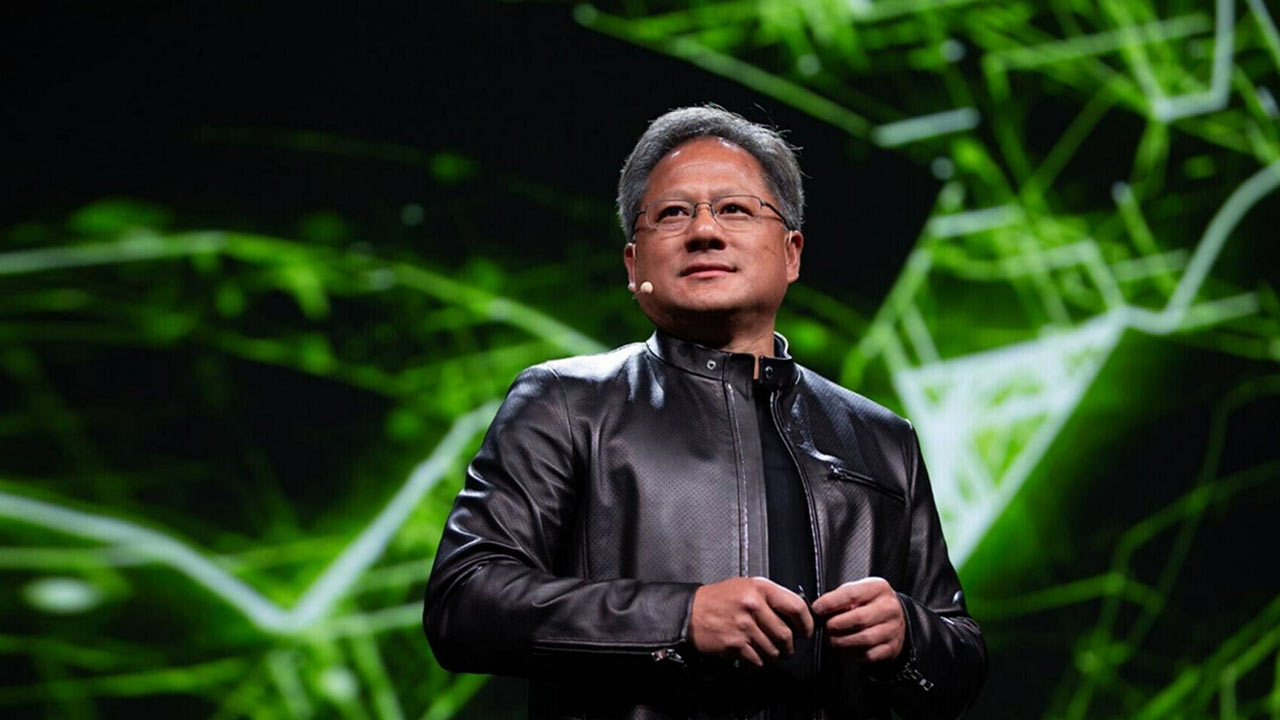
Nvidia CEO Jensen Huang has strongly criticized U.S. export restrictions on AI chips to China, calling them a “failure” that cost American firms billions in lost sales while accelerating China’s self-reliance in semiconductor development. Speaking at the Computex conference in Taipei, Huang welcomed the Trump administration’s decision to reverse some of the Biden-era controls, signaling a shift that could reshape global tech policy.
“The fundamental assumptions that led to the AI diffusion rule have been proven to be fundamentally flawed,” Huang said, referring to the Biden administration’s three-tiered export control regime, which entirely blocked sales of advanced chips to China.
Impact on Nvidia and U.S. Industry
Since the Biden administration’s controls came into effect, Nvidia’s market share in China fell from 95% to 50%, Huang revealed. Nvidia has been hit particularly hard, taking a $5.5 billion charge in April related to its blocked H20 chip, and Huang now estimates total revenue loss at $15 billion.
Despite these setbacks, Huang noted that AI research in China has continued unabated and is now being powered by local technologies, particularly chips from Huawei and other Chinese semiconductor designers. He estimated that China’s AI market will be worth $50 billion in 2025 and called the competition there “intense”.
“They would love for us never to go back to China,” he said.
Trump’s Strategy: A Shift in Direction
Huang praised the Trump administration’s plan to move away from rigid export tiers and toward a global licensing regime based on government-to-government agreements. The proposed shift could provide the U.S. more flexibility and leverage in trade negotiations while also easing pressure on U.S. tech firms.
“President Trump realises it’s exactly the wrong goal,” Huang said, arguing that isolating China from U.S. tech would not stop AI innovation and only encourage the growth of competitive alternatives.
Nvidia’s Workaround
Nvidia is now developing a new version of its Blackwell AI chip that includes slower memory, allowing it to comply with current U.S. restrictions while still serving key markets.
Rising Tensions
China responded sharply to recent U.S. moves that warned firms against using Chinese-made AI chips like Huawei’s Ascend, urging the U.S. to “immediately correct its wrongdoings.” Beijing warned that such measures violate trade agreements and undermine cooperation, threatening “resolute” countermeasures.
Industry Outlook
While the Biden administration had aimed to contain China’s semiconductor and military advancements, the unintended consequence appears to be a rapid buildup of China’s domestic AI and chipmaking capabilities. Huang’s remarks underscore the growing frustration within U.S. tech circles over policies they say are self-damaging.
Meanwhile, Nvidia continues to dominate the global AI infrastructure market, with new product announcements at Computex expected to further boost its $130.5 billion revenue base.