
Fed-BIS Report Finds Monetary Policy Still Effective in Tokenized Financial Systems

A joint research project between the New York Federal Reserve and the Bank for International Settlements (BIS) has concluded that central banks can effectively conduct monetary policyand potentially do so more efficiently—in a tokenized, decentralized financial environment, according to a report released on Wednesday.

The findings stem from Project Pine, a prototype initiative developed by the New York Fed’s Innovation Center and the BIS Innovation Hub, aimed at evaluating whether digital tools and blockchain-based systems could support core monetary operations in a future financial system dominated by tokenized assets.

Key Takeaways:

  • The prototype system was able to instantaneously execute monetary policy operations in response to simulated market conditions, preserving central banks’ ability to manage liquidity and interest rates.

  • The report suggests that smart contracts could allow central banks to rapidly deploy or adjust monetary policy tools, making operations more responsive in times of uncertainty.

  • Tokenization refers to digital representations of assets on blockchain platforms, increasingly used in decentralized finance (DeFi) and being explored by wholesale financial markets.

Future operations could be nimbler in uncertain conditions and potentially reduce frictions between the time of announcements and offerings,” the report noted.

Future Implications for Central Banks:

While there is currently no immediate threat to how central banks implement policy, the report acknowledges that widespread tokenization in wholesale markets could demand participation in new financial infrastructures and interaction with digital tokens to remain effective.

It also points to the growing operational complexity of monetary policy in a hybrid financial system, where automation may need to complement—though not entirely replace—human judgment.

If the private financial sector adopts tokenization on a broad scale… central banks may need to adapt to novel market infrastructures,” the report states.

Strategic Preparation, Not Reaction

The findings are part of preparatory research to ensure central banks remain capable of navigating an evolving financial landscape. The system tested was not tailored to any specific central bank but was designed to mimic standard monetary operations such as repo transactions, liquidity injections, and interest rate targeting.

While decentralized financial technologies may present new risks, they also offer opportunities for streamlining operations, reducing time lags, and enhancing precision in policy deployment.
India Approves $435 Million HCL-Foxconn Semiconductor Plant Near Jewar Airport

India’s federal cabinet has approved a new 37.06 billion ($435 million) semiconductor plant — a joint venture between HCL Group and Taiwan’s Foxconnas part of the India Semiconductor Mission, Information Minister Ashwini Vaishnaw announced on Wednesday.

The plant will be built near Jewar airport in Uttar Pradesh, and is expected to have a monthly capacity of 20,000 wafers, enabling the production of 36 million display driver chips annually. The facility will begin commercial production in 2027, becoming the sixth project approved under India’s national semiconductor initiative.

This marks another significant step in our journey to build a robust semiconductor ecosystem in India,” Vaishnaw said at the cabinet briefing in New Delhi.

A Strategic Push Toward Chip Self-Sufficiency

Prime Minister Narendra Modi has made semiconductor manufacturing a key pillar of India’s economic growth strategy, aiming to turn the country into a global electronics manufacturing hub. Despite heavy investments and multiple proposals, India currently has no operational chip fabrication facility.

Mixed Results in India’s Semiconductor Drive

The HCL-Foxconn announcement comes amid a series of starts and stalls in India’s semiconductor ambitions:

  • Adani Group recently paused talks with Israel’s Tower Semiconductor on a $10 billion chip project, after internal concerns about commercial demand.

  • A $19.5 billion joint venture between Foxconn and Vedanta collapsed in 2023 due to cost overruns and delays in receiving government incentives.

  • Still, progress continues with other ventures:

    • Tata Group is moving ahead with an $11 billion chip fabrication and testing facility.

    • Micron Technology (U.S.) is developing a $2.7 billion chip packaging plant in India.

Industry Implications

The HCL-Foxconn facility’s focus on display driver chipscritical components for screens in smartphones, tablets, and TVs—comes at a time when global supply chains are realigning away from dependence on China and Taiwan.

By 2027, the new plant could help fill both domestic and export demand for mid-range semiconductor components, while adding momentum to India’s long-term goal of building a self-reliant semiconductor ecosystem.

Pony.ai Robotaxi Catches Fire After Malfunction, No Injuries Reported

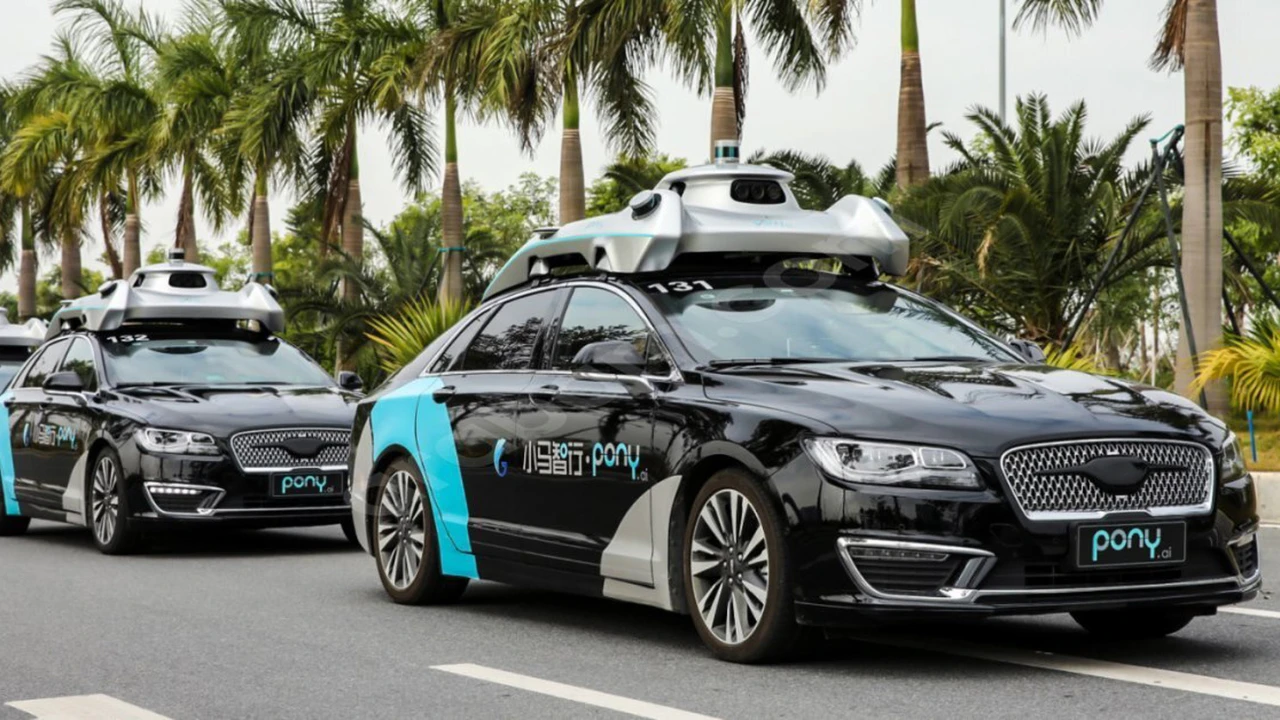
Pony.ai, one of China’s leading autonomous vehicle companies, confirmed on Wednesday that one of its driverless robotaxis caught fire in Beijing after a system malfunction triggered an emergency stop. The incident occurred while the vehicle was being handled by service personnel. Fortunately, no passengers were on board, and no injuries were reported.

According to a company statement, the car—operating without a human driver—experienced an “abnormal statusearly Tuesday morning, prompting its safety system to initiate a stop. Service staff arrived within two minutes, but during the response process, the vehicle ignited and caught fire.

No collision occurred and no one was injured. The specific cause is currently under investigation,” Pony.ai stated.

Incident Footage and Public Response

Videos circulating on Chinese social media show thick black smoke rising from a multi-lane highway, with a burned-out vehicle straddling a road divider. The car appears to be a Lexus, the luxury brand under Toyota, which is a known backer of Pony.ai. However, Reuters was unable to verify the model or authenticity of all media posted online.

An unnamed Beijing traffic police officer told Qingdao city’s broadcast outlet that the fire broke out when the engine was restarted, further complicating the cause analysis.

Regulatory and Industry Implications

The incident comes at a sensitive time, as Chinese regulators have begun tightening scrutiny on autonomous driving systems following a recent fatal autopilot-related crash involving a Xiaomi vehicle. The government has been encouraging the deployment of autonomous driving technology, with Pony.ai, Baidu, and others receiving approval to operate fully driverless robotaxis in designated urban zones.

However, high-profile failureslike the Waymo robotaxi incident in San Francisco where the vehicle was set on fire by a crowd—have raised broader concerns about safety, emergency response, and public trust in autonomous vehicles.

Ongoing Investigation

Neither Pony.ai nor Toyota provided additional details as of this writing. The cause of the fire remains under investigation, and regulators are likely to monitor the situation closely as the government refines its autonomous vehicle safety standards.