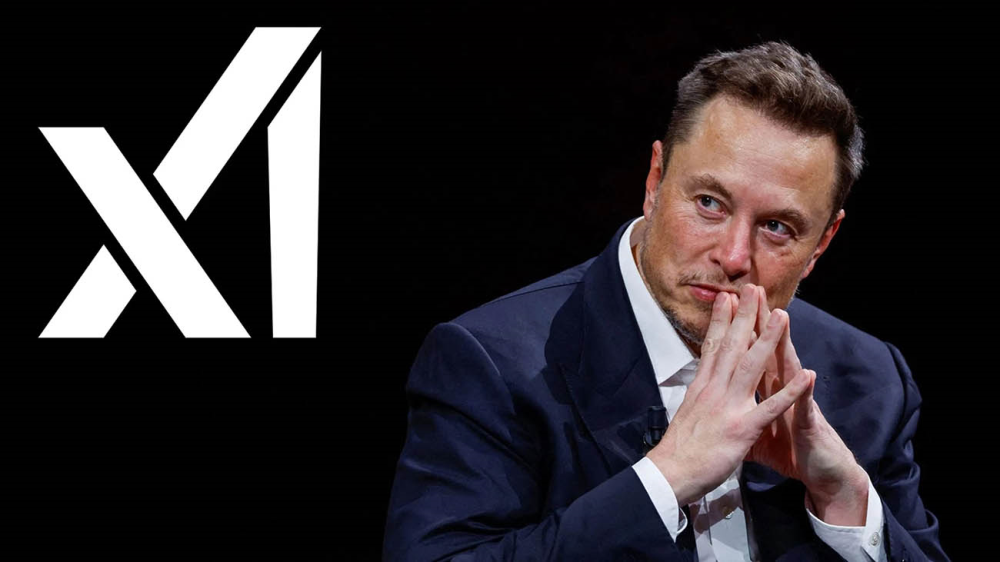
Elon Musk’s xAI Seeks $4.3 Billion Equity Raise Amid Massive Spending Plans

Elon Musk’s AI startup xAI is reportedly in talks to raise $4.3 billion in equity funding, according to Bloomberg News. This new capital would be in addition to a $5 billion debt funding round already in progress, as xAI intensifies efforts to scale its artificial intelligence capabilities.

Founded in 2023, xAI has already raised $14 billion in equity to date. However, the company is now seeking fresh investment as it anticipates spending approximately $13 billion in 2025 alone — more than $1 billion per month, much of it earmarked for hardware, compute infrastructure, and top-tier AI talent.

Key Highlights:

  • The additional equity would bring total fundraising efforts to over $23 billion.

  • The company’s flagship product is Grok, a chatbot integrated with X (formerly Twitter), which xAI acquired earlier this year.

  • According to Bloomberg, xAI’s valuation has surged to $80 billion as of Q1 2025, up from $51 billion at the end of 2024.

  • Musk’s startup may benefit from a $650 million rebate from a manufacturing partner, helping to offset some of its rising costs.

Context and Competition:

Musk previously co-founded OpenAI in 2015 but stepped away from the board in 2018. Since then, he has become increasingly critical of OpenAI’s direction and established xAI as a competitor focused on “truthful” and “beneficial” AI.

OpenAI is reportedly aiming to raise up to $40 billion at a $300 billion valuation, with SoftBank involved in its latest funding round.

Industry Implications:

The AI space has become one of the most capital-intensive sectors in tech, as firms race to secure the massive computational power and top-tier research talent required to train frontier models. xAI’s projected 2025 cash burn is among the highest in the industry, underscoring Musk’s ambitious push to catch up with, and possibly surpass, competitors like OpenAI, Anthropic, and Google DeepMind.


OpenAI Weighs Antitrust Action Against Microsoft Amid Tensions Over AI Partnership

Executives at OpenAI have internally discussed whether to accuse Microsoft of anticompetitive behavior, potentially seeking a federal regulatory review of their contractual relationship, according to a report from the Wall Street Journal.

Microsoft, a major backer of OpenAI since 2019 with an investment exceeding $10 billion over time, has been a core infrastructure partner via its Azure cloud services. However, tensions between the companies appear to be growing as they negotiate the terms of OpenAI’s ongoing transition into a public-benefit corporation — a step that requires Microsoft’s approval.

Disputes and Strategic Divergences:

  • Talks between the two sides have dragged on for months without a final agreement on Microsoft’s future equity stake in OpenAI.

  • According to The Information, OpenAI is pushing for Microsoft to accept a 33% stake in a restructured subsidiary in exchange for giving up rights to future profits.

  • OpenAI also seeks to revise clauses that currently give Microsoft exclusive hosting rights for its models, potentially opening the door for other cloud providers like Google Cloud, which OpenAI has already begun engaging to expand its compute capacity.

Microsoft, reportedly unwilling to concede to OpenAI’s proposed restructuring, is said to be seeking further concessions. Still, both companies issued a joint statement to Reuters expressing optimism:

“Talks are ongoing and we are optimistic we will continue to build together for years to come.”

Possible Antitrust Implications:

Should OpenAI move forward with an antitrust complaint or regulatory appeal, it could dramatically reshape one of the most influential alliances in the artificial intelligence landscape. Microsoft’s deep integration with OpenAI — spanning cloud infrastructure, product embedding (like Copilot in Office), and funding — could come under increased regulatory scrutiny, especially in the U.S. and EU, where antitrust enforcement in tech has intensified.

This development highlights OpenAI’s increasing desire to diversify partnerships and assert strategic independence, even from its most powerful corporate backer.

BBVA Advises Wealthy Clients to Allocate Up to 7% in Bitcoin, Signaling Growing Institutional Embrace of Crypto

BBVA, one of Spain’s largest banks, is advising its private banking clients to allocate between 3% and 7% of their portfolios to cryptocurrencies, primarily bitcoin and ether, according to Philippe Meyer, head of digital & blockchain solutions at BBVA Switzerland.

Speaking at the DigiAssets conference in London, Meyer stated the advisory began in September 2023, reflecting a growing confidence in the sector. While many banks passively allow crypto investments, BBVA stands out by actively recommending such allocations — a rare move among mainstream European financial institutions.

“With private customers, since September last year, we started advising on bitcoin,” Meyer said. “The riskier profile, we allow up to 7% of portfolios in crypto.”

Context and Strategy:

  • BBVA started executing crypto trades for private clients in 2021, but this is the first time it has formally advised allocations.

  • The recommendation currently includes bitcoin and ether, with plans to extend coverage to other digital assets later in 2025.

  • Meyer emphasized that even a 3% allocation can boost portfolio performance without exposing clients to excessive risk.

Market Momentum:

Bitcoin hit record highs in May, continuing its recovery from the crypto market collapse in 2022, which saw major platforms like FTX implode. The rebound has been aided by increased institutional interest and a pro-crypto stance from U.S. political figures, including Donald Trump.

Despite these advances, regulatory bodies remain cautious:

  • The European Securities and Markets Authority (ESMA) noted earlier this year that 95% of EU banks still do not engage in crypto activities.

  • Regulators consistently warn investors of crypto’s volatility, reiterating that one should be prepared to lose their entire investment.

BBVA’s approach reflects a nuanced shift in institutional sentiment, especially for wealthy clients seeking diversification amid evolving digital asset landscapes.