Trump Administration Renegotiates Biden-Era Chips Act Grants, Says Commerce Secretary Lutnick

The Trump administration is actively renegotiating semiconductor manufacturing grants originally awarded under the Biden-era CHIPS and Science Act, according to U.S. Commerce Secretary Howard Lutnick. Speaking before the Senate Appropriations Committee on Wednesday, Lutnick indicated that some of these awards may be significantly altered or even cancelled as part of efforts to secure better terms for U.S. taxpayers.

“Some of the Biden-era grants just seemed overly generous, and we’ve been able to renegotiate them,” Lutnick told lawmakers, emphasizing that the renegotiations aim to deliver greater value to the American public. “All the deals are getting better, and the only deals that are not getting done are deals that should have never been done in the first place.”

$52.7 Billion CHIPS Act Under Review

The $52.7 billion CHIPS and Science Act, signed by President Biden in 2022, was designed to bolster domestic semiconductor manufacturing and reduce reliance on Asia, particularly Taiwan and South Korea. Under the program, billions of dollars in grants were awarded to both U.S. and foreign chipmakers, including Taiwan’s TSMC, South Korea’s Samsung and SK Hynix, as well as U.S.-based Intel and Micron.

Though many of these awards were signed before Biden left office, most of the funds have yet to be fully disbursed. The grant payments are generally structured to be released as companies meet specific production and investment milestones tied to their U.S. plant expansions.

TSMC Award Revised Amid Expanding U.S. Investment

Lutnick cited Taiwan Semiconductor Manufacturing Co. (TSMC) as an example of successful renegotiation. Under the original agreement, TSMC was awarded $6 billion to support its U.S. manufacturing expansion. Lutnick revealed that TSMC subsequently increased its planned investment from $65 billion to $165 billion, while still receiving the same $6 billion in federal funds.

Although TSMC confirmed in March that it would invest an additional $100 billion in the U.S., the company has not commented on whether the new investment was directly tied to renegotiated CHIPS Act terms.

White House Seeking Delays and New Terms

The renegotiation efforts are not new. In February, Reuters reported that the White House was already seeking to renegotiate several awards and delay some upcoming disbursements to ensure better returns on government spending.

Lutnick’s comments suggest that the Trump administration intends to continue scrutinizing past agreements to maximize taxpayer value and may block deals it deems wasteful or excessive.

AI Computing Capacity Also a Focus

During the hearing, Lutnick also addressed concerns about the global race for artificial intelligence computing capacity. He emphasized the administration’s commitment to ensuring that over 50% of global AI compute power remains based in the United States. This statement comes amid criticism of a Trump administration deal allowing the United Arab Emirates to purchase advanced American AI chips, raising fears about exporting critical technology.
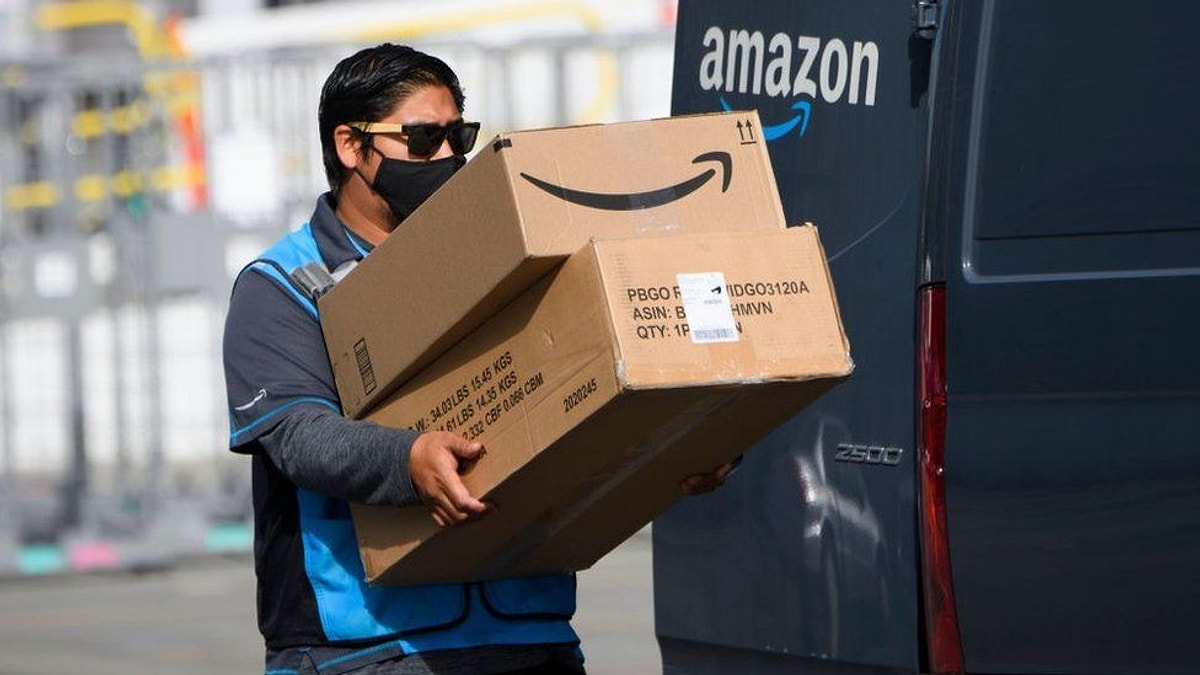

Amazon Unveils AI Upgrades to Delivery, Logistics, and Warehouse Operations

Amazon announced a series of new artificial intelligence initiatives aimed at enhancing its delivery, logistics, and warehouse operations, showcasing how the technology could significantly speed up package delivery and improve efficiency across its sprawling supply chain.

At the center of these developments is Amazon’s creation of a new group within its Lab126 device unit, tasked with developing warehouse robots powered by “agentic AI.” Unlike today’s robots that perform single, repetitive tasks, these AI-powered machines will be capable of multitasking — such as unloading trailers, retrieving parts, and making decisions based on natural language prompts. This flexibility is expected to be particularly beneficial during peak demand periods like the holiday season.

“For our customers, it’s, of course, faster delivery,” said Yesh Dattatreya, a robotics scientist leading the initiative. The robots will also contribute to minimizing waste and reducing carbon emissions, Amazon said, aligning with its broader sustainability goals.

Agentic AI — which allows systems to autonomously make and execute decisions — has become one of the most promising investment areas in AI development. Amazon’s version aims to transform warehouse robots into multi-functional assistants capable of responding to human commands in natural language.

Smarter Mapping for Delivery Drivers

Beyond warehouses, Amazon is using generative AI to improve mapping for delivery drivers. The new software provides highly detailed information about building layouts, obstacles, and navigation routes, particularly aiding deliveries to complex locations like large office parks or apartment complexes.

“This innovation is making it easier for Amazon drivers to find the right delivery spot, especially in tricky places,” Amazon stated.

The company also confirmed, for the first time publicly, that it is exploring AI-powered eyeglasses for its delivery drivers. These smart glasses would feature embedded screens to provide turn-by-turn directions, freeing drivers’ hands while navigating and delivering packages. Although still in development, the glasses could eventually integrate the advanced mapping technology already in use.

According to Viraj Chatterjee, vice president of Amazon’s Geospatial unit, U.S. drivers are already using the AI-generated maps daily, though they are not mandated to do so. This approach may help Amazon avoid legal challenges related to excessive control over gig economy workers.

AI Enhances Inventory Forecasting and Same-Day Delivery

In addition to physical logistics, Amazon is applying AI to better predict customer demand and optimize same-day delivery operations. The new forecasting software considers multiple variables—including price, convenience, weather, and special events like Prime Day—to ensure that popular products are pre-positioned in fulfillment centers closer to where they are most likely to be ordered.

“It allows us to sell a different set of books in Boston than we would in Boise, and cater to different tastes really, really efficiently across the communities that we serve,” said Nathan Smith, director of demand forecasting for Amazon’s supply chain optimization technologies unit.

With these AI upgrades, Amazon aims to maintain its competitive edge in e-commerce by delivering packages faster, improving the delivery experience for drivers, and further automating warehouse operations.

Apple Loses Appeal to Delay App Store Antitrust Reforms in Epic Games Case

Apple has failed in its latest attempt to delay a U.S. court order requiring changes to its App Store practices, marking a significant setback in its long-running legal battle with Epic Games. The 9th U.S. Circuit Court of Appeals on Wednesday rejected Apple’s request to pause enforcement of parts of the federal judge’s injunction while it pursues further appeals.

The case stems from Epic Games’ 2020 lawsuit challenging Apple’s control over its iOS App Store and in-app payment system. Epic argued that Apple’s policies stifle competition and allow it to collect excessive fees from app developers.

Court Orders Apple to Open App Store to More Competition

In April, U.S. District Judge Yvonne Gonzalez Rogers found Apple in contempt of her previous injunction and ordered the company to immediately cease several business practices that restricted developers’ ability to direct users to alternative payment options. Among the practices targeted was Apple’s introduction of a 27% fee on developers who facilitate payments outside of the App Store—a fee the judge said was an attempt to sidestep the original injunction.

Additionally, the court barred Apple from restricting where app developers can place links or buttons that lead users to external purchasing platforms.

Epic Games CEO Tim Sweeney celebrated the appeals court decision on social media, stating that the “long national nightmare of the Apple tax is ended.”

Apple Argues for Business Control, Epic Sees New Competition

In its emergency appeal, Apple argued that the ruling strips it of control over “core aspects of its business operations” and unfairly compels the company to give developers free access to its platform services. Apple also expressed disappointment at the appeals court decision but vowed to continue its legal battle.

Epic Games countered that Apple’s actions were aimed at preserving its dominance and maintaining revenue streams that the court had ruled were anti-competitive. Epic claimed that since the injunction was issued, many developers have already introduced better payment systems, improved deals, and expanded choices for consumers, increasing genuine competition on iOS.

Ongoing Legal Risks for Apple

This latest ruling leaves Apple exposed to continued legal and regulatory scrutiny. Judge Gonzalez Rogers previously accused Apple of misleading the court about its compliance efforts and referred both Apple and one of its executives to federal prosecutors for potential criminal contempt charges.

While Apple won most aspects of the original lawsuit in 2021, Gonzalez Rogers did rule that the company must allow developers to inform users about alternative payment options outside of Apple’s in-app purchase system.

The outcome of Apple’s ongoing appeal will likely have significant implications for the future of digital marketplaces and the company’s multibillion-dollar App Store revenue.