Amazon eyes deeper investment in Anthropic to stay ahead in AI race

Amazon is reportedly considering another multibillion-dollar investment in Anthropic, the artificial intelligence firm behind the Claude AI models, according to the Financial Times. The potential move would strengthen Amazon’s position as a major player in the rapidly intensifying global AI race.

The report, citing sources familiar with the matter, says Amazon wants to expand on the $8 billion investment it committed to Anthropic in November 2023. That initial deal, which included an upfront $4 billion, made Amazon one of the company’s largest stakeholders, alongside Google, which has invested more than $3 billion into Anthropic.

Both Amazon and Anthropic declined to comment on the renewed talks when contacted by Reuters.

A race to stay relevant in AI

Amazon’s increasing interest in Anthropic highlights its urgency to catch up to rivals OpenAI and Google, who have made significant consumer-facing advances in generative AI over the past two years. Anthropic’s Claude family of AI models competes directly with OpenAI’s ChatGPT and Google’s Gemini.

“We quickly realized that we had many shared goals that were fundamentally critical,” said Dan Grossman, Amazon’s VP of worldwide corporate development. “The size of the (existing investment) represents our ambition.”

Amazon’s deepened partnership with Anthropic could also help it attract top AI talent, an increasingly competitive space where companies are offering equity, massive compensation packages, and research freedom to lure leading minds in machine learning and large language models.

Strategic implications

Amazon’s AI ambitions are closely tied to its cloud business, AWS, where Anthropic’s models are being integrated into services for enterprise customers. The ongoing partnership gives Anthropic priority access to AWS’s Trainium and Inferentia chips, optimizing both model development and deployment.

Beyond infrastructure, Amazon is aiming to embed Claude-powered AI tools deeper into Alexa, Amazon Web Services, and its e-commerce ecosystem, which could give it an edge in personalized search, voice interfaces, and customer service automation.

The prospective increase in funding would also help Amazon maintain equity leadership in Anthropic amid growing investor interest in the startup. With AI startups commanding soaring valuations, Amazon appears determined not to lose strategic control over a potential future titan in the field.
Linda Yaccarino resigns as CEO of X amid AI controversies and advertiser backlash

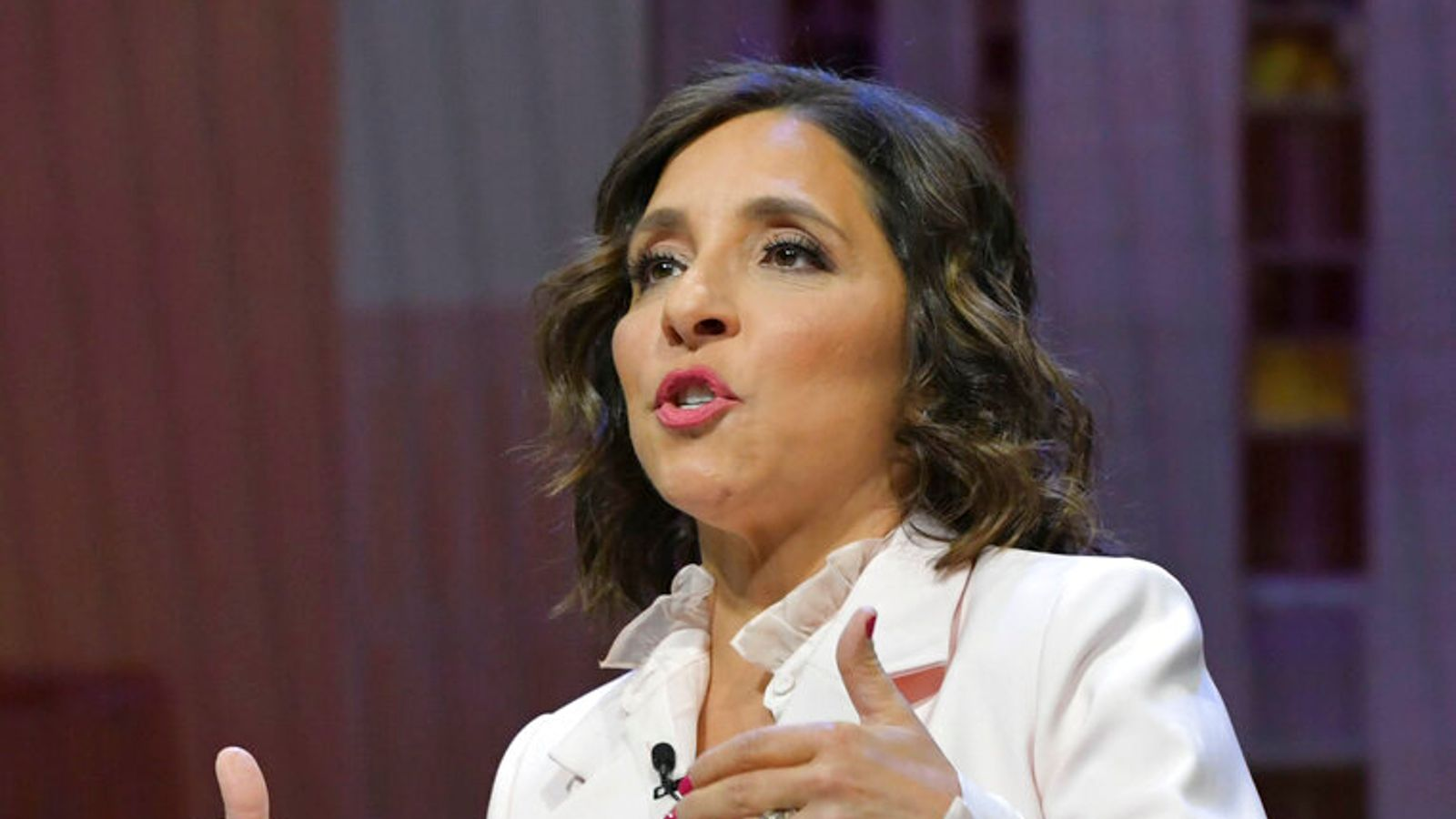
In a surprise move, Linda Yaccarino announced her resignation as CEO of X, the social media platform formerly known as Twitter, just months after the company was absorbed by Elon Musk’s AI startup, xAI. Yaccarino shared the news via a post on X, stating, “I’ve decided to step down as CEO of X,” though no specific reason was provided for her exit.

The abrupt departure deepens the turmoil surrounding Musk’s tech empire, which includes Tesla, SpaceX, and xAI. Musk responded briefly, writing, “Thank you for your contributions,” in a reply to her resignation post. No successor has been named.

Turmoil at the top

Yaccarino, 61, was appointed in 2023 after a high-profile career at NBCUniversal, where she was chair of global advertising and partnerships. Her mission at X was to repair the platform’s relationship with advertisers, many of whom had pulled back due to a surge in extremist and toxic content under Musk’s leadership.

Her resignation follows closely on the heels of a Grok-related controversy, in which xAI’s chatbot posted content containing antisemitic tropes and praise for Adolf Hitler. The posts, which were removed after a wave of criticism, may have heightened internal tensions. Analysts suggest the Grok incident could have been a breaking point, with some citing a clash of leadership styles between Yaccarino and Musk.

“This may have come to a head when the embedded AI chat Grok started responding to AI posts in an increasingly offensive manner,” said Gil Luria, analyst at D.A. Davidson.

Struggles with advertiser trust

While at X, Yaccarino worked to rebuild advertiser confidence, even launching lawsuits against certain advertisers and industry bodies like the World Federation of Advertisers, alleging collusion and boycotts aimed at hurting the platform’s revenue.

Despite the headwinds, some analysts argue that Yaccarino achieved what she was brought in to do. “She accomplished what she was hired to do,” said Jasmine Enberg of Emarketer, pointing to projected ad growth in 2025.

Still, her efforts were under constant strain due to Musk’s provocative statements and unpredictable governance. Yaccarino often found herself putting out fires, navigating PR crises and internal upheaval while attempting to launch new business features, such as:

  • Partnerships with Visa to develop direct payments,

  • A smart TV app for X content,

  • Preliminary discussions around X-branded debit or credit cards, as reported by the Financial Times.

Wider Musk empire faces instability

Yaccarino’s resignation is the latest in a string of executive departures linked to Musk. At Tesla, the CEO’s longtime associate Omead Afshar and North America HR director Jenna Ferrua left last month. Tesla shares dipped 1% following the Yaccarino news.

Musk, who briefly held a government post earlier this year under the Trump administration, is now juggling several companies while facing mounting scrutiny over content moderation, AI safety, and business ethics.

X is also burdened by heavy debt and remains under pressure from both advertisers and regulators over its content policies and AI integrations.

European telecom firms warn against EU deregulation push, fear market ‘re-monopolisation’

A group of European telecom companies, including Vodafone, Iliad, and 1&1, have jointly criticized the European Commission’s proposal to relax regulations on fixed broadband networks, arguing that such a move could reverse progress on market competition and fiber optic rollout.

In an open letter published Thursday, the companies expressed concerns that loosening regulations for dominant operators—typically former monopolists such as Deutsche Telekom in Germany—would lead to a “re-monopolisation” of national markets and undermine the EU’s digital goals.

Pushback against deregulation

The European Commission is reviewing rules that currently require dominant network owners to allow competitors access to their infrastructure under regulated terms. The proposal under consideration would ease those obligations, particularly in markets deemed to have improved competition.

However, the signatories of the letter argue that such deregulation would be a “step backwards” for Europe. They warn it would:

  • Contradict the EU’s own pro-competition policies,

  • Stifle the deployment of fiber optic networks,

  • Reinforce the dominance of historical operators in national markets.

“This would undo years of progress and hurt consumer choice,” the letter states.

Fiber optic rollout remains contentious

The development and expansion of fiber-to-the-home (FTTH) networks remains a divisive issue across Europe. Smaller telecoms argue that the incumbent operators—who control much of the legacy infrastructure—already enjoy significant advantages, and further deregulation would only deepen their dominance.

National developments reflect broader tension

Earlier in July, Germany’s Bundestag passed new legislation aimed at accelerating the rollout of fiber and mobile networks. However, critics say that without firm regulatory oversight, smaller providers risk being squeezed out of lucrative markets, undermining investment diversity.

With the EU pushing for widespread gigabit connectivity by 2030, the tension between market liberalization and infrastructure control is emerging as a key regulatory battleground.