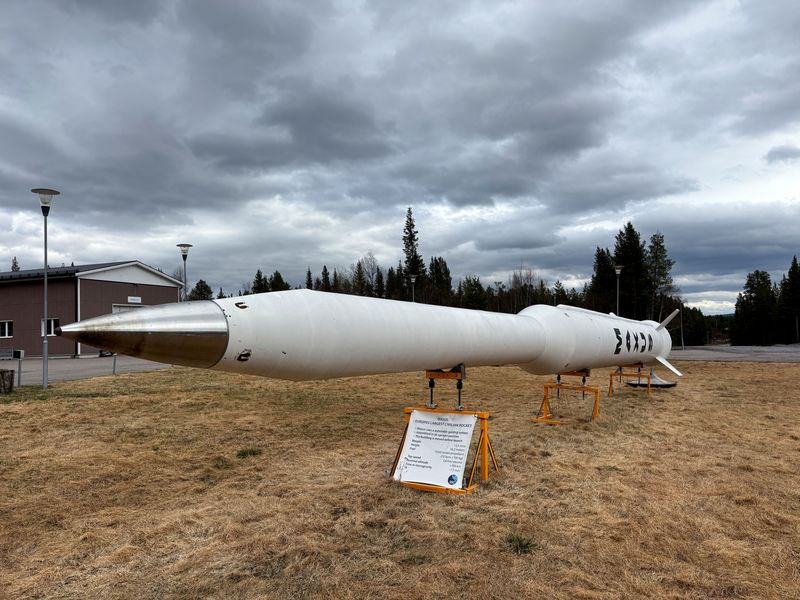
Nordic spaceports poised to boost Europe’s launch autonomy amid US tech dominance

Two remote spaceports in Sweden and Norway are emerging as Europe’s top hopes for reducing dependence on U.S.-based space technology, as the continent struggles to establish sovereign access to orbit amid global tensions and rapid technological shifts.

The Esrange Space Center in northern Sweden and the Andøya Spaceport in northern Norway are racing to become the first mainland European sites to launch satellites into orbit. Their development comes amid fears over potential access limits to SpaceX’s Starlink network, which has proven critical to Ukraine’s war effort — and as European officials worry about geopolitical risks tied to U.S. tech dominance.

“We’ve lost competition to Elon Musk… we need autonomous launch capabilities,” said Andrius Kubilius, European Commissioner for Defence and Space.

Massive launch gap

The urgency is underscored by the scale of the gap: U.S. space launches hit 154 in 2024, while Europe managed just three. Europe accounted for only 10% of global public space investment ($143 billion) last year, according to an EU study.

This disparity is especially critical in the era of low Earth orbit (LEO) satellites, which are cheaper and offer superior connectivity, but must be deployed in massive numbers. Goldman Sachs predicts 70,000 LEO satellites will be launched globally in the next five years.

Europe’s lone spaceport can’t keep pace

Currently, Europe’s only launch facility is in French Guiana, 7,000 km from Paris. It successfully launched the long-delayed Ariane 6 rocket earlier this year — over five years behind schedule. But the Ariane 6 is not reusable, has a higher per-launch cost than SpaceX’s Falcon 9, and lacks capacity for Europe’s growing commercial and defense needs.

Nordic alternatives offer rare geographic advantages

Located above the Arctic Circle, Esrange offers 5,200 km² of uninhabited land, ideal for launch recovery and safety. It’s surrounded by reindeer pastures, mountains, and bogland, and has nearby rail and airport access via Kiruna, a mining town.

Meanwhile, Andøya — an island base partially owned by Norwegian defense contractor Kongsberg — already conducted a successful test flight with German startup ISAR Aerospace. Although the rocket only flew for 30 seconds before splashing into the sea, it was considered a promising start.

ISAR has seen a surge in demand from European defense ministries, which CEO Daniel Metzler links directly to Donald Trump’s re-election bid:

“Trump probably did more for European defence than any European politician… it created a huge sense of urgency.”

ISAR’s first commercial launches are expected in 2025, with Esrange providing additional test capacity for its partially reusable rockets.

Aggressive expansion planned

  • Esrange has partnered with U.S.-based Firefly and South Korea’s Perigee, diversifying its launch options.

  • Firefly offers 24-hour launch readiness for rapid satellite replacement — a capacity NATO officials say Europe must emulate.

A NATO delegation recently visited Andøya, which has already secured a 30-launch-per-year license. Esrange has yet to set a cap but is expected to match or exceed that number in the coming years.

“Europe needs more aggressive timelines,” one anonymous NATO official told Reuters.

Still a long road ahead

Despite progress, major technical and infrastructure work remains before full orbital capability is achieved.

“There’s a lot of testing and trialling to be done,” said Lennart Poromaa, head of Esrange. “Within a year, we’ll probably have the entire base ready.”

Europe’s space race is no longer a science experiment — it’s a geopolitical imperative, with the Arctic launch pads offering one of the continent’s best hopes of securing strategic autonomy in orbit.

Tesla plans San Francisco robotaxi rollout within two months, pending approval

Tesla CEO Elon Musk announced plans to expand the company’s robotaxi service to the San Francisco Bay Area within the next one to two months, contingent on regulatory approval. The update follows a limited launch of the service in Austin, Texas, where the company began public tests with about a dozen vehicles in June.

The pilot program in Austin includes a front-seat safety monitor, restricted passenger access, and a constrained service area. Musk added on X (formerly Twitter) that the service will expand to a larger area in Austin this weekend, though details remain sparse.

When asked by a Tesla fan group about a Bay Area launch, Musk replied: “Waiting on regulatory approvals, but probably in a month or two.”

Tesla’s push into autonomous ride-hailing is central to its long-term strategy. With electric vehicle sales declining amid heightened competition and political backlash surrounding Musk’s public image, much of Tesla’s lofty market valuation hinges on the successful commercialization of robotaxis and AI-powered humanoid robots.

However, rolling out autonomous services has proven challenging industry-wide. Regulatory scrutiny, safety concerns, and technical barriers have slowed progress. For example, GM’s Cruise has had to halt its operations following safety investigations. To date, Alphabet’s Waymo is the only firm with a fully operational and fee-charging driverless taxi service, operating in cities including San Francisco, Los Angeles, Austin, Phoenix, and Atlanta.

Tesla, which faced few regulatory obstacles in Texas, will encounter a stricter environment in California. The state requires companies to obtain multiple approvals from the Department of Motor Vehicles (DMV) and the California Public Utilities Commission (CPUC) before launching paid autonomous services.

Tesla received its first CPUC permit in March but must secure further approvals from both the CPUC and DMV before deploying driverless robotaxis commercially. Neither agency has commented yet on the current state of Tesla’s application.

Meanwhile, footage from Tesla’s Austin trial shared by select participants on social media shows early issues such as traffic slowdowns and erratic maneuvers, raising questions about the system’s readiness for wider deployment.

Despite these challenges, Musk has remained confident in Tesla’s plans to scale robotaxi operations rapidly across major U.S. cities.

SAG-AFTRA passes AI-focused agreement with video game studios, ending strike

Hollywood video game actors have ratified a new contract with major studios, introducing industry-first protections around artificial intelligence and concluding a nearly year-long labor standoff. The SAG-AFTRA union announced the deal on Wednesday, marking a significant moment for labor rights in the gaming industry as AI continues to reshape creative work.

“AI was the centerpiece of our proposal package,” said Sarah Elmaleh, a negotiation committee member and voice actor known for her roles in Final Fantasy XV and Call of Duty: Black Ops III. The agreement ensures actors have consent and disclosure rights when AI is used to replicate their voice or likeness. Notably, it also allows performers to suspend AI use consent during strikes — a safeguard previously not enshrined in contracts.

The deal was approved by a resounding 95.04% majority of SAG-AFTRA members and applies to key studios, including Activision, Electronic Arts, Disney Character Voices, WB Games, Take-Two, and Insomniac Games, among others.

SAG-AFTRA President Fran Drescher called the agreement a milestone: “This deal achieves important progress around AI protections, and progress is the name of the game.” For studios, the deal brings “historic wage increases, industry-leading A.I. protections, and enhanced health and safety measures,” according to spokesperson Audrey Cooling.

Along with AI clauses, the Interactive Media Agreement addresses the physical demands of motion capture work, providing on-set medics for high-risk scenes. Elmaleh emphasized the need to support not only vocal performers but those who “put their bodies on the line” to bring digital characters to life.

The new contract includes a 15.17% immediate wage increase, with further 3% raises scheduled for November 2025, 2026, and 2027.

This strike followed failed negotiations that began in 2023, overlapping with the larger wave of labor unrest in Hollywood, including the WGA and actors’ strikes. The broader debate around AI usage has also led to growing support for the NO FAKES Act, a bipartisan bill aimed at banning unauthorized AI-generated replicas of a person’s voice or image. Backed by SAG-AFTRA, Disney, the Recording Academy, and the Motion Picture Association, the bill is still under consideration in Congress.

The newly ratified agreement represents a landmark moment in establishing ethical AI standards in entertainment and may serve as a blueprint for other sectors facing similar technological challenges.