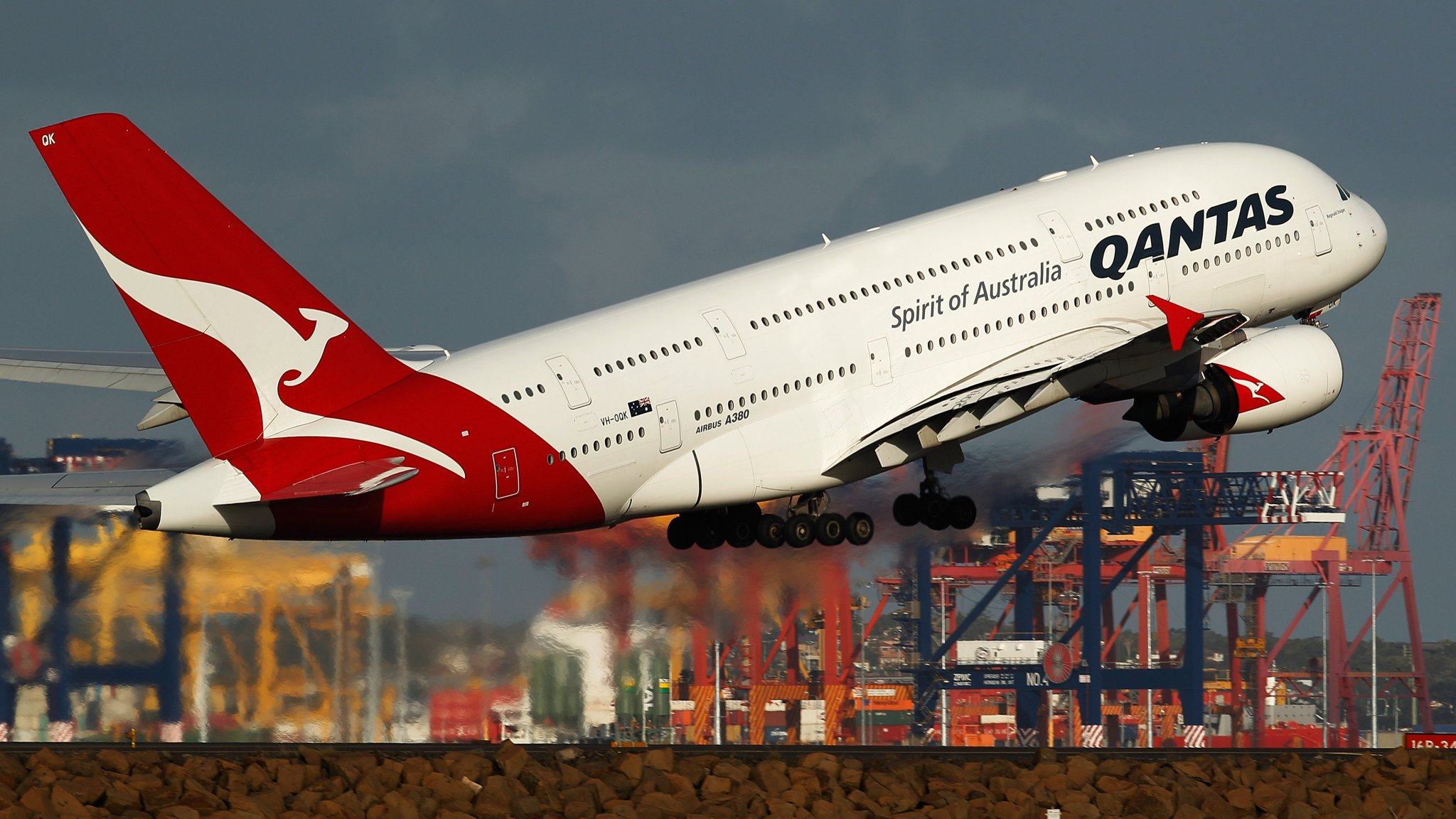
Qantas Contacts Cyber Criminal After Data Breach Affecting Six Million Customers

Australia’s Qantas has confirmed that a cyber criminal reached out to the airline one week after a major data breach exposed personal information of six million customers. The breach involved a hacker targeting a call centre and accessing a third-party customer service platform containing sensitive details including names, emails, phone numbers, birth dates, and frequent flyer numbers, a Qantas spokesperson told Reuters on Tuesday.

The airline has engaged the Australian Federal Police in the investigation and declined to provide further details on the contact due to the ongoing criminal matter. While there is currently no evidence that the stolen data has been leaked publicly, Qantas is actively monitoring the situation with cyber security experts.

This breach marks one of the most significant cyber attacks in Australia since the 2022 incidents involving telecommunications provider Optus and health insurer Medibank, which led to the introduction of mandatory cyber resilience laws.

The incident poses a challenge for Qantas as it works to restore public confidence after its reputation suffered during the COVID-19 pandemic due to operational disruptions and criticism.

Samsung Electronics Faces 39% Drop in Q2 Profit Amid Weak AI Chip Sales

Samsung Electronics is expected to report a 39% decline in its second-quarter operating profit, largely due to delays in supplying advanced memory chips to AI chip leader Nvidia, industry analysts said. The South Korean tech giant is forecast to announce an operating profit of 6.3 trillion won ($4.62 billion) for April to June, marking its lowest earnings in six quarters, according to LSEG SmartEStimate.

This downturn has raised concerns about Samsung’s ability to compete with rivals like SK Hynix and Micron in the rapidly growing market for high-bandwidth memory (HBM) chips used in artificial intelligence data centers. While its competitors have seen strong demand, Samsung’s growth has been limited by its heavy reliance on the China market, where U.S. export restrictions have curbed sales of advanced chips.

Analysts point out that Samsung’s latest HBM chips, specifically the HBM3E 12-high version, have not yet received Nvidia’s certification, slowing supply to the U.S. AI chip leader. Ryu Young-ho, senior analyst at NH Investment & Securities, noted that Samsung’s shipments to Nvidia are unlikely to be significant in 2025. Samsung has, however, started supplying the new chip to AMD since June.

Despite challenges in the chip segment, Samsung’s smartphone sales remain steady, supported by stockpiling ahead of potential U.S. tariffs on imported devices. Nonetheless, ongoing U.S. trade policies, including proposed tariffs on non-U.S.-made smartphones and possible restrictions on technology exports to Samsung’s Chinese plants, continue to create business uncertainty.

Samsung’s shares have underperformed this year compared to the KOSPI index, rising about 19% against the KOSPI’s 27.3% increase. As of Monday, Samsung shares dipped 1.9%, while the KOSPI rose 0.3%.

Capgemini to Acquire WNS for $3.3 Billion to Boost AI-Driven Outsourcing Services

France’s IT services giant Capgemini has agreed to purchase technology outsourcing firm WNS for $3.3 billion in cash, aiming to expand its portfolio of artificial intelligence (AI) tools for business process improvement, the company announced on Monday.

The acquisition will enable Capgemini to develop consulting services focused on enhancing company operations and cost efficiency through AI technologies, including generative AI and agentic AI, which it anticipates will attract substantial investment.

The deal values WNS shares at $76.50 each, a 17% premium over their closing price on July 3, excluding WNS’s financial debt. Capgemini’s interest in the India-based WNS, known for business process outsourcing (BPO) and data analytics, was initially reported by Reuters in April.

Capgemini CEO Aiman Ezzat highlighted that WNS’s “high growth, margin accretive and resilient Digital Business Process Services” would also strengthen Capgemini’s footprint in the U.S. market. WNS’s client roster includes major firms such as Coca-Cola, T-Mobile, and United Airlines.

In a media call, Ezzat noted that the acquisition would immediately open cross-selling opportunities in the U.S. and the U.K. The deal is expected to close by the end of 2025 and to be accretive to Capgemini’s revenue and operating margin from day one.

Despite the strategic rationale, Capgemini’s shares dropped about 5% after the announcement, making it one of the biggest decliners on Europe’s STOXX 600 index. Morgan Stanley analysts expressed concerns that the deal might restrict Capgemini’s financial flexibility and have limited immediate financial impact.

Analysts also cautioned that generative AI could disrupt the traditionally labor-intensive BPO market, potentially affecting Capgemini’s revenue and introducing new competitors. They noted the market might need more proof that WNS is the optimal vehicle for leveraging AI to transform BPO services.