EU Digital Rules Hurting Innovation and European Users

Google is warning that the European Union’s Digital Markets Act (DMA)—a sweeping antitrust law targeting Big Tech—is stifling innovation and leading to worse experiences for European consumers and businesses. The message will be delivered Tuesday at a European Commission workshop convened to allow Google critics to voice concerns and seek clarity.

Google’s legal team will argue that the new regulatory demands, intended to reduce the dominance of platforms like Google Shopping and Google Flights, are backfiring. According to Clare Kelly, one of Google’s lawyers, the company’s efforts to comply have resulted in clunky interfaces, higher ticket prices, and a 30% drop in direct booking traffic for airlines, hotels, and restaurants across Europe.

“We remain genuinely concerned about real world consequences of the DMA, which are leading to worse online products and experiences for Europeans,” Kelly is expected to say, according to remarks seen by Reuters.

The Digital Markets Act, which came into force in March 2024, imposes strict obligations on companies designated as “gatekeepers”, like Alphabet’s Google, Apple, Amazon, Meta, Microsoft, and ByteDance. Violations can result in fines up to 10% of global annual revenue.

In response to DMA scrutiny, Google has modified its search display to better highlight rival services, but critics say the changes don’t go far enough to ensure genuine competition. Google’s Oliver Bethell will call on regulators to provide clearer compliance guidelines to avoid delays and uncertainty.

“If we can understand precisely what compliance looks like, not just in theory, but taking account of on-the-ground experience, we can launch compliant services quickly and confidently across the EEA,” Bethell will say.

He also challenges Google’s critics to provide evidence-based analysis of both the costs and benefits of proposed remedies. “We need help identifying the areas where we should focus,” Bethell will argue, urging for data-driven input that can be jointly assessed with the Commission.

The Commission’s workshop—attended by EU officials, competition experts, and Google rivals—aims to clarify compliance expectations and evaluate whether the DMA is achieving its stated goals without unintended negative consequences.

Xiaomi Faces Backlash as YU7 EV Buyers Confront Year-Long Delivery Delays

Buyers of Xiaomi’s new YU7 electric SUV are voicing growing frustration after being told they may have to wait up to 60 weeks for delivery, despite paying a non-refundable deposit. The smartphone giant turned automaker received around 240,000 orders for the YU7 in the first 18 hours after sales opened last Thursday, but only a limited number of vehicles were available for immediate delivery.

By Tuesday, Xiaomi’s official app indicated wait times of 38 to 60 weeks, Reuters confirmed. More than 400 customer complaints have since been filed on the Sina Black Cat consumer complaint platform, with many saying they were unaware of the lengthy wait until after confirming their orders. Customers paid 5,000 yuan ($698) upfront and are now demanding refunds, citing concerns about EV tax exemptions expiring by year-end.

Xiaomi has not publicly responded, but CEO Lei Jun said he would address customer concerns in a livestream event on Wednesday via Weibo, where he has nearly 27 million followers.

The backlash mirrors earlier issues with Xiaomi’s first EV, the SU7 sedan, which debuted in March 2024. Though SU7 buyers initially faced seven-month delays, the car eventually outsold Tesla’s Model 3 in China from December onward. However, the SU7 brand image was hit by a fatal crash in March, and since then, Xiaomi has also faced complaints about unclear delivery schedules and optional feature configurations.

The YU7, Xiaomi’s second EV, is priced from 253,500 yuan ($35,360) — nearly 4% cheaper than Tesla’s Model Y, the best-selling SUV in China. Xiaomi has made clear its ambition to directly challenge Tesla’s dominance in China’s EV market.

To meet demand, Xiaomi is scaling up production at its Beijing factory, raising monthly output from 4,000 units in March 2024 to 28,000 in May, and is preparing to expand to two new factory sites nearby.

Still, unless transparency improves and production catches up, Xiaomi risks damaging its EV reputation — especially at a time when consumer trust and timely delivery are becoming major differentiators in China’s competitive electric vehicle landscape.

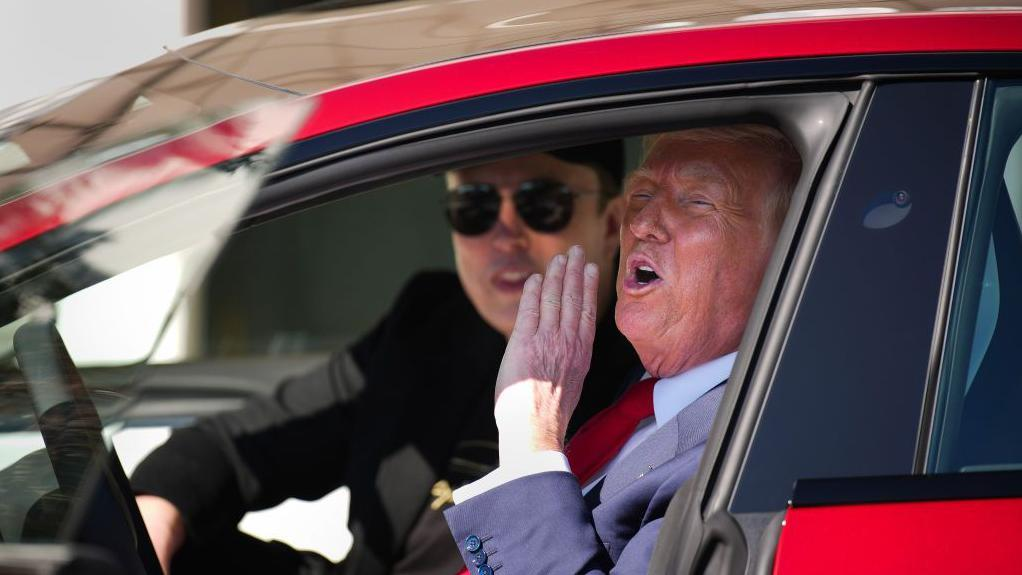
Trump-Musk Clash Triggers Scrutiny Fears Across Tesla, SpaceX, and Other Ventures

Former U.S. President Donald Trump’s call to review subsidies awarded to Elon Musk’s companies has sparked concerns of heightened regulatory scrutiny across the billionaire’s business empire, which spans automotive, space, energy, brain tech, and social media. The threat of government intervention may disrupt operations or stall innovation in several of Musk’s ventures. Here’s a breakdown of the U.S. agencies involved:

National Highway Traffic Safety Administration (NHTSA)
Tesla is under continued investigation by the NHTSA, especially concerning its advanced driver assistance systems. The agency is reviewing incidents involving Tesla’s robotaxi service in Austin, including videos showing vehicles misbehaving in traffic and in adverse weather. These inquiries extend broader probes into Tesla’s Full Self-Driving (FSD) technology, particularly related to safety during poor visibility.

Federal Communications Commission (FCC)
The FCC has begun reviewing its spectrum sharing policies, which could affect SpaceX’s Starlink satellite internet service. SpaceX is seeking new spectrum access to expand satellite coverage, but decades-old limits on signal power remain a barrier. The review could influence future Starlink deployments and broadband expansion goals.

Food and Drug Administration (FDA)
Neuralink, Musk’s brain implant startup, falls under the FDA’s oversight. After an initial rejection due to safety concerns, the FDA granted clearance for clinical trials, which are currently underway in the U.S. Neuralink is also exploring trials in Canada. The FDA will decide if Neuralink’s implants can eventually be marketed.

Environmental Protection Agency (EPA)
The EPA monitors SpaceX’s wastewater output at its Texas launch site and coordinates with other federal agencies under the National Environmental Policy Act. SpaceX’s rocket activities must pass environmental impact assessments to ensure compliance with land, water, and wildlife protection standards.

Federal Aviation Administration (FAA)
In September, the FAA proposed a $633,000 fine against SpaceX for violating licensing requirements before two 2023 launches. The FAA continues to investigate the company’s safety compliance, especially after repeated rocket explosions. Additional restrictions may follow.

Securities and Exchange Commission (SEC)
Musk is facing litigation from the SEC related to his 2022 acquisition of Twitter (now X). The agency has also probed Neuralink’s compliance and transparency, according to a December 2023 letter from Musk’s attorney, posted on X.

Federal Trade Commission (FTC)
The FTC oversees data and privacy protections at Musk’s social media platform, X. The agency is also investigating antitrust allegations, reviewing whether media watchdog groups coordinated an advertiser boycott that Musk claims is illegal.

Regulatory Risk Outlook
Trump’s renewed focus on Musk’s government support could pave the way for increased enforcement or changes to existing subsidies, affecting growth trajectories across his enterprises. With Musk already under the microscope at multiple agencies, the political escalation adds another layer of complexity.