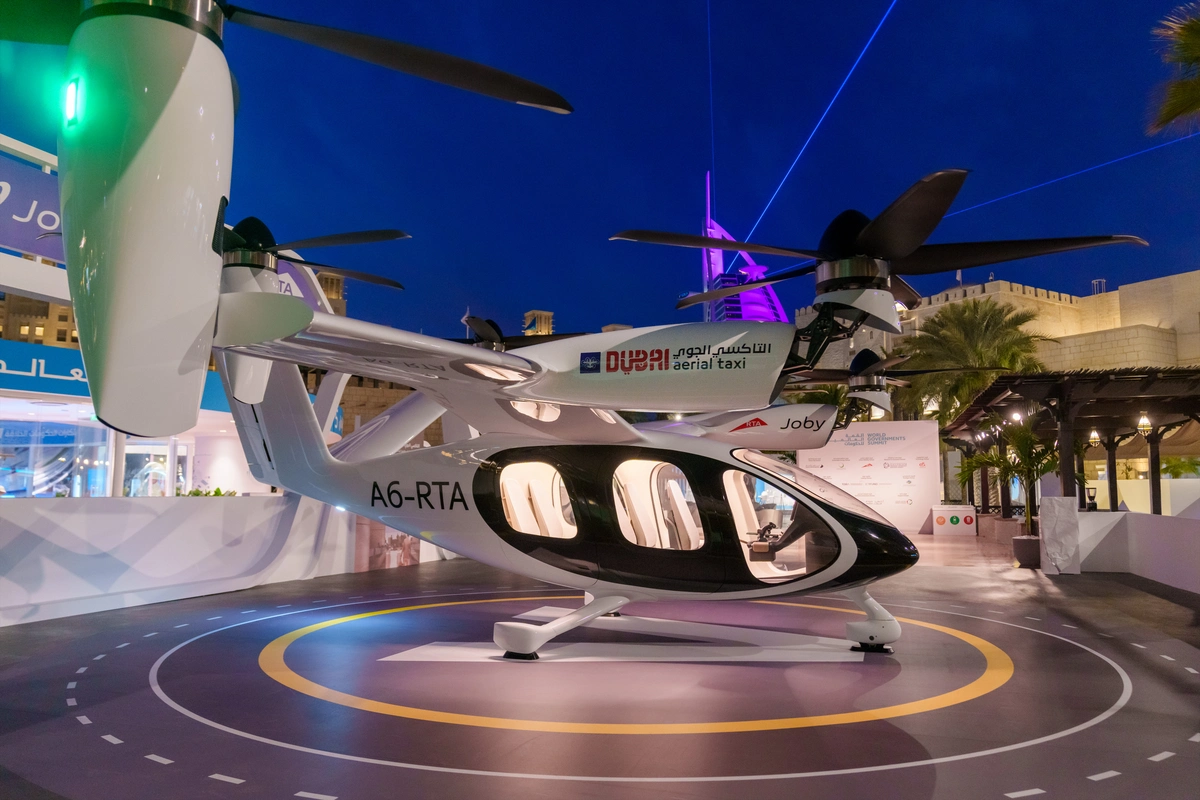
Dubai Eyes 2026 Launch for Joby Air Taxis to Beat Traffic

Dubai may soon redefine urban commuting by turning to the skies. Joby Aviation completed its first successful test flight of a fully electric air taxi in the emirate this week, as the city moves forward with plans to launch commercial airborne transport by 2026.

The California-based company’s eVTOL (electric vertical take-off and landing) aircraft, which produces zero emissions and operates with minimal noise, is intended to help ease congestion in one of the world’s most traffic-heavy cities. According to Joby’s UAE General Manager Anthony Khoury, a journey from Dubai International Airport (DXB) to Palm Jumeirah would take just 12 minutes by air taxi, compared to about 45 minutes by car.

The test flight was conducted in an isolated desert area southeast of downtown Dubai. It involved a vertical takeoff, a several-mile flight, and a vertical landing, simulating a typical short-distance urban trip. The event was attended by senior officials, transport executives, and company representatives.

Though Joby’s long-term vision is to make aerial rides affordable for all, Khoury acknowledged that early pricing will cater to wealthier travelers, as is often the case with new technologies.

The Joby Aerial Taxi can fly up to 160 kilometers (100 miles) at speeds reaching 320 km/h (200 mph), making it a strong candidate for short-haul urban and intercity travel. Its quiet electric propulsion makes it suitable for residential areas — a key consideration for urban operations.

In early 2024, Joby signed an exclusive agreement with Dubai’s Roads and Transport Authority (RTA), granting it the sole rights to operate air taxis in the emirate for six years. The company aims to launch with four vertiports located at DXB airport, Palm Jumeirah, Downtown Dubai, and Dubai Marina.

Despite the successful test, significant challenges remain — including regulatory approval, development of vertiport infrastructure, and supply chain risks. In April, Morgan Stanley downgraded Joby’s stock price target from $10 to $7, citing execution risks and broader aerospace industry concerns. As of now, Joby’s stock is trading at $10.55.

“This is a rare leap in aviation,” said Didier Papadopoulos, Joby’s President of OEM. “You don’t often see transformations like this — we’re at the start of something remarkable.”
M&S CEO: Cyberattack Fallout Will Largely Be Over by August

Marks & Spencer CEO Stuart Machin told shareholders on Tuesday that the British retailer expects to be past the worst effects of a major cyberattack by August, as the company works to restore operations and rebuild consumer trust.

The April cyberattack dealt a serious blow to the company, causing a £300 million ($413 million) hit to profit. It forced M&S to shut down its online store for nearly seven weeks, disrupted stock automation systems, and led to empty shelves in stores during May.

Speaking at M&S’s annual shareholder meeting, Machin said: “I’m really hoping by August, the majority of this is behind us.” This marked the first opportunity for investors to question leadership directly about the incident and its aftermath.

Questions over preventability and accountability were front and center. When asked if the cyberattack could have been prevented, Chairman Archie Norman acknowledged that “there’s always something that could be done” and that M&S continues to examine the details of the breach. Machin added that the attack exploited a third-party contractor via a social engineering tactic.

The CEO defended M&S’s prior cyber readiness, noting that the company had quadrupled its investment in cybersecurity and tripled the size of its cybersecurity team in the year leading up to the breach. “I’m glad we invested then. I’m glad we continue to invest,” Machin said.

One shareholder raised concerns about executive accountability, questioning whether Machin’s £7.1 million pay package, which rose 39% last year, should be reduced in light of the incident. Norman responded that incentive pay was tied to shareholder outcomes and that it was too early to determine adjustments.

Currently, the M&S online store is still only partially operational, with full restoration expected within four weeks. Automation systems at the Donington logistics hub are also expected to be fully functional by August, according to Machin.

In the meantime, the company is focused on reinforcing internal training to defend against further attacks and to bolster awareness of social engineering vulnerabilities.

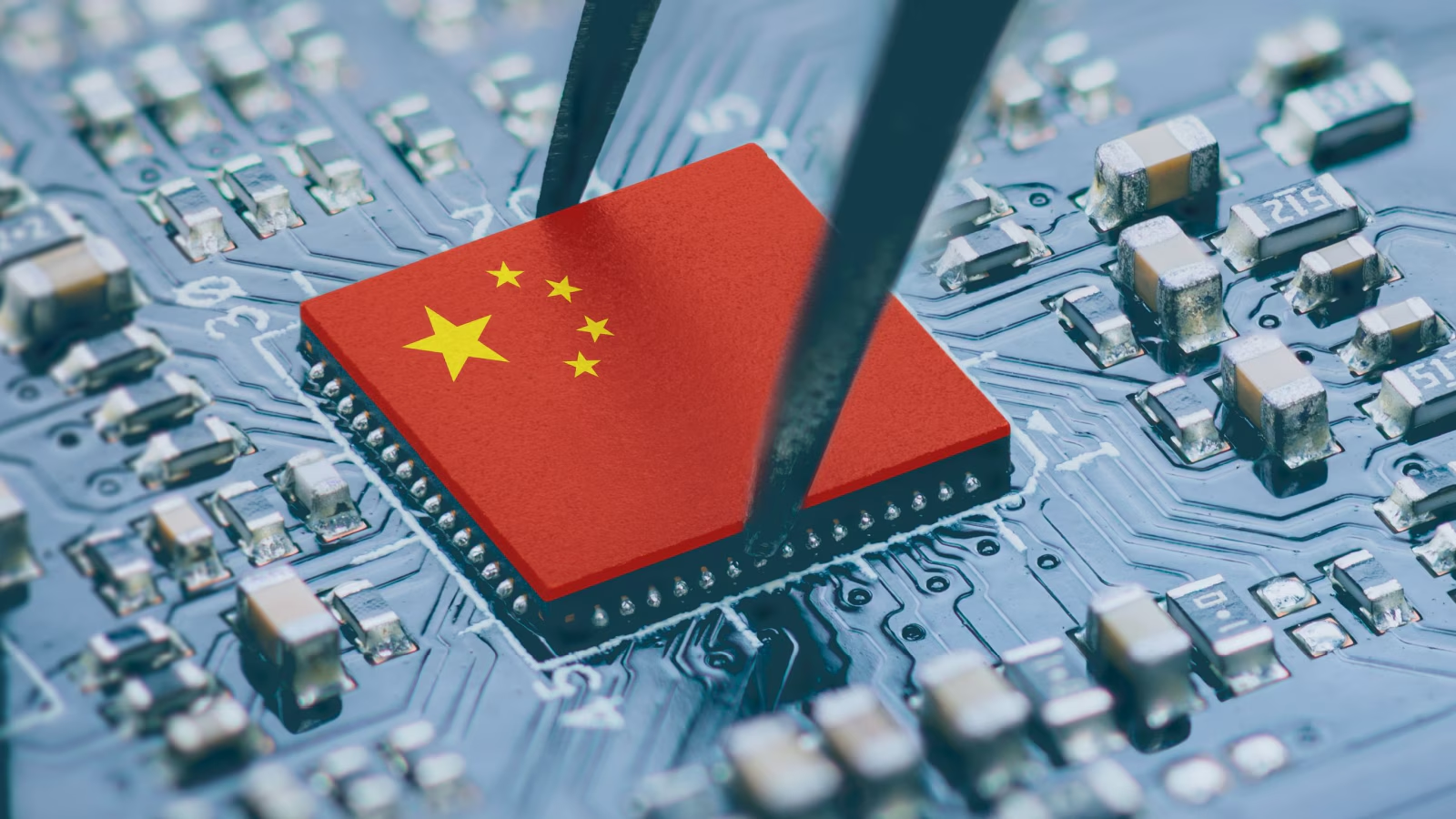
Two Chinese AI Chip Firms Target $1.7 Billion IPOs Amid U.S. Export Curbs

Two Chinese artificial intelligence chipmakers, Moore Threads and MetaX, are seeking to raise a combined 12 billion yuan ($1.65 billion) through initial public offerings (IPOs) on Shanghai’s STAR Market, according to filings released Monday. The companies are betting that U.S. export restrictions on advanced semiconductors will drive demand for homegrown alternatives.

Beijing-based Moore Threads aims to raise 8 billion yuan, while Shanghai-based MetaX targets 3.9 billion yuan. Both firms design graphics processing units (GPUs)—vital components for AI applications—and are attempting to position themselves as domestic challengers to Nvidia, whose chips are now largely restricted from sale in China.

Their listing bids come as China accelerates its push for semiconductor self-sufficiency amid tightening U.S. sanctions. In April, Washington imposed additional curbs that banned Nvidia’s popular H20 chips from export to China. Earlier restrictions have also blocked Chinese chipmakers from using top-tier global foundries such as Taiwan Semiconductor Manufacturing Company (TSMC).

Although both Moore Threads and MetaX acknowledged in their IPO filings that U.S. sanctions present operational challenges, they also highlighted the market opportunity those restrictions have created. “U.S. restrictions… are prompting Chinese companies to accelerate domestic substitution,” Moore Threads stated. Similarly, MetaX noted that geopolitical pressures are “forcing domestic clients to use domestically-produced GPU products.”

Financially, both firms remain deep in the red.

  • Moore Threads reported 2024 revenue of 438 million yuan but posted a loss of 1.49 billion yuan, adding to losses of 1.67 billion yuan in 2023 and 1.84 billion yuan in 2022.

  • MetaX had 2024 revenue of 743 million yuan with a 1.4 billion yuan loss, following losses of 871 million yuan in 2023 and 777 million yuan in 2022.

Despite these losses, analysts say that access to China’s capital markets is critical for these startups to scale R&D and reach economies of scale. “Moore Threads and MetaX are both considered leading GPU firms in China,” said He Hui, semiconductor research director at Omdia. “IPO funding is essential to sustain innovation and growth.”

Founded in 2020, both companies were launched by veterans of major U.S. chipmakers.

  • MetaX’s leadership includes former AMD executives, notably Chairman Chen Weiliang, AMD’s former global head of GPU product line design.

  • Moore Threads was founded by ex-Nvidia personnel, including Chairman Zhang Jianzhong, previously Nvidia’s general manager in China.

These two firms join a rapidly expanding field of Chinese AI chipmakers such as Huawei, Cambricon, and Hygon, all seeking to fill the void left by restricted foreign chip supply and capitalize on Beijing’s semiconductor independence ambitions.