Duolingo Raises 2025 Revenue Forecast as AI Features Boost User Growth

Duolingo (DUOL.O) raised its annual revenue forecast and surpassed second-quarter revenue estimates on Wednesday, driven by increased adoption of its AI-enhanced subscription services. The language-learning app’s shares climbed about 20% in after-hours trading.

Operating on a freemium model, Duolingo offers free basic lessons with premium tiers that provide advanced features through monthly or annual subscriptions. The company now expects 2025 revenue between $1.01 billion and $1.02 billion, surpassing analysts’ consensus of $996.6 million. Previously, the forecast ranged from $987 million to $996 million.

For the April-June quarter, revenue reached $252.3 million, beating analysts’ estimates of $240.7 million.

Duolingo’s two subscription tiers, Super and Max, include AI-powered tools like video-call conversation practice with chatbots, personalized error analysis, and improved feedback. Since launching its AI video-call feature on Android in January, the company has expanded it to more languages to enhance natural conversation practice and drive subscription growth.

The company’s gross margin exceeded expectations this quarter due to lower-than-anticipated AI costs and stronger ad performance, which, while a smaller part of the business, contributed positively to margins, CFO Matt Skaruppa said.

Duolingo uses generative AI to craft and personalize lessons across more than 100 languages. CEO Luis von Ahn noted that after 12 years to develop its first 100 courses, AI tools helped launch 148 new courses in about one year.

Looking ahead, Duolingo expects third-quarter revenue between $257 million and $261 million, exceeding analyst forecasts of $253 million, and projects adjusted core profit for 2025 in the range of $288.1 million to $295.5 million.
Shopify Raises Revenue Outlook on Strong Consumer Demand, Shares Jump 20%

Shopify (SHOP.TO) forecasted upbeat quarterly revenue on Wednesday, citing resilient consumer demand and strong seller performance despite tariff pressures. The Canadian e-commerce platform’s shares surged 20% following the announcement.

Shopify’s merchant base showed steady growth through early August, building on a 31% revenue jump in the April-June quarter. The company’s results helped ease investor concerns over uncertainty caused by shifting U.S. trade policies under President Donald Trump.

“We haven’t seen any drops in U.S. demand, whether inbound, outbound or local. In fact, the U.S. accelerated in the second-quarter,” CFO Jeff Hoffmeister said on the post-earnings call, noting strong growth across all merchant segments. High-volume sellers with more than $50 million in annual gross merchandise volume (GMV), as well as smaller sellers under $2 million, performed particularly well.

Shopify also reported that many merchants have been raising prices, although specific details were not disclosed. This contrasts with e-commerce giant Amazon’s recent statement that it has yet to see a notable rise in prices despite strong retail results.

Analyst Charlie Miner of Third Bridge commented, “The tariff situation is still playing out… but there is clarity on how consumers will react, and Shopify appears largely unaffected so far.”

Looking ahead, Shopify expects third-quarter revenue growth in the mid- to high-twenties percentage range, above analysts’ consensus estimate of 21.54%, based on data from LSEG.

The company’s investments in artificial intelligence-powered tools to help merchants automate tasks such as website building, image generation, and sales data analysis are contributing to its momentum.

US Grants Exemption for Zoox Self-Driving Vehicles, Ends Safety Probe

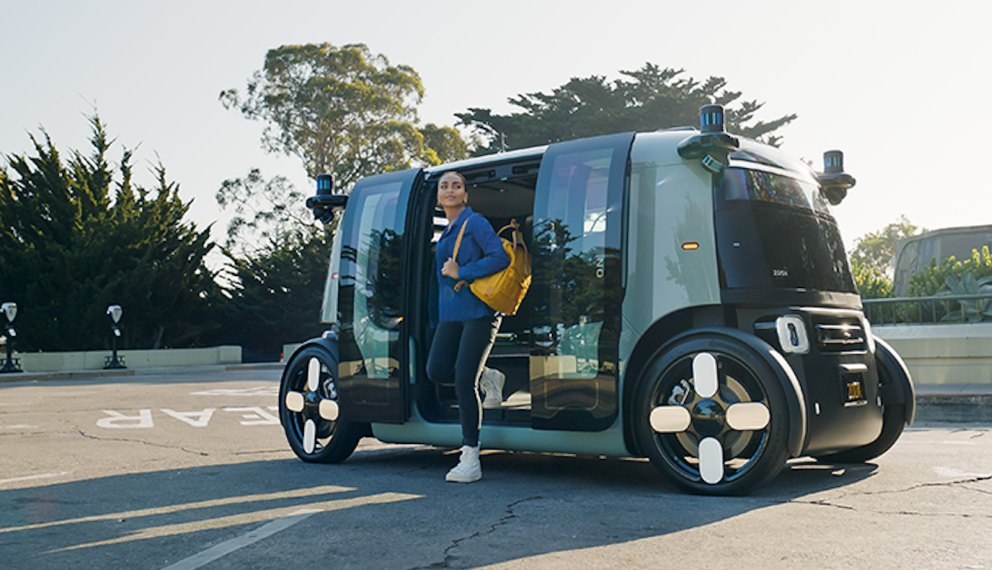
The National Highway Traffic Safety Administration (NHTSA) has certified Amazon’s (AMZN.O) self-driving unit Zoox vehicles for demonstration use and closed its investigation into whether the vehicles complied with federal safety standards.

The agency began probing in 2022 after questions arose about whether Zoox’s purpose-built autonomous vehicles, which lack traditional driving controls like steering wheels and brake pedals, met federal safety requirements under the company’s self-certification.

In June, Zoox applied for an exemption from some regulatory requirements, which NHTSA granted, allowing the vehicles to operate legally on U.S. public roads under this exemption. The agency also required Zoox to remove any claims that their vehicles fully comply with applicable federal motor vehicle standards.

The Trump administration had signaled in June an intent to accelerate approvals for self-driving vehicle exemptions, following stalled proposals by General Motors and Ford to deploy vehicles without steering wheels and pedals.

In May, Zoox recalled 270 driverless vehicles after an unoccupied robotaxi was involved in a crash in Las Vegas due to a scenario where the automated system might misjudge another vehicle approaching perpendicularly and failing to stop, potentially causing collisions. Zoox paused operations briefly, conducted a safety review, and deployed a software update to fix the issue.

NHTSA also closed a related probe from May 2024 into 258 Zoox vehicles after a software update resolved a braking problem that led to two rear-end collisions involving motorcyclists.