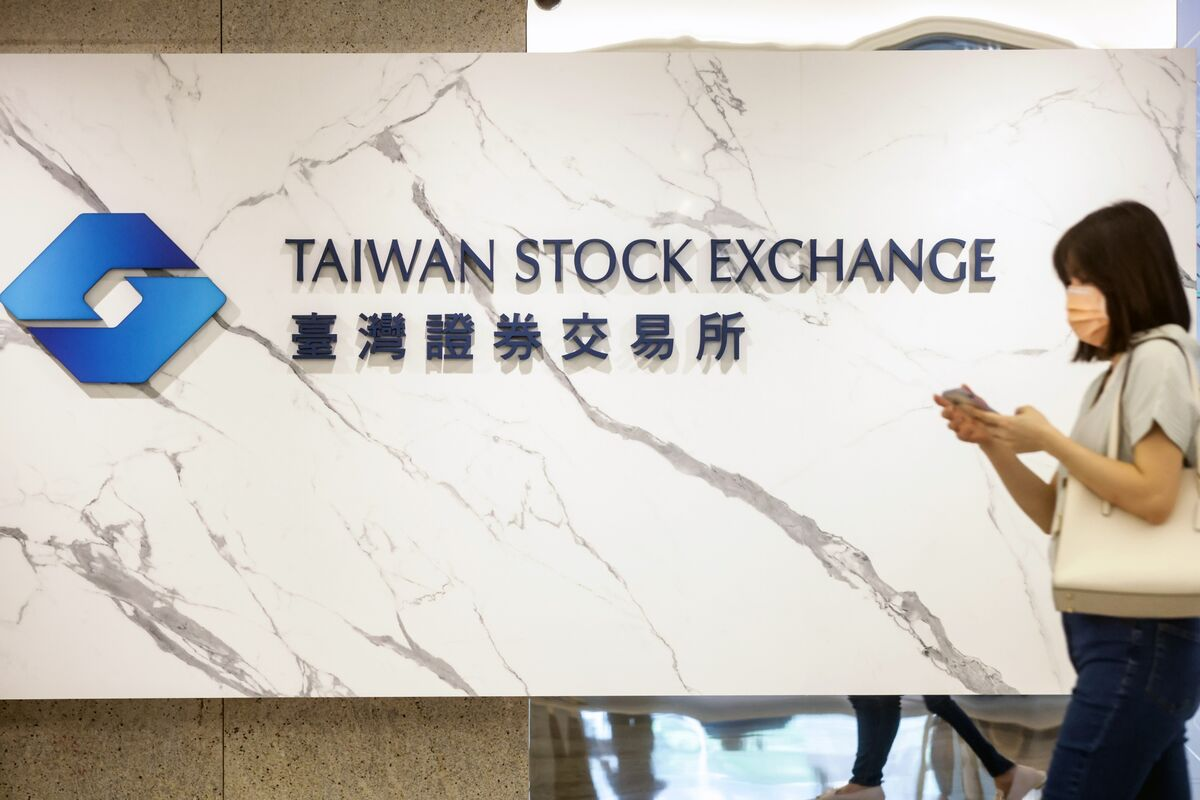
Foreign Investors Pour Billions into Taiwan and South Korea Stocks Amid AI and Growth Optimism

Foreign investors have shown renewed confidence in Asian equities for the third consecutive month in July, pouring record-level funds into Taiwan and South Korea, driven by optimism around AI technology and economic growth prospects. Taiwan attracted $7.78 billion—the highest inflow since the 2008 global financial crisis—while South Korea drew $4.52 billion, the largest since February 2024, according to LSEG data.

The MSCI Asia ex-Japan index rose 2% in July, marking its fifth straight month of gains, while Taiwan’s and South Korea’s key benchmarks advanced about 6% each. The two countries, dominant exporters of tech products, have become magnets for AI-related investments amid improving global trade relations and reduced tariff uncertainties.

South Korea’s appeal is boosted by shareholder-friendly reforms, political stability, and solid corporate fundamentals, although recent tax reform concerns have raised some investor caution.

Thailand also saw a return of foreign investment with $499 million inflows in July—the first since September last year—driven by attractive valuations following prolonged selling. However, political uncertainty, macroeconomic challenges, and a strong currency weigh on a more robust recovery, despite a 14% jump in the SET index, its best monthly performance since November 2020.

Meanwhile, Indian markets faced outflows exceeding $2 billion, breaking a three-month buying streak, while Indonesia and the Philippines also saw net withdrawals. Vietnam attracted $326 million as investors favored its strong growth outlook and favorable U.S. tariff terms.

South Korea’s Samsung and SK Hynix Exempt from 100% U.S. Chip Tariffs

South Korea’s top trade official, Yeo Han-koo, announced that Samsung Electronics and SK Hynix will not face the proposed 100% U.S. tariffs on semiconductor imports, benefiting from favorable tariff terms under a trade agreement between the U.S. and South Korea.

This comes after U.S. President Donald Trump indicated plans to impose steep tariffs on semiconductor imports from countries without U.S.-based production commitments. However, companies with active or planned manufacturing facilities in the U.S. would be exempt.

Samsung has invested in two chip fabrication plants in Texas, located in Austin and Taylor, while SK Hynix plans to build an advanced chip packaging and AI R&D facility in Indiana. Analysts suggest that Samsung’s broader U.S. investments and its inclusion in Apple’s supply chain give it a stronger exemption position compared to SK Hynix, whose packaging plant alone might not fully qualify for tariff relief.

Apple recently confirmed that Samsung’s Texas plant will supply chips for its iPhones and other products, further strengthening Samsung’s U.S. manufacturing footprint. Following these developments, Samsung’s shares rose 2.6%, while SK Hynix’s shares gained 0.6%, mirroring broader market trends.

Neither company commented on the tariff discussion.

Uber Seeks Funding from Banks and Private Equity to Expand Robotaxi Business

Uber CEO Dara Khosrowshahi revealed that the company is in discussions with private equity firms and banks to secure financing for the expansion of its robotaxi operations. This move aligns with Uber’s strategy to scale up its autonomous vehicle business amid growing competition and interest in self-driving technology.

Uber currently offers robotaxi rides through a partnership with Alphabet-owned Waymo and is deepening ties with automakers such as Volkswagen and Lucid to increase its fleet of autonomous vehicles. The company’s robotaxi business model includes three approaches: charging fixed rates to vehicle-owning partners, revenue sharing with fleet operators, and owning vehicles while licensing the self-driving software.

Khosrowshahi emphasized that once Uber demonstrates the revenue potential per vehicle, attracting additional financing will be easier. Presently, the company plans to allocate a “modest” part of its roughly $7 billion annual cash flow towards robotaxi deployment and may also consider selling minority stakes to fund expansion.

Industry analysts note that scaling robotaxi services could significantly reduce Uber’s reliance on human drivers, lowering costs and boosting profitability. Uber’s robotaxi offerings are live in Austin, Texas, and Atlanta, Georgia. In April, Uber signed a deal with Volkswagen to deploy thousands of autonomous electric vans across the U.S. over the next decade. Additionally, a $300 million partnership with Lucid and Nuro will enable Uber to deploy more than 20,000 autonomous taxis over six years.

Despite regulatory challenges, market skepticism, and high costs that have led some companies to scale back autonomous vehicle projects, Uber, Tesla, and Waymo continue to push robotaxi adoption, with Tesla and Waymo expanding services in key U.S. cities such as Austin, San Francisco, and beyond.

Ken Mahoney, CEO of Mahoney Asset Management, commented on the market potential, noting that many companies see the robotaxi sector as a promising growth area with a large total addressable market.