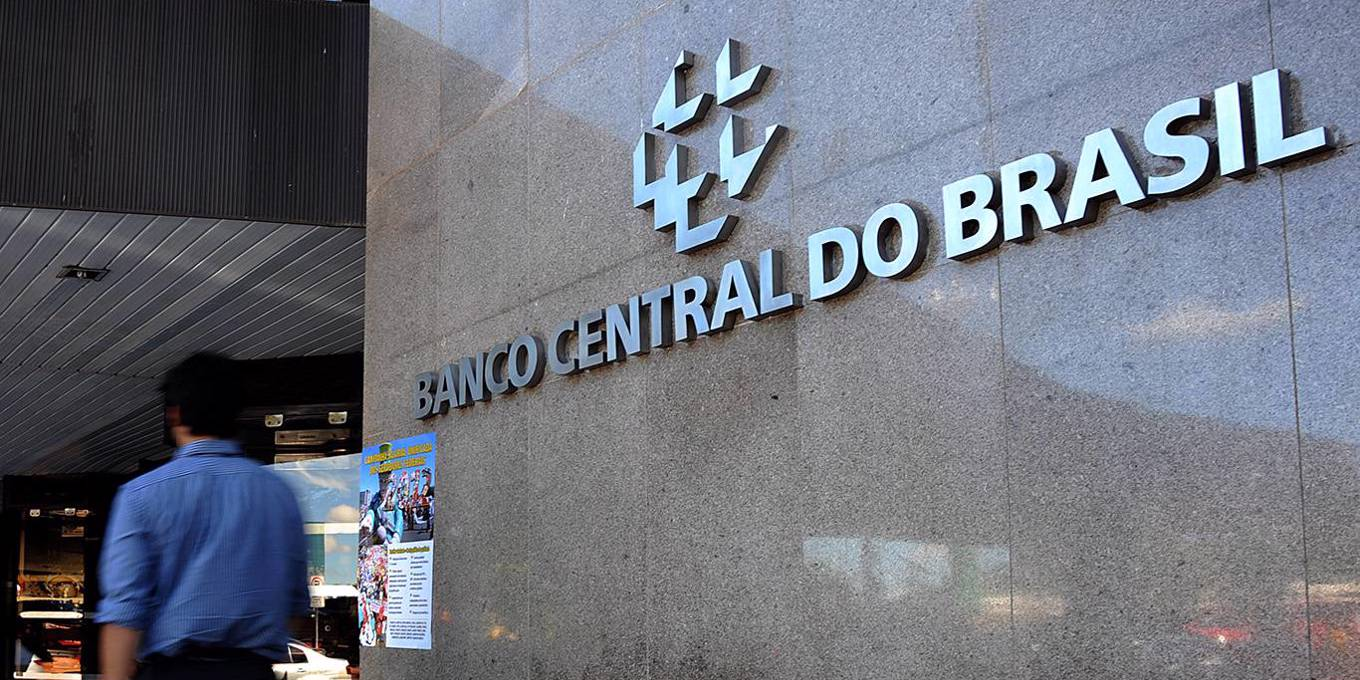
Brazil’s Central Bank Tightens Financial System Security After Cyberattacks

Brazil’s central bank unveiled new rules on Friday to bolster the resilience of the financial system following a wave of cyberattacks targeting financial institutions.

Effective immediately, non-authorized payment institutions connected to the National Financial System Network through IT providers will face a 15,000 reais ($2,767) cap on digital transfers. Central bank Governor Gabriel Galipolo explained that nearly all corporate transfers using Pix or TED already fall below this threshold, meaning the cap will mainly disrupt criminal attempts to move large sums in single operations.

“This measure is aimed at organized crime, not the financial institutions,” Galipolo stressed. By forcing attackers to carry out multiple smaller transactions, the central bank hopes to make illicit activity easier to detect.

In addition, the deadline for unauthorized firms to apply for a banking license has been moved up from December 2029 to May 2026, accelerating regulatory oversight. Going forward, no payment institution will be allowed to operate without prior approval.

Regulation director Gilneu Vivan also announced that long-awaited cryptoasset regulations will be issued later this year, building on a framework approved by Congress in 2022. Officials have raised concerns about the use of stablecoins in illicit financial flows.

Galipolo reassured markets that the banking system remains sound, despite heightened scrutiny. “There is no risk to Brazil’s banking system. The system is stable and there is no threat whatsoever,” he said.

On geopolitical risks, Galipolo called U.S. sanctions against Brazilian Supreme Court Justice Alexandre de Moraes under the Magnitsky Act “unusual.” While he declined to comment on the central bank’s recent decision to block the acquisition of lender Master by BRB due to confidentiality, he noted that all board decisions are taken collectively and based on technical grounds.

The sanctions against Moraes — which freeze his U.S. assets and restrict business with American firms — have sparked questions about potential spillover effects on Brazilian banks with U.S. operations, though the central bank said it is closely monitoring the situation.


Allegro CEO Denies Dispute with InPost Amid Arbitration Claim

Polish e-commerce giant Allegro rejected suggestions of a business dispute with its partners on Friday, despite ongoing tensions with its key delivery provider InPost (INPST.AS).

“We do not believe that we are involved in any business or other dispute with any entity,” said Allegro CEO Marcin Kusmierz, who took charge in June. His comments came after InPost announced in July that it had filed an arbitration claim, accusing Allegro of breaching a long-term delivery agreement by redirecting customers to its own parcel lockers.

InPost, which derives roughly 30% of its Polish revenue from Allegro, has seen its shares tumble more than one-third this year, though they gained 9% on Friday after a sharp 13% drop earlier in the week on weaker parcel volumes. Allegro shares were up around 2%.

InPost CEO Rafal Brzoska has defended the arbitration move as necessary to protect shareholder interests. Allegro, however, emphasized that it respects existing agreements while continuing to diversify its logistics network by adding new partners and rolling out its own lockers to cut delivery costs.

JPMorgan analysts noted that the interdependence of the two companies makes a negotiated settlement likely, though it may reduce InPost’s margins. The bank estimated that Poland will account for 48% of InPost’s revenue in 2025, but that figure could fall to 35% by 2030 as the company accelerates its international expansion.

Warner Bros Discovery Sues Midjourney Over Use of Superman, Scooby-Doo in AI Images

Warner Bros Discovery (WBD.O) has filed a lawsuit against AI photo-generation company Midjourney, accusing it of illegally using iconic characters such as Superman, Batman, Wonder Woman, Bugs Bunny, and Scooby-Doo to train and generate images without authorization.

In a complaint lodged in Los Angeles federal court, Warner Bros alleged that Midjourney built its platform by exploiting copyrighted material, enabling subscribers to create high-quality, downloadable depictions of its characters “in every imaginable scene.” The lawsuit claims Midjourney knowingly disregarded copyright protections, pointing to the company’s prior restriction on video generation from infringing images, a safeguard that was recently lifted and promoted as an upgrade.

“Midjourney has made a calculated and profit-driven decision to offer zero protection for copyright owners, even though it knows the breathtaking scope of its piracy,” the complaint states. Warner Bros is seeking damages, disgorgement of profits, and an injunction to stop further unauthorized use.

The action follows a similar case brought in June by Walt Disney and Comcast’s Universal, which accused Midjourney of misusing characters including Darth Vader, Shrek, Bart Simpson, and Ariel from The Little Mermaid.

Founded in 2022 by David Holz, San Francisco-based Midjourney has grown rapidly, amassing nearly 21 million users and generating an estimated $300 million in revenue in 2024. The company has previously argued that training AI models on copyrighted works falls under “fair use,” allowing for the “free flow of ideas and information.”

Warner Bros, whose portfolio spans DC Comics, Hanna-Barbera, Cartoon Network, and Turner Entertainment, said protecting its intellectual property is vital to safeguarding its creative partnerships and investments. “The heart of what we do is develop stories and characters to entertain our audiences,” a company spokesperson said.

The case is Warner Bros Entertainment Inc et al v Midjourney Inc, U.S. District Court, Central District of California, No. 25-08376.